
Transplantation
Small Intestine Transplantation in Korea
Small intestine transplant in Korea: rare surgery for irreversible intestinal failure, with ~20 years of experience and strong survival outcomes.
Quick Answer
- Three transplant types are performed: isolated small intestine, combined liver-intestine, and multivisceral (stomach, pancreas, spleen, small intestine, and colon together).
- Seoul St. Mary's Hospital performed Korea's first successful small intestine transplant in 2004 and has accumulated the largest national case volume — 18 transplants — in the country.
- East Asian 5-year patient survival for intestinal transplantation is approximately 70%, comparable to the international benchmark.
At a Glance
| Procedure time | 8–16 hours depending on graft type (isolated, combined, or multivisceral) |
|---|---|
| Anesthesia | General anesthesia with continuous intraoperative monitoring |
| Hospital stay | 4–12 weeks (ICU phase followed by ward rehabilitation) |
| Recommended stay in Korea | 3–6 months minimum for immune stabilisation and outpatient follow-up |
| Recovery | 12–18 months to functional independence; lifelong immunosuppression required |
Overview
Small intestine transplantation is one of the rarest and most technically demanding transplant procedures performed worldwide. It replaces a diseased or removed small intestine with a healthy graft from a deceased or, in select cases, a living donor.
The surgery addresses intestinal failure — the condition in which the gut can no longer absorb enough nutrients and fluid to sustain life.
Without a functioning small intestine, patients depend on total parenteral nutrition (TPN), delivered directly into a central vein, which carries serious long-term risks including liver damage, recurrent bloodstream infections, and loss of venous access sites.
Three graft configurations exist. An isolated intestinal transplant replaces the small bowel alone. A combined liver-intestine transplant is used when TPN-related liver disease has developed alongside gut failure.
A multivisceral transplant replaces the stomach, duodenum, pancreas, spleen, and small intestine — and sometimes the colon — as a block, used for complex abdominal pathology such as extensive thrombosis or motility disorders affecting the entire upper gastrointestinal tract.
In South Korea, intestinal transplantation has been performed since 2004. Korean research identifies chronic intestinal pseudo-obstruction syndrome and short bowel syndrome as the two leading causes of intestinal failure requiring transplant evaluation.
Living donor intestinal transplant
In Korea, international patients may only receive transplants from living donors who travel with them. Deceased-donor allocation is reserved for Korean nationals under national organ-sharing rules. Discuss living-donor eligibility and evaluation requirements with the transplant centre's international office before booking travel.

Am I a Candidate?
Candidates for small intestine transplantation are patients with irreversible intestinal failure for whom long-term TPN has failed or is no longer sustainable.
Common indications include:
- Short bowel syndrome following massive bowel resection (trauma, volvulus, necrotising enterocolitis in children, Crohn's disease)
- Chronic intestinal pseudo-obstruction unresponsive to medical management
- Diffuse intestinal polyposis or motility disorders involving the entire small bowel
- TPN-associated liver failure that has progressed to cirrhosis
- Repeated life-threatening central-line infections despite optimal catheter care
- Loss of central venous access sites needed to continue TPN
Patients who are candidates for an isolated graft must have preserved liver function. Those with established hepatic fibrosis or cirrhosis from prolonged TPN are typically evaluated for a combined liver-intestine graft. Multivisceral transplantation is reserved for the most complex anatomical presentations.
Paediatric patients represent a significant proportion of the evaluated population in Korea, consistent with global trends, where congenital gut anomalies and necrotising enterocolitis drive the highest demand for intestinal transplantation in childhood.
How the Procedure Works
The surgical sequence differs by graft type but follows a shared core structure.
Donor procurement — the intestinal graft is recovered from a deceased donor under conditions designed to minimise warm ischaemia time. Cold preservation in organ preservation solution is used during transport.
Recipient preparation — the patient undergoes extensive pre-operative evaluation including nutritional optimisation, infection screening, and vascular mapping. For multivisceral cases, abdominal CT angiography defines the vascular anatomy before surgery.
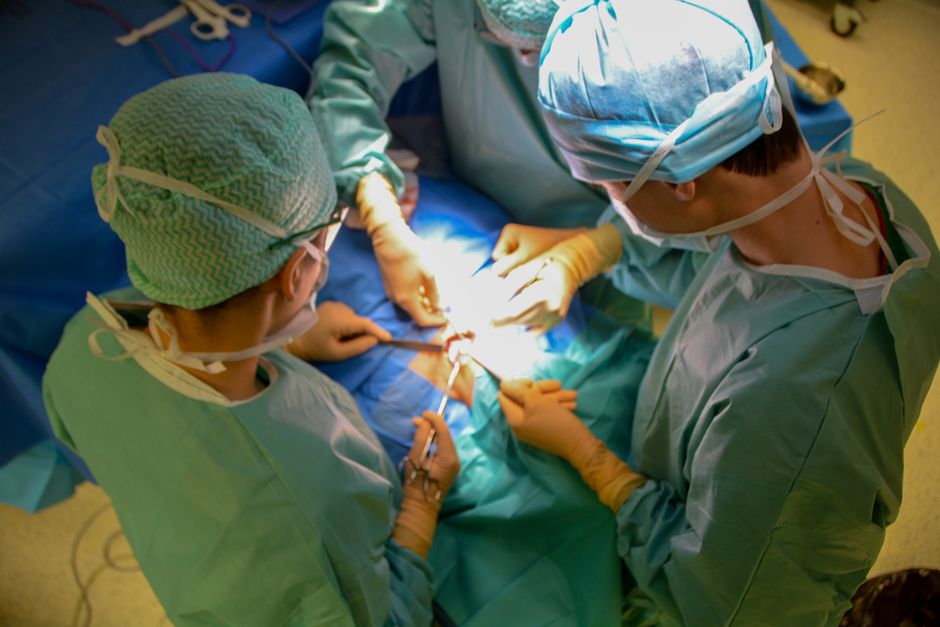
Implantation — the graft is placed in the recipient's abdominal cavity. Arterial inflow is restored from the aorta; venous drainage is routed either through the portal system or the systemic circulation.
The proximal bowel is connected to the recipient's remaining duodenum or jejunum, and the distal end is brought out as a temporary stoma, which allows the surgical team to monitor graft function directly through an endoscope in the early post-operative period.
Stoma creation is intentional and temporary. It enables repeated mucosal biopsies to detect acute cellular rejection before clinical signs appear. Stoma closure typically follows once immune stability is confirmed — usually several months after transplant.
For multivisceral cases, the en-bloc organ cluster is implanted as a unit, requiring reconstruction of multiple vascular and bowel anastomoses within a single operative field.
Recovery Timeline
Recovery from intestinal transplantation is prolonged and requires structured, multidisciplinary monitoring.
Weeks 1–4 (ICU and early ward phase)
- Ventilator support weaning, fluid balance management, and TPN continuation until graft function is confirmed
- Endoscopic surveillance biopsies begin within the first week to detect rejection early
- Initiation of tacrolimus-based immunosuppression with close therapeutic drug monitoring
Weeks 4–12 (enteral transition phase)
- Gradual introduction of enteral nutrition through the graft as absorptive capacity is established
- Ongoing weekly or biweekly endoscopic biopsies
- Management of common early complications: rejection episodes, cytomegalovirus infection, and bacterial translocation
Months 3–6 (consolidation phase)
- Stoma reversal in eligible patients once immune stability is documented
- Transition from hospital-based to outpatient follow-up
- Dietary progression toward oral intake; dietitian-led nutritional rehabilitation
Beyond 6 months
- Lifelong immunosuppression — typically tacrolimus with gradual dose reduction
- Annual endoscopic surveillance for chronic rejection and post-transplant lymphoproliferative disorder
- Patients who achieve full enteral independence can return to near-normal dietary patterns, though some restrictions remain long term

Cost
Costs vary by hospital and case. Ask the hospital for a written, itemised estimate before you decide.
Why Korea
Korea's position in intestinal transplantation is built on a combination of surgical experience, regulatory infrastructure, and healthcare quality that distinguishes it from most destinations in the Asia-Pacific region.
Pioneer programme with two decades of continuity. Seoul St. Mary's Hospital performed Korea's first successful small intestine transplant in 2004 and marked the 20th anniversary of that programme in 2024, with the original patient still surviving — an outcome that exceeds many international benchmarks for long-term graft and patient survival.
Largest national case volume. With 18 intestinal transplants performed at the leading centre alone, Korea's experience is concentrated in a single high-volume programme rather than fragmented across many low-volume sites — a pattern that correlates with better outcomes in complex transplant surgery globally.
Multivisceral capability. Korean surgeons have successfully performed full multivisceral transplantation, including a six-organ en-bloc transplant (stomach, duodenum, pancreas, spleen, small intestine, large intestine) in a paediatric patient — demonstrating technical capability at the most complex end of the spectrum.
Institutional research support. The Korea Health Industry Development Institute (KHIDI), under the Ministry of Health and Welfare, funds transplant research and supports the infrastructure through which outcomes data are collected and published. The Medical Korea portal (medicalkorea.or.kr) provides a government-backed quality assurance framework for international patients.
Structured international patient pathways. Korea's medical tourism infrastructure includes accreditation mechanisms, interpreter services, and coordinated care teams designed for international patients travelling from abroad — the primary regions that most frequently seek Korean tertiary care.
Key Takeaways
- Korea's intestinal transplant programme dates to 2004, with the country's leading centre reporting 18 cases and a 5-year survival rate consistent with East Asian benchmarks of approximately 70%.
- Three graft configurations are available — isolated intestine, combined liver-intestine, and multivisceral — selected based on the extent of organ involvement and TPN-associated complications.
- Recovery requires a minimum 3–6 month stay in Korea for immune monitoring, endoscopic surveillance biopsies, and stoma management before safe repatriation.
- KHIDI and the Medical Korea portal provide government-backed frameworks supporting transplant research and international patient access to Korean tertiary care.
- International patients can only receive intestinal transplants from a living donor who accompanies them to Korea — deceased-donor allocation is not available to non-residents.
Frequently Asked Questions
Who is a candidate for small intestine transplantation in Korea?
Patients with irreversible intestinal failure who can no longer sustain life on TPN — due to TPN-related liver damage, recurrent infections, or loss of venous access — are evaluated. Common underlying conditions include short bowel syndrome, chronic intestinal pseudo-obstruction, and extensive gut dysmotility. A full transplant workup at a Korean centre is required before listing.
Can international patients receive a deceased-donor intestinal transplant in Korea?
No. Under Korean organ-sharing policy, deceased-donor organs are allocated to Korean nationals. International patients seeking intestinal transplantation in Korea must bring a compatible living donor. The transplant centre will evaluate both the recipient and the proposed donor before accepting the case.
How long must I stay in Korea after the transplant?
A minimum of 3–6 months in-country is recommended. The early post-operative period involves intensive endoscopic monitoring, immunosuppression adjustment, and — if a stoma was created — eventual stoma reversal surgery. Repatriation is only considered once the patient has achieved enteral nutrition tolerance and stable graft function.
What are the most serious risks of intestinal transplantation?
The main risks are acute and chronic rejection of the graft, serious infections (particularly cytomegalovirus and bacterial translocation from the gut), post-transplant lymphoproliferative disorder (a lymphoma linked to immunosuppression), and graft failure requiring return to TPN. The immunosuppression burden is higher for intestinal transplants than for most other solid-organ transplants because the gut contains a large amount of immune tissue.
Is small intestine transplant available for children in Korea?
Yes. Korean centres have performed intestinal and multivisceral transplants in paediatric patients, including a complex six-organ en-bloc transplant in a child. Paediatric intestinal failure — most commonly from short bowel syndrome following necrotising enterocolitis or congenital anomalies — is a recognised indication. Paediatric cases require specialist anaesthesia and intensive care capability, which leading Korean transplant hospitals maintain.
How does Korea's 5-year survival rate compare internationally?
East Asian programmes including Korea report approximately 70% 5-year patient survival for intestinal transplantation, which is consistent with or modestly above the international average. The leading Korean centre has cited its own 5-year survival data as exceeding the international benchmark, with its first patient from 2004 remaining alive at the 20-year follow-up mark in 2024.
Related Topics
Sources
International Patient Preparation Guides
Independent resources for international patients researching care in South Korea:
กำลังหาข้อมูลเกี่ยวกับการรักษาในเกาหลีอยู่หรือไม่?
KmedTour เป็นแหล่งข้อมูลเท่านั้น โปรดติดต่อโรงพยาบาลโดยตรง หรือค้นหาโรงพยาบาลที่ขึ้นทะเบียนรับผู้ป่วยต่างชาติได้ที่พอร์ทัล Medical Korea
Quick Facts
ค่าใช้จ่าย
ขอใบประเมินราคาเป็นลายลักษณ์อักษรจากโรงพยาบาล
Duration
30 days
Korean Hospitals
0+ Available
โรงพยาบาลที่มี Small Intestine Transplantation
Medical Information Disclaimer
The information provided on this page about Small Intestine Transplantation is for general educational and informational purposes only. It is not intended as, and should not be construed as, medical advice, diagnosis, or treatment recommendations.
Always seek the advice of a qualified healthcare professional regarding any medical condition or treatment. Never disregard professional medical advice or delay seeking it because of information found on this website. Individual treatment outcomes may vary. Costs shown are estimates and may differ based on individual circumstances.
KmedTour is an independent information platform. It is not a medical provider or a registered foreign patient attraction agency, and it does not book treatment, take payment for treatment, or receive per-patient fees from hospitals. Treatment is arranged and paid for directly between you and the hospital.