Spine$5000 - $12000⭐ KAHF Accredited Hospitals
Transforaminal Endoscopic Lumbar Discectomy in Korea
Minimally invasive keyhole spine surgery removing herniated lumbar disc through the natural foramen opening — Korea leads globally in technique volume and outcomes.
Quick Answer
- Transforaminal endoscopic discectomy (TELD) reaches the disc through the natural foramen opening using a ~8 mm working cannula and a high-definition endoscope — no muscle cutting, no general anesthesia required.
- Cost in Korea runs approximately $10,000–$15,000 all-in, roughly 60–70% less than comparable US pricing.
- Hospital stay is 1–2 nights; most patients walk the same day and return to sedentary work within 7 days.
- Korea reported 4.2% lumbar disc recurrence rate across large multicenter cohorts and 90%+ patient satisfaction — consistent with published peer-reviewed data from Korean institutions.
At a Glance
| Procedure time | 60–90 minutes per disc level |
|---|---|
| Anesthesia | Local with IV sedation (most cases); spinal or general available |
| Hospital stay | 1–2 nights |
| Recommended stay in Korea | 7–10 days (surgery + initial recovery + follow-up) |
| Recovery | Light activity next day; sedentary work in ~7 days; full activity by 6–8 weeks |
| Typical cost in Korea | $10,000–$15,000 USD (all-inclusive packages) |
Overview
Transforaminal endoscopic lumbar discectomy (TELD) is a minimally invasive spine procedure that accesses a herniated lumbar disc through the natural bony opening — the intervertebral foramen — without cutting paraspinal muscles or removing bone.
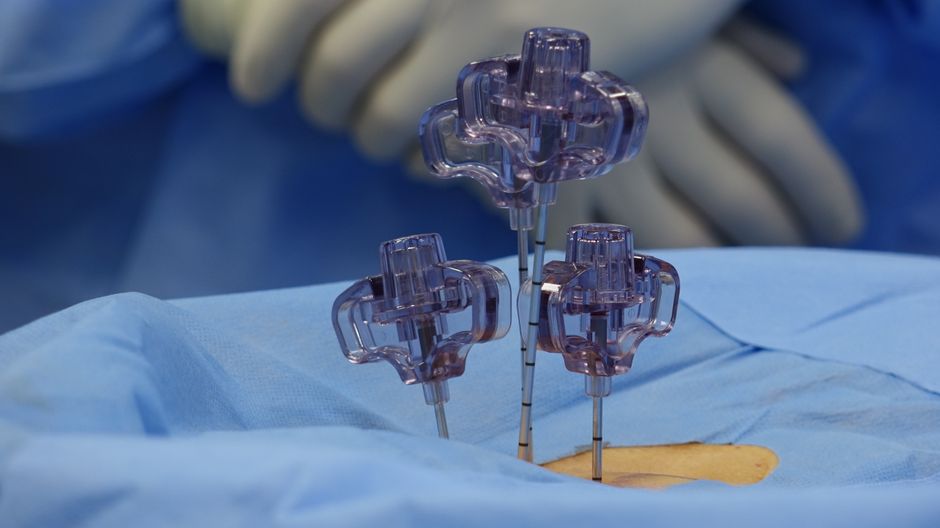
A slender working cannula (roughly 8 mm in diameter) and a high-definition endoscope are introduced under real-time fluoroscopic guidance. The surgeon visualises the herniated disc material directly and removes it with endoscopic instruments, decompressing the affected nerve root.
Because no major muscle retraction is involved, blood loss is minimal and post-operative pain is substantially lower than open or micro-discectomy approaches.
TELD vs. interlaminar endoscopic discectomy (IELD): Korean spine centres commonly use the transforaminal approach for herniations at L4-L5 and above, and the interlaminar route for L5-S1, adapting technique to anatomy.
Korean neurosurgeons and orthopaedic spine surgeons have published extensively on TELD outcomes. South Korea's national health insurance data — covering tens of thousands of cases — has been used in peer-reviewed cost-utility analyses, giving the technique one of the largest real-world evidence bases globally.
The procedure is performed in accredited Korean hospitals holding KOIHA (Korea Institute for Healthcare Accreditation) or JCI certification, under regulatory oversight from the Ministry of Food and Drug Safety (MFDS) and supported by KHIDI (Korea Health Industry Development Institute) research funding.
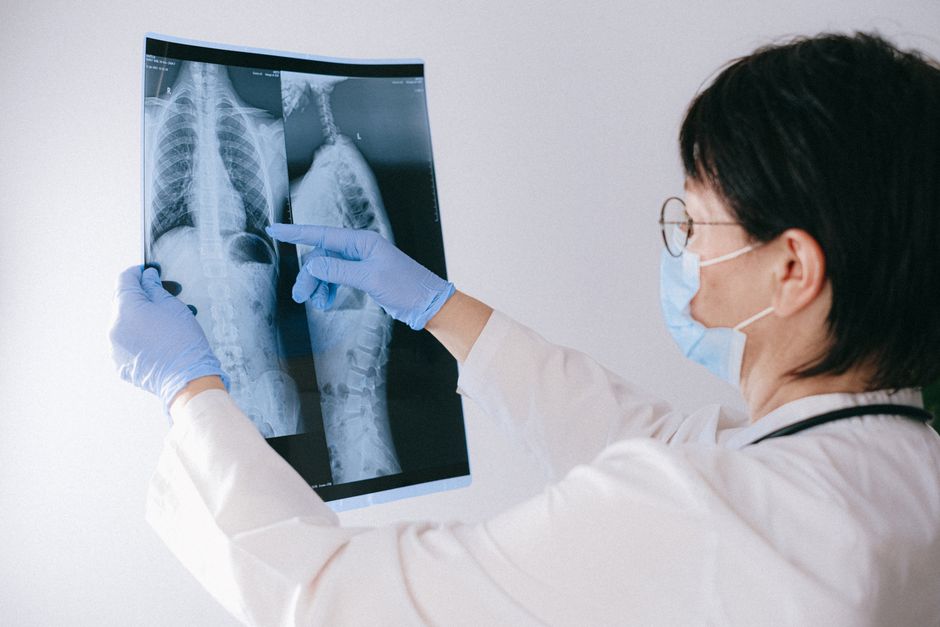
Bring recent MRI images from home
Most Korean spine centres can review digital MRI files (DICOM format) sent ahead of travel to confirm candidacy and provide a binding quote — saving you the cost of repeat imaging on arrival.
Am I a Candidate?
TELD is appropriate for patients who have lumbar disc herniation confirmed on MRI or CT and who have not responded adequately to 4–6 weeks of conservative care (physiotherapy, epidural injections, medication).
Typical candidates:
- Contained or extruded disc herniation at L2-L3, L3-L4, or L4-L5
- Radiculopathy (shooting leg pain/numbness) along a dermatomal pattern
- Patients who want to avoid general anesthesia or prolonged hospitalisation
- Working-age adults needing faster return to activity
Patients who may NOT be ideal candidates include those with severe spinal instability, significant spondylolisthesis requiring fusion, or multi-level disease with significant stenosis at every level.
Korean spine centres routinely conduct a pre-operative consultation (in-person or via telemedicine for international patients) that includes review of current MRI images — usually taken within the past 6 months — before confirming candidacy.
Pre-operative workup typically includes full blood panel, coagulation screen, ECG, and anaesthesia risk assessment. Patients on blood thinners are advised to pause medication under physician guidance before travel.
How the Procedure Works
The procedure is performed with the patient prone on a radiolucent table.
Step 1 — Localisation A spinal needle is advanced under continuous fluoroscopic (X-ray) guidance to the medial border of the inferior pedicle, targeting the Kambin's triangle — a safe anatomical corridor within the foramen.
Step 2 — Access A guidewire is introduced through the needle, followed by sequential dilators. A partial foraminoplasty (shaping the bony opening) is performed so the working cannula seats correctly. Some centres use a trephine (circular drill) in a one-step foraminoplasty technique.
Step 3 — Endoscopic visualisation The endoscope is introduced through the cannula. High-definition camera optics give the surgeon a direct view of the disc, exiting nerve root, and any annular tear.
Step 4 — Disc removal Endoscopic rongeurs and graspers are used to remove herniated or extruded disc fragments until the nerve root is fully decompressed. Continuous saline irrigation keeps the field clear and reduces thermal injury.
Step 5 — Confirmation and closure A probe verifies no remaining fragment is present. The cannula is removed; the single skin incision (approximately 8 mm) is closed with one or two sutures or steri-strips.
Total operative time is typically 60–90 minutes per disc level treated.
Recovery Timeline
Day of surgery (Day 0) Patient is monitored for 2–4 hours post-procedure. Most patients stand and take short walks in the ward before end of day.
Days 1–2 Light ambulation is encouraged. Discharge typically occurs within 1–2 nights. Oral analgesics manage residual soreness. Korean hospitals provide discharge instructions and arrange a follow-up appointment.
Days 3–7 Short walks, gentle stretching, light daily activities. Patients with sedentary desk jobs may return to work around Day 7. Avoid prolonged sitting in one position for more than 30–40 minutes.
Weeks 2–4 Light exercise (walking 20–30 minutes daily). Driving is generally permitted from around Week 2 with physician clearance.
Weeks 6–8 Return to moderate physical activity. Physical therapy is often started during this window to rebuild core stability and prevent recurrence.
3–6 months Full functional recovery. Published data shows pain and disability indices improve steadily within the first six months, after which the curve typically plateaus. International patients can usually fly home 5–7 days post-surgery after the initial follow-up confirms uneventful healing.
Cost Breakdown
Korea's all-inclusive spine packages for TELD typically range from $10,000 to $15,000 USD, covering the surgery itself, anaesthesia, 1–2 nights hospital stay, pre-operative imaging review, standard post-op medications, and one follow-up visit.
For context, comparable endoscopic discectomy in the United States can exceed $30,000–$50,000 before insurance. Korean pricing represents an estimated 60–70% saving.
Factors that affect the final quote:
- Single vs. multi-level — each additional disc level adds cost
- Hospital tier — tertiary university hospitals versus specialist spine clinics differ in base fees
- Room grade — standard ward vs. private room (can add $100–$300/night)
- Additional imaging — new MRI in Korea if existing images are outdated
- Interpreter and coordinator services — often included in international patient packages
Most Korean hospitals serving international patients provide itemised written quotes before commitment. Under Medical Korea programme guidelines (KHIDI/Ministry of Health and Welfare), accredited institutions must provide transparent fee disclosure to foreign patients.
Travel and accommodation add roughly $1,500–$3,000 for a 7–10 day Seoul stay, depending on flight origin and hotel choice.
| Item | Typical Cost in Korea (USD) |
|---|---|
| Surgery + anaesthesia + OR fee | $7,500–$11,000 |
| Hospital stay (1–2 nights, standard room) | $300–$700 |
| Pre-op labs and ECG | $150–$350 |
| MRI review / new MRI if required | $300–$600 |
| Post-op medications and 1 follow-up visit | $200–$400 |
Why Korea
Korea has developed one of the highest-volume endoscopic spine surgery ecosystems in the world, supported by national health insurance data across hundreds of thousands of cases — a scale that generates unusually strong outcome data.
Technique leadership: Korean surgeons contributed foundational refinements to the transforaminal endoscopic approach, including one-step trephine foraminoplasty and the systematic use of biportal endoscopic techniques (UBE). Training programmes draw spine surgeons from across Asia, the Middle East, and Africa.
Regulatory environment: Devices and surgical equipment used in Korean spine centres must meet MFDS (Ministry of Food and Drug Safety) standards — Korea's equivalent of the FDA. KHIDI funds ongoing comparative effectiveness research on endoscopic vs. open techniques.
Accreditation: Hospitals must hold KOIHA accreditation under Article 58 of Korea's Medical Act to be eligible for the Medical Korea programme. Major tertiary centres additionally hold JCI certification. The Medical Korea portal (medicalkorea.or.kr) lists verified institutions.
International patient infrastructure: Seoul — particularly the Gangnam medical district — has concentrated a dense cluster of spine clinics with dedicated international patient coordinators, multilingual staff, translation services, airport transfer, and insurance liaison.
Cost advantage: At 60–70% below US pricing for comparable quality, Korea consistently ranks among the top three global destinations for spinal procedures in medical tourism surveys conducted by KHIDI.
Key Takeaways
- TELD is a same-day or 1-night procedure using a keyhole approach through the natural foramen — no major muscle cutting, minimal blood loss.
- Korea's all-inclusive cost of $10,000–$15,000 is roughly 60–70% below comparable US pricing, with accredited hospitals under the Medical Korea programme.
- Most patients with sedentary work return to desk duties within 7 days; full recovery and physical therapy completion by 6–8 weeks.
- Confirm your chosen hospital holds KOIHA or JCI accreditation and is listed on the official medicalkorea.or.kr registry before booking.
Frequently Asked Questions
Is general anaesthesia required for transforaminal endoscopic discectomy?
Not in most cases. The procedure is commonly performed under local anaesthesia combined with intravenous sedation, meaning you are relaxed and comfortable but do not require a breathing tube or full general anaesthesia. This reduces anaesthesia-related risks and speeds recovery. Korean spine centres will confirm the anaesthesia plan during pre-operative assessment.
How is TELD different from standard open microdiscectomy?
Open microdiscectomy requires a 3–5 cm skin incision and sustained retraction of paraspinal muscles to reach the disc. TELD uses an approximately 8 mm incision and a narrow working cannula placed through the natural foramen opening, causing minimal muscle disruption. Recovery is generally faster, post-operative pain lower, and hospital stay shorter with TELD.
What is the recurrence rate for lumbar disc herniation after endoscopic surgery?
Large multicenter Korean data reports a lumbar disc recurrence rate of approximately 4.2% — broadly consistent with published peer-reviewed literature on endoscopic discectomy outcomes. Recurrence risk can be influenced by factors such as patient age, disc quality, activity levels, and adherence to post-operative rehabilitation.
When can I fly home after surgery in Korea?
Most international patients are medically cleared to fly approximately 5–7 days after surgery, following a post-operative follow-up that confirms wound healing and satisfactory neurological recovery. Long-haul flights require movement breaks every 1–2 hours and compression stockings to reduce DVT risk. Your Korean care team will provide a fitness-to-fly letter.
Will I need physiotherapy after returning home?
Yes. A structured physiotherapy programme starting around weeks 6–8 is strongly recommended to rebuild core muscle strength, correct posture, and reduce long-term recurrence risk. Korean hospitals typically provide a discharge rehabilitation plan that your home physiotherapist can follow.
Does Korea's national health insurance cover foreign patients?
Korea's National Health Insurance (NHI) scheme covers Korean residents and certain registered foreign residents. International medical tourists travelling specifically for treatment are not covered under NHI and will pay the private self-pay rate. Most Korean hospitals serving international patients provide clear written quotes that reflect the full private rate.
Related Topics
Sources
- Cost-utility analysis of endoscopic lumbar discectomy — Korean NHI system (PMC)
- Percutaneous transforaminal endoscopic discectomy: techniques and outcomes (PMC)
- Effect of TELD extent on postoperative neurological recovery — Frontiers in Neurology
- Multicenter 5000-case retrospective study of transforaminal endoscopic discectomy (PMC)
- Medical Korea — Accreditation Programme (KAHF/KOIHA)
- KHIDI — Korea Health Industry Development Institute
Ready to Begin Your Journey?
Get matched with KAHF-accredited hospitals and receive a personalized treatment plan.
Quick Facts
Typical Cost
$5000 - $12000
Duration
3 days
Accredited Hospitals
0+ Available
Top Hospitals
Medical Information Disclaimer
The information provided on this page about Transforaminal Endoscopic Lumbar Discectomy is for general educational and informational purposes only. It is not intended as, and should not be construed as, medical advice, diagnosis, or treatment recommendations.
Always seek the advice of a qualified healthcare professional regarding any medical condition or treatment. Never disregard professional medical advice or delay seeking it because of information found on this website. Individual treatment outcomes may vary. Costs shown are estimates and may differ based on individual circumstances.
KmedTour acts as a medical tourism facilitator and does not provide direct medical services. All treatments are performed by independently accredited healthcare providers in South Korea.