Cardiac$30000 - $60000⭐ KAHF Accredited Hospitals
TAVI Procedure in Korea
TAVI replaces a failing aortic valve without open-chest surgery — Korea performs it across ~20 specialist centres with MFDS-approved devices.
Quick Answer
- TAVI (Transcatheter Aortic Valve Implantation) replaces a narrowed aortic valve through a catheter, avoiding open-chest surgery entirely.
- Korea performed its first TAVI in 2011 and is now the leading TAVI country in Asia, with procedures active at ~20 institutions.
- Approximate cost in Korea: $28,000–$50,000 USD all-in, significantly below US or Western European pricing for equivalent technology.
- Most international patients stay 10–14 days in Korea to cover pre-procedure workup, the procedure, and early follow-up before flying home safely.
At a Glance
| Procedure time | 1.5–3 hours |
|---|---|
| Anesthesia | General or conscious sedation (centre-dependent) |
| Hospital stay | 5–8 days |
| Recommended stay in Korea | 10–14 days |
| Recovery | Light activity in 1–2 weeks; most daily activities by 4–6 weeks |
| Typical cost in Korea | $28,000–$50,000 USD (device + procedure + hospitalisation) |
Overview
Transcatheter Aortic Valve Implantation (TAVI) — also called TAVR — is a minimally invasive heart procedure that replaces a severely narrowed (stenotic) aortic valve without stopping the heart or opening the chest.
A compressed replacement valve is loaded onto a catheter, guided through the femoral artery (groin) or an alternative access site, positioned inside the diseased valve, and expanded. The old valve leaflets are pushed aside and the new valve begins functioning immediately.
TAVI was developed for patients considered too high-risk for conventional open-heart surgical aortic valve replacement (SAVR). Global evidence has since expanded its use to intermediate- and, increasingly, lower-risk patients with severe symptomatic aortic stenosis.
Aortic stenosis — the progressive calcification and narrowing of the aortic valve — is one of the most common serious heart valve diseases in adults over 65. Left untreated, severe symptomatic aortic stenosis carries a poor prognosis without intervention.
Key terms to know: - Aortic stenosis — narrowing that restricts blood flow from the heart - Transcatheter — delivered via a thin tube (catheter) through a blood vessel - MFDS — Korea's Ministry of Food and Drug Safety, which approves TAVI devices for clinical use in Korea
Bring your full cardiac imaging history
Korean centres will need your most recent echocardiogram report and any prior coronary angiography results to assess TAVI candidacy before you travel. Uploading these in advance through your KmedTour coordinator can save 1–2 consultation days on arrival.
Am I a Candidate?
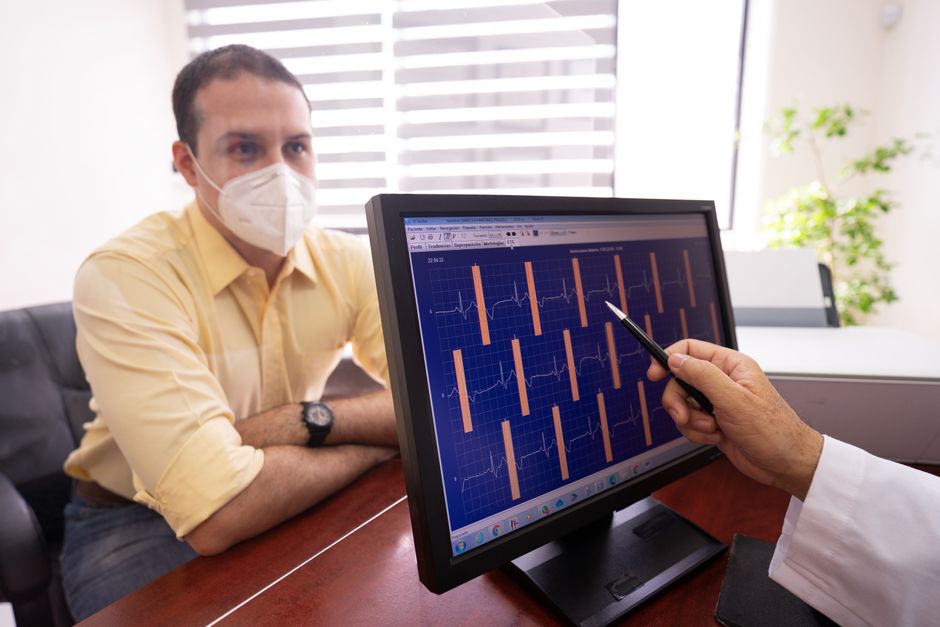
TAVI is primarily indicated for adults with severe symptomatic aortic stenosis who are at elevated surgical risk or who prefer to avoid open-chest surgery.
Candidacy centers on risk. Typical candidates are adults over 65 with calcific aortic stenosis and symptoms (chest pain, breathlessness, fainting), or patients with significant comorbidities (lung disease, kidney disease, prior cardiac surgery) that raise surgical risk.
Each must be assessed by a Heart Team, a multidisciplinary group of cardiologists and cardiac surgeons, and deemed suitable.
Candidacy is determined after thorough imaging, including CT angiography of the aortic root and access vessels, echocardiography (TTE/TOE), and coronary angiography.
Contraindications may include: - Anatomically unsuitable aortic root dimensions - Severe aortic regurgitation as the dominant lesion - Active endocarditis - Life expectancy below 1 year from non-cardiac cause
Korean cardiac centres use the same international scoring tools (STS score, EuroSCORE II) to assess risk. All major Korean TAVI programmes operate a formal Heart Team model as required by clinical guidelines.
If TAVI is not suitable, the Heart Team may recommend surgical valve replacement or, in selected very frail patients, balloon aortic valvuloplasty as a bridge.
How the Procedure Works
Before the procedure:
Patients undergo a comprehensive pre-procedure workup over 2–3 days.
- Multidetector CT (MDCT) scan of the chest, abdomen, and pelvis to measure aortic annulus dimensions and map access routes
- Transthoracic and/or transoesophageal echocardiography
- Coronary angiography to assess for coexisting coronary artery disease
- Blood tests, renal function, and coagulation studies
- Anaesthesia assessment
The procedure itself:
The most common access route is transfemoral — through the femoral artery in the groin — because it is the least invasive.
Alternative access (transapical, trans-subclavian, trans-aortic) is used when the femoral vessels are too small or calcified.
- The patient receives general anaesthesia or conscious sedation
- A sheath is inserted into the access vessel
- The delivery catheter, loaded with the compressed replacement valve (typically self-expanding or balloon-expandable), is advanced under fluoroscopic and echocardiographic guidance
- The valve is positioned across the native diseased valve and deployed
- Position and function are confirmed by imaging immediately
- The catheter and sheath are removed; the access site is closed
Korea's MFDS approved the second-generation VitaFlow Liberty® system (MicroPort CardioFlow) in December 2024, among other approved platforms. Both self-expanding and balloon-expandable valve technologies are available at major Korean centres.
Immediately after:
Patients are transferred to a cardiac intensive care unit (CICU) or high-dependency unit for monitoring overnight, then moved to a step-down ward.
Recovery Timeline
Days 1–3 (hospital):
Most patients are mobile within 24 hours of a transfemoral TAVI. Physiotherapy begins on day 1 or 2. Telemetry monitoring continues. A pacemaker is implanted during this period if heart block develops — this occurs in a minority of patients.
Days 4–8 (hospital to discharge):
Echocardiography is performed before discharge to confirm valve function. Antiplatelet therapy (typically dual antiplatelet for a period, then single agent) is initiated. Patients are counselled on activity restrictions and warning signs.
Weeks 1–2 (Korea recovery period):
International patients are advised to remain in Seoul for 7–10 days after discharge for an outpatient follow-up appointment and to confirm stability before a long-haul flight.
Light walking is encouraged. Heavy lifting, strenuous activity, and driving are restricted.
Weeks 2–6 (return home):
- Gradually return to daily activities
- Most patients report meaningful improvement in breathlessness and exercise tolerance within 2–4 weeks
- Outpatient cardiology follow-up at 1 month (can be arranged with a home cardiologist via telemedicine liaison)
3–12 months:
Echocardiographic follow-up at 3 months and 1 year to assess valve haemodynamics. Long-term anticoagulation planning is individualised — patients with atrial fibrillation may require oral anticoagulation.
TAVI valves are designed for long-term durability; durability data at 5–10 years continues to accumulate in global registries.
Cost Breakdown
Korea's TAVI costs are substantially lower than equivalent procedures in the United States, United Kingdom, or Germany, primarily because hospital facility fees and device acquisition costs are lower — not because quality is reduced.
Approximate USD cost components for an international patient:
- Valve device (prosthesis): $12,000–$20,000 — the single largest cost element; varies by device type and generation
- Procedure fee (cathlab, surgical team, anaesthesia): $8,000–$14,000
- Hospital stay (5–8 days, CICU + ward): $5,000–$10,000
- Pre-procedure workup (CT, echo, angio, bloods): $2,000–$4,000
- Post-discharge follow-up in Korea: $500–$1,000
Total estimated range: $28,000–$50,000 USD
For reference, comparable TAVI in the US commonly exceeds $80,000–$120,000 USD after facility and insurance adjustments.
What the price typically includes at Korean hospitals for international patients: - All procedure consumables and device - CICU and ward stay - Standard post-op echo before discharge - Medical coordination and interpretation services (at international patient centres)
What it typically excludes: - International travel and accommodation - Travel insurance or medical evacuation coverage - Medications on discharge - Home-country cardiology follow-up
Korean national health insurance (NHIS) covers TAVI for Korean citizens who meet clinical criteria; international self-pay patients pay a different (uninsured) rate, which is still cost-competitive globally.
| Item | Typical Cost in Korea (USD) |
|---|---|
| Valve prosthesis (device) | $12,000–$20,000 |
| Cathlab procedure + surgical team fees | $8,000–$14,000 |
| Hospital stay (CICU + ward, 5–8 days) | $5,000–$10,000 |
| Pre-procedure workup (CT, echo, angiography) | $2,000–$4,000 |
| Post-discharge Korea follow-up | $500–$1,000 |
Why Korea
Korea has established itself as Asia's leading TAVI destination through a combination of specialist volume, regulatory rigour, and accessible infrastructure.
Clinical volume and expertise:
TAVI is actively performed at approximately 20 institutions across Korea. Volume matters in structural heart intervention — higher-volume centres are associated with better procedural outcomes in global data. Korea's national TAVI Registry has tracked outcomes since the programme began in 2011, creating a strong quality-improvement feedback loop.
Regulatory standards:
All TAVI devices used in Korea must receive MFDS approval — the Korean equivalent of FDA or CE Mark clearance. Korea approved its first TAVI devices in line with international timelines and continued updating its approved device list, including second-generation systems in 2024.
MFDS standards are aligned with international GMP and clinical evidence requirements.
KHIDI and the Medical Korea brand:
KHIDI (Korea Health Industry Development Institute) manages the Medical Korea government programme, which promotes, coordinates, and quality-assures medical tourism nationally. Hospitals listed under Medical Korea meet defined service and safety standards for international patients. KHIDI also facilitates data sharing on exported medical technologies.
Seoul and Gangnam district:
Seoul concentrates the majority of Korea's tertiary cardiac centres. The Gangnam district specifically hosts several major hospital campuses with dedicated international patient departments, translators, and care coordination services — reducing the logistical burden for patients travelling from Africa, the GCC, or Southeast Asia.
Cost advantage without quality compromise:
Korea's TAVI pricing for self-pay international patients is typically 40–60% below US pricing for equivalent-generation devices. This reflects structural differences in hospital economics, not differences in device quality or clinical standards.
Short waiting times:
Unlike many public health systems in Europe or Canada, Korean private hospitals can schedule international TAVI patients within days to a few weeks of confirmed candidacy, subject to pre-procedure imaging results being available.
Key Takeaways
- TAVI is a catheter-based valve replacement — no open chest, shorter recovery than conventional surgery, and same-day ambulation after transfemoral access.
- Korea is Asia's most active TAVI country, with ~20 specialist centres, MFDS-approved devices, and a national registry tracking outcomes since 2011.
- All-in cost for international patients in Korea is approximately $28,000–$50,000 USD — substantially below equivalent pricing in the US or Germany.
- Plan for 10–14 days in Seoul to cover pre-procedure workup, the procedure itself, hospital stay, and a mandatory pre-flight follow-up echo.
Frequently Asked Questions
Am I a candidate for TAVI if I have had previous heart surgery?
Prior cardiac surgery is not an automatic disqualification. In fact, patients who have previously undergone coronary artery bypass grafting (CABG) are sometimes better served by TAVI than repeat open surgery because it avoids re-sternotomy. Candidacy depends on a full Heart Team assessment including CT imaging of your anatomy.
How long does the TAVI procedure itself take?
The procedure typically takes between 1.5 and 3 hours, including preparation, valve deployment, and imaging confirmation. Straightforward transfemoral cases at experienced centres are often completed in under 2 hours. The patient is in hospital for 5–8 days in total.
What are the main risks of TAVI?
The most clinically important risks are: stroke (including disabling stroke), new permanent pacemaker requirement (due to heart block), vascular access site complications, paravalvular leak (incomplete sealing around the new valve), and acute kidney injury. Experienced high-volume centres and careful patient selection reduce these risks. Your Heart Team will discuss your individual risk profile before any decision is made.
Can I fly home after TAVI and how soon?
Most centres recommend waiting at least 7–10 days after hospital discharge before a long-haul flight. This allows a follow-up echocardiogram to confirm valve function and gives time to identify any delayed complications such as pacemaker issues or access-site problems. Your Korean coordinator will arrange the pre-flight clearance appointment.
How durable is a TAVI valve — will I need another procedure?
TAVI valve durability is an active area of research. Data from the longest-followed patient cohorts (up to 10 years) shows acceptable haemodynamic durability in most patients. For older patients, a TAVI valve often lasts the remainder of their natural lifespan. For younger patients, the Heart Team will discuss the likelihood of future valve-in-valve procedures and plan accordingly.
Does Korea's national health insurance cover TAVI for international patients?
No. Korea's National Health Insurance Service (NHIS) covers TAVI for qualifying Korean citizens. International self-pay patients are billed at uninsured hospital rates. These rates are still significantly lower than comparable self-pay or out-of-network pricing in most Western countries. Always request a formal written cost estimate from the international patient centre before confirming your procedure date.
Related Topics
Sources
- Costs Associated with TAVI and SAVR in Korea — PMC / Journal of Chest Surgery
- Trends and Outcomes of TAVI in Korea: Korean TAVI Registry — PMC
- Aortic Stenosis and TAVI: Current Status and Future Directions in Korea — PMC
- Medical Korea — Heart Procedures (medicalkorea.or.kr)
- Medical tourism in South Korea — Wikipedia
Ready to Begin Your Journey?
Get matched with KAHF-accredited hospitals and receive a personalized treatment plan.
Quick Facts
Typical Cost
$30000 - $60000
Duration
5 days
Accredited Hospitals
0+ Available
Top Hospitals
Medical Information Disclaimer
The information provided on this page about TAVI Procedure is for general educational and informational purposes only. It is not intended as, and should not be construed as, medical advice, diagnosis, or treatment recommendations.
Always seek the advice of a qualified healthcare professional regarding any medical condition or treatment. Never disregard professional medical advice or delay seeking it because of information found on this website. Individual treatment outcomes may vary. Costs shown are estimates and may differ based on individual circumstances.
KmedTour acts as a medical tourism facilitator and does not provide direct medical services. All treatments are performed by independently accredited healthcare providers in South Korea.