Orthopedic$18000 - $40000⭐ KAHF Accredited Hospitals
Spinal Fusion in Korea
Surgery that permanently joins two or more vertebrae to eliminate painful motion and stabilise the spine.
Quick Answer
- Spinal fusion permanently connects two or more vertebrae using bone graft and fixation hardware — rods, screws, or cages — eliminating the painful movement between them while maintaining overall spinal function above and below.
- Best candidates are adults with degenerative disc disease, spondylolisthesis, spinal stenosis causing nerve compression, or spinal instability that has not responded to extended conservative treatment including physiotherapy and injections.
- Korea stay is 7–14 days: patients typically stand and begin walking within days of surgery; hospital stay is usually 5–7 nights, with supervised physiotherapy continuing before departure.
- Typical cost in Korea: $18,000–$40,000 USD, depending on the number of levels fused, the surgical approach, and implant selection.
At a Glance
| Procedure time | 2–5 hours (varies with levels fused) |
|---|---|
| Anesthesia | General |
| Hospital stay | 5–7 days |
| Recommended stay in Korea | 7–14 days |
| Recovery | Walking within days; return to sedentary work over weeks; full fusion solidifies over months |
| Typical cost in Korea | $18,000–$40,000 USD |
Overview
Spinal fusion permanently connects two or more vertebrae, eliminating the painful motion between them while preserving function in the rest of the spine.
Patients from Africa, the Middle East, and Southeast Asia choose Korea for spinal surgery because accredited hospitals combine experienced spine teams, modern implant systems, and intraoperative neuromonitoring within coordinated care pathways.
Between each vertebra sits an intervertebral disc — a cushion that absorbs load and allows movement. When discs degenerate, collapse, or shift out of position, they can cause:
- Axial pain — deep aching in the back or neck
- Radiculopathy — shooting pain, numbness, or weakness down an arm or leg from nerve compression
- Myelopathy — spinal cord compression causing weakness or coordination problems
Fusion works by joining the painful motion segment so that load is shared across solid bone rather than through a diseased disc or unstable joint.
Bone graft — from the patient's own body, a donor, or a synthetic source — fills the space and gradually turns into solid bone over months.
Modern approaches include TLIF (transforaminal), PLIF (posterior), ALIF (anterior), and XLIF/LLIF (lateral) — the right technique depends on the level and cause of your problem.
KmedTour coordinates pre-arrival imaging review, interpreter support, and a written physiotherapy handover plan.
Am I a Candidate?
You may be a candidate for spinal fusion if you have a confirmed spinal condition causing persistent symptoms not resolved by conservative care:
- Degenerative disc disease with confirmed disc collapse and axial pain
- Spondylolisthesis (vertebral slippage) causing instability or nerve compression
- Spinal stenosis with leg symptoms (claudication, weakness, numbness) not controlled by injections
- Disc herniation with persistent nerve symptoms after adequate conservative management
- Spinal instability from prior surgery, trauma, or tumour
Conservative care that should typically be tried first:
Physiotherapy, structured pain management, and image-guided injections over an adequate period. Fusion is not first-line treatment for back pain without clear structural cause.
Before approving surgery, the team reviews:
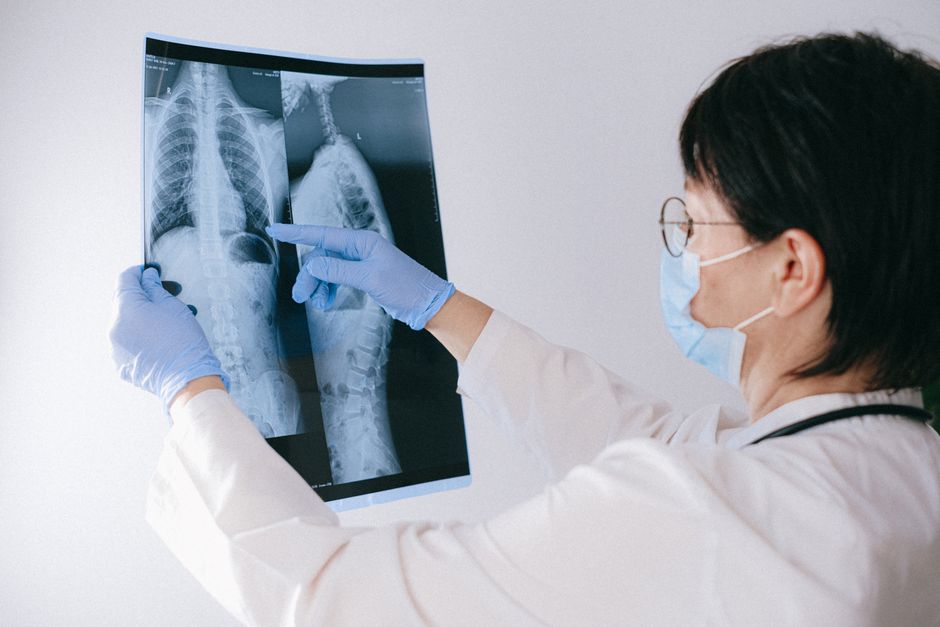
- MRI (and CT where needed) confirming the structural problem at the intended level
- Cardiovascular fitness for general anaesthesia
- Diabetes control and smoking history (smoking significantly impairs fusion and is a contraindication at many centres)
- Bone density (osteoporosis affects implant fixation)
- Active infection
A pre-travel video consultation with your recent imaging allows the spine surgeon to assess your case, discuss the approach, and confirm suitability before you book.
How the Procedure Works
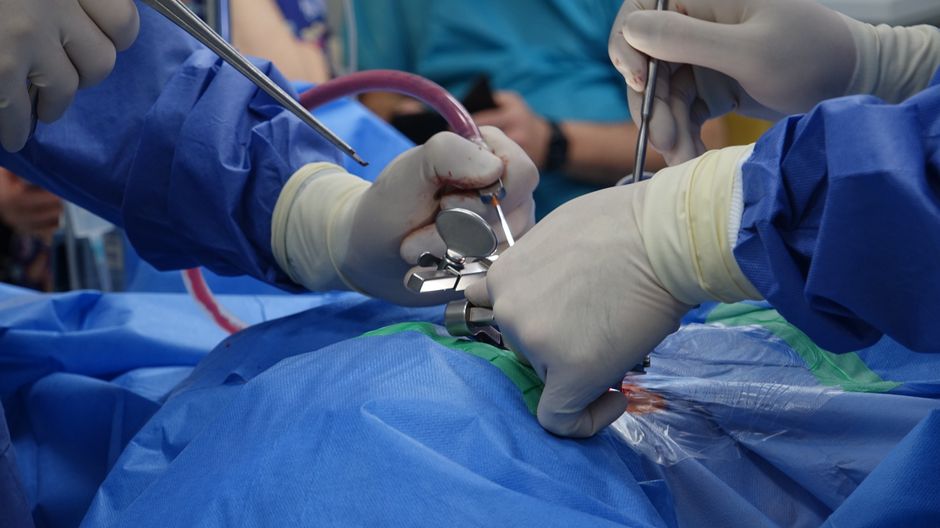
Spinal fusion is performed under general anaesthesia. Procedure length varies from about two hours for a single-level fusion to five or more hours for multi-level or revision cases.
Approach selection: The surgeon chooses the approach based on the location and nature of your problem:
- Posterior (PLIF/TLIF): approach from the back; most common for lumbar fusion
- Anterior (ALIF): approach from the front of the abdomen; allows a larger disc space cage
- Lateral (XLIF/LLIF): approach from the side through a small flank incision; less blood loss for certain cases
Decompression: If nerve compression is present, the surgeon removes the offending material — disc fragment, bone spur, or thickened ligament — first, to relieve nerve pressure.
Implant placement: A cage (titanium or PEEK) filled with bone graft is placed in the prepared disc space to restore height and alignment. Pedicle screws and connecting rods fix the segment above and below the fusion level.
Bone grafting: Bone graft provides the biological scaffold for fusion. Options include:
- Autograft from the patient's own iliac crest or local bone
- Allograft (donor bone)
- Synthetic bone substitute
Intraoperative neuromonitoring (IONM) continuously checks nerve function throughout the procedure.
The incision is closed and a drain may be placed briefly. Early mobilisation typically begins the next day.
Recovery Timeline
Recovery begins within 24 hours of surgery and continues for many months as the bone fusion solidifies. The Korea stay supports the critical early phase.
Day 1 (in hospital):
- Most patients stand and take first steps with physiotherapist support within 24 hours
- Pain is managed with intravenous and oral medication
- A brace may be prescribed — wear guidance is surgeon-specific
Days 2–7 (inpatient):
- Progressive walking, stair practice, and safe movement education
- Drain removed (if placed) within 2 days
- Wound monitoring and swelling management
Days 7–14 (pre-departure):
- Continued physiotherapy focused on safe movement, gentle core activation, and walking endurance
- Surgeon confirms wound status and clears long-haul flight
- KmedTour provides a written rehabilitation plan, operative summary, and implant details for your home team
Months 1–3 and beyond (at home):
- Avoid heavy lifting, bending, and twisting in the early months — your surgeon specifies exact restrictions
- Bone fusion solidifies gradually over several months; imaging at follow-up confirms progress
- Return to sedentary work: typically several weeks; manual or physical work: longer, surgeon-guided
- Smoking must be avoided completely — it is one of the most consistent predictors of fusion failure
Arrange a local spinal or orthopaedic review after returning. Report new weakness, numbness, bladder or bowel changes, fever, or wound problems promptly.
Cost Breakdown
The estimated cost for spinal fusion through KmedTour ranges from $18,000 to $40,000 USD. Where you fall in this range depends primarily on:
- Number of levels fused (single-level vs multi-level)
- Surgical approach (posterior, anterior, or combined)
- Implant selection: cage material, pedicle screw system, bone graft type
- Whether a decompression procedure is performed at the same time
- Hospital stay length
What the quoted price generally covers:
- Surgeon, assistant, and anaesthesia fees
- Operating room, implants, and intraoperative neuromonitoring
- Inpatient hospital stay (typically 5–7 nights)
- Standard medications, blood transfusion if needed, drain management
- Inpatient physiotherapy during admission
- Pre-operative imaging review and tests on arrival
What is typically not included:
- International flights and visa fees
- Accommodation before and after the hospital stay
- Post-discharge brace cost
- Extended rehabilitation and follow-up at home
KmedTour provides a written, itemised quotation after the surgeon reviews your imaging.
| Item | Typical Cost in Korea (USD) |
|---|---|
| Single-level lumbar fusion (TLIF or PLIF) | $18,000–$26,000 |
| Two-level lumbar fusion | $24,000–$34,000 |
| Three or more levels / complex reconstruction | $32,000–$40,000+ |
| Cervical fusion (1–2 levels, ACDF) | $18,000–$28,000 |
| Hospital stay (5–7 nights, standard room) | Typically included in package |
Why Korea
Korea is an established destination for complex spinal surgery, with hospitals accredited under national and international standards and regulated by the Ministry of Health and Welfare.
Accreditation and oversight:
- KOIHA (Korean Organisation for International Healthcare Accreditation) sets quality and safety benchmarks for hospitals treating international patients
- KHIDI's Medical Korea programme supports foreign patient access to accredited facilities
- These frameworks reflect country-level governance, not just individual hospital reputation
Clinical approach: Accredited Korean hospitals offer a range of fusion techniques including minimally invasive approaches that reduce muscle damage and aim to shorten inpatient stay. Intraoperative neuromonitoring is standard at major centres. Physiotherapy is integrated into the care pathway from the first day after surgery.
International patient infrastructure: Dedicated international patient departments at accredited hospitals provide interpreter services, structured discharge planning, and coordination with the patient's home medical team.
KmedTour adds pre-arrival imaging review, hospital matching, and a written rehabilitation handover for your home physiotherapist — so care planned in Korea continues after you return.
Key Takeaways
- Spinal fusion permanently joins painful motion segments using bone graft and fixation hardware; the surgical approach — posterior, anterior, or lateral — is selected based on your specific condition and imaging.
- Bone fusion solidifies over months: early restrictions on bending, lifting, and twisting protect the implants while the graft matures — and smoking must be stopped completely, as it is a leading cause of fusion failure.
- Korean hospitals accredited under KOIHA combine experienced spine teams, intraoperative neuromonitoring, minimally invasive options, and integrated physiotherapy within international-patient care pathways.
- Costs range from $18,000 to $40,000 USD depending on levels fused, approach, and implants; an itemised quote is provided after the surgeon reviews your imaging.
Frequently Asked Questions
How long does it take for a spinal fusion to fully heal?
Bone fusion is a gradual biological process. The implants provide immediate mechanical stability, but the bone graft takes many months to fully solidify into mature bone — a process confirmed by follow-up imaging. Early restrictions on bending, twisting, and lifting protect the hardware while the graft matures. Your surgeon will specify activity restrictions and follow-up imaging timelines based on the number of levels fused and the bone graft used.
Will fusion cause problems in the vertebrae above and below?
Adjacent segment disease, accelerated wear at the levels next to a fusion, is a recognised long-term consideration. It happens because fused segments transfer more load to neighbouring discs. Risk is higher with multi-level fusions and in patients who already have degeneration at adjacent levels. The surgeon fuses the minimum number of levels needed, and post-operative physiotherapy strengthens surrounding muscles to distribute load. Most patients with adjacent segment changes are managed without further surgery.
Can I fly long-haul after spinal fusion?
Flying is generally possible several days after surgery once the immediate post-operative phase has passed, early mobilisation is established, and the surgeon has confirmed wound integrity. Long-haul flights after any spinal surgery carry some risk of blood clots; you will receive guidance on compression stockings, staying hydrated, and gentle movement during the flight. Confirm flying clearance with your surgeon before booking your return ticket.
What happens if smoking is not stopped before or after surgery?
Smoking significantly impairs bone healing by reducing blood flow to the graft site and disrupting the cells that form new bone. In spinal fusion, it is one of the most consistent predictors of failed fusion (pseudoarthrosis), where the graft never solidifies into bone. Many accredited Korean centers require documented smoking cessation before offering elective fusion. If you smoke, stopping, ideally several weeks or more before surgery, is one of the most important things you can do to protect the outcome.
What rehabilitation happens after I return home?
Before leaving Korea, KmedTour provides a written, staged rehabilitation plan alongside your operative summary, implant details, and activity restrictions. The plan covers early mobilisation, safe posture and movement, gradual core strengthening, and return-to-work guidance — structured so a physiotherapist in your home country can continue without gaps. Arrange a local spinal or orthopaedic review as soon as possible after returning. Report any new weakness, numbness, bladder or bowel changes, fever, or wound discharge immediately.
Related Topics
Ready to Begin Your Journey?
Get matched with KAHF-accredited hospitals and receive a personalized treatment plan.
Quick Facts
Typical Cost
$18000 - $40000
Duration
14 days
Accredited Hospitals
6+ Available
Top Hospitals
Busan Adventist Hospital
Busan
View Details →
Busan ST. Mary's Hospital
Busan
View Details →
Donghoon Advanced Lengthening Reconstruction Institute
Gyeonggi-do
View Details →
Cheonan Chungmu Hospital
Chungcheongnam-do
View Details →
Design Hospital
Jeollabuk-do
View Details →
Available Cities
Medical Information Disclaimer
The information provided on this page about Spinal Fusion is for general educational and informational purposes only. It is not intended as, and should not be construed as, medical advice, diagnosis, or treatment recommendations.
Always seek the advice of a qualified healthcare professional regarding any medical condition or treatment. Never disregard professional medical advice or delay seeking it because of information found on this website. Individual treatment outcomes may vary. Costs shown are estimates and may differ based on individual circumstances.
KmedTour acts as a medical tourism facilitator and does not provide direct medical services. All treatments are performed by independently accredited healthcare providers in South Korea.