Cancer$2000 - $5000⭐ KAHF Accredited Hospitals
Sentinel Lymph Node Biopsy in Korea
Minimally invasive cancer-staging procedure mapping the first lymph nodes a tumor drains to, widely performed in South Korea.
Quick Answer
- Sentinel lymph node biopsy (SLNB) identifies the first lymph nodes that drain a primary tumor, letting surgeons determine whether cancer has spread without removing the entire lymph node basin.
- In South Korea standalone SLNB typically costs $2,000–$5,000 USD, or $5,000–$14,000 when bundled with breast-cancer surgery — substantially less than comparable Western pricing.
- Most patients are discharged same-day or after one overnight stay; full recovery to normal activities takes roughly 1–2 weeks.
- Korea's oncology centres use dual-tracer technique (radioisotope Tc-99m + blue dye, or indocyanine green fluorescence) for the highest sentinel node detection rates.
At a Glance
| Procedure time | 45–90 minutes |
|---|---|
| Anesthesia | General or local with IV sedation |
| Hospital stay | Same-day or 1 night |
| Recommended stay in Korea | 5–7 days (results, follow-up consultation) |
| Recovery | Light activity in 3–5 days; full recovery in 1–2 weeks |
| Typical cost in Korea | $2,000–$5,000 USD (standalone); $5,000–$14,000 when bundled with cancer surgery |
Overview
Sentinel lymph node biopsy is a surgical staging procedure that locates the sentinel nodes — the first lymph nodes to receive drainage from a cancerous tumour — and removes them for pathological examination.
If the sentinel nodes are cancer-free, the surgeon can confidently spare the wider lymph node chain, reducing the risk of long-term side effects such as lymphoedema. If cancer cells are found, the extent of spread guides the next treatment decision.
The procedure is most commonly performed in breast cancer and melanoma staging, but is also used in endometrial, thyroid, colon, and head-and-neck cancers. In South Korea, major oncology centres have integrated SLNB as a standard component of their cancer-management pathways.
Korea's medical tourism regulator, KHIDI (Korea Health Industry Development Institute), oversees quality certification for hospitals treating international patients, and clinics authorised to accept foreign patients must hold a Ministry of Health and Welfare certificate. Patients can verify a hospital's status through the official Medical Korea portal.
Request final pathology in writing before you fly home
Final paraffin-section pathology results typically take 3–5 business days. Plan your Korea stay to include your results consultation — the pathology report drives the next treatment decision and your oncologist at home will need the official document.
Am I a Candidate?
You may be a suitable candidate for SLNB if you have:
- A confirmed or suspected solid tumour with a clinically negative lymph node basin (no palpable or imaging-confirmed nodal involvement)
- Early-stage breast cancer (stage I–II) where axillary status needs to be determined
- Cutaneous melanoma requiring nodal staging before deciding on completion lymph node dissection
- Endometrial, cervical, or head-and-neck cancer where surgeons plan sentinel mapping as part of a curative resection
- Adequate general health to tolerate short-duration surgery under general or IV-sedation anaesthesia
Some patients are not ideal candidates, including those with:
- Clinically positive lymph nodes confirmed on imaging or prior biopsy
- Prior surgery or radiation to the lymph node basin that may disrupt normal drainage pathways
- Known allergy to blue dye agents (isosulfan blue or patent blue V) — ICG fluorescence is used as an alternative in such cases
- Certain neoadjuvant chemotherapy scenarios (although SLNB after neoadjuvant therapy is increasingly performed in selected patients at Korean academic centres)
The treating surgeon reviews imaging, pathology, and comorbidities to confirm suitability.
How the Procedure Works
Pre-operative mapping (lymphoscintigraphy)
Several hours before surgery, a small amount of radioactive tracer — typically technetium-99m (Tc-99m) colloid — is injected around the tumour or the nipple-areolar complex. A gamma camera creates a map showing which lymph node basin the tracer drains to. This image guides the surgical team.
Tracer injection in the operating suite
Immediately before or during the procedure, the surgeon injects a visual tracer — blue dye (isosulfan blue or methylene blue) or indocyanine green (ICG) fluorescent dye — into the same site. Korean academic centres widely employ the dual-tracer approach (radioisotope + ICG or blue dye) for higher detection accuracy.
Intraoperative node identification
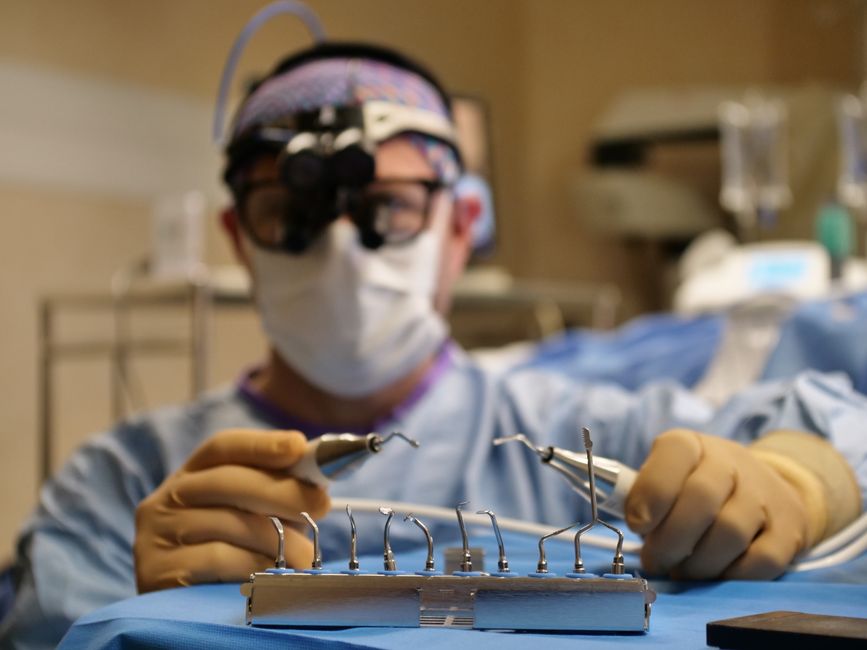
Using a handheld gamma probe to detect radioactivity and visual inspection for blue or fluorescent-green staining, the surgeon locates the sentinel node or nodes through a small incision (typically 2–4 cm) over the nodal basin. Any node that is radioactive, visually stained, or both is excised.
Intraoperative pathology (frozen section)
Many Korean oncology centres offer same-session frozen-section analysis. If the pathologist confirms cancer in the sentinel node during the operation, the surgeon may proceed immediately to axillary lymph node dissection, avoiding a second operation.
Wound closure
The incision is closed with absorbable sutures and a dressing applied. The procedure is complete. The blue dye may temporarily discolour urine and skin at the injection site — this resolves within 24–48 hours.
Recovery Timeline
Day of surgery Most patients recover in the post-anaesthesia care unit for 1–2 hours and are discharged the same day. Those who had SLNB as part of a larger cancer resection stay one night.
Days 1–3 are mild. Soreness and bruising at the incision site are normal, and gentle arm movement is encouraged to prevent stiffness.
Showering is usually permitted within 24–48 hours (avoid submerging the wound), the blue dye tint on skin fades over several days, and urine may look greenish or blue temporarily.
Days 4–7 - Most patients return to light daily activities - Driving is permitted once pain is controlled and range of motion is adequate (typically day 3–5) - Follow-up consultation to review final pathology results — this is the key appointment for international patients staying in Korea
Weeks 2–4 finish healing. The incision heals fully, with sutures dissolving or removed around day 7–10, while strenuous exercise and heavy lifting (over 5 kg) stay deferred until the surgeon clears them.
If pathology is negative, no further lymph node surgery is required, a quality-of-life advantage over routine lymph node dissection.
Longer-term monitoring - Lymphoedema risk is substantially lower after SLNB than after full axillary dissection - Numbness or tingling near the incision can persist for several weeks as local nerves regenerate
Cost Breakdown
South Korea's oncology pricing is significantly lower than equivalent care in the United States, United Kingdom, or Australia, even after accounting for travel and accommodation.
As a standalone procedure, SLNB in Korea is estimated in the $2,000–$5,000 USD range depending on the hospital tier, tracer method used, and whether intraoperative frozen section is included.
When SLNB is performed as part of breast cancer surgery, published medical-tourism aggregator data places total breast-cancer surgery packages (including SLNB) at $5,000–$14,000 USD at Korean hospitals — compared with $20,000–$50,000+ in the United States for comparable oncological care.
What typically drives cost variation in Korea:
- Hospital tier — university-affiliated academic hospitals may charge more than specialist private oncology clinics
- Tracer technology — ICG fluorescence systems add marginal cost over blue-dye-only approaches; dual-tracer (Tc-99m + ICG) is highest
- Frozen section analysis — same-day intraoperative pathology adds cost but may prevent a second surgery
- Package inclusions — pre-op imaging (ultrasound, MRI), anaesthesiology fees, recovery room, and pathology may or may not be bundled
- Interpretation and case-management services — KHIDI-registered medical tourism facilitators often add coordination fees (typically $200–$500)
Patients should request an itemised estimate covering surgeon fee, anaesthesia, hospital facility, pathology lab, and post-op consultation before confirming travel.
| Item | Typical Cost in Korea (USD) |
|---|---|
| SLNB (standalone, blue dye or ICG) | $2,000–$3,500 |
| SLNB with dual-tracer (Tc-99m + ICG/blue dye) | $3,000–$5,000 |
| SLNB bundled with breast-conserving surgery | $5,000–$9,000 |
| SLNB bundled with mastectomy | $8,000–$14,000 |
| Intraoperative frozen-section pathology (add-on) | $300–$700 |
Why Korea
South Korea is an established destination for oncological procedures, and SLNB specifically benefits from the country's investment in advanced surgical oncology infrastructure.
Regulatory credibility Hospitals authorised to treat international patients must meet standards set by the Ministry of Health and Welfare and can be verified through Medical Korea (medicalkorea.or.kr) and KHIDI (khidi.or.kr).
Korea's Ministry of Food and Drug Safety (MFDS) regulates the radiopharmaceuticals and dyes used in SLNB, ensuring tracer quality and safety.
Seoul and Gangnam as hubs Approximately 85% of international patients receive treatment in Seoul, with Gangnam-gu and Seocho-gu concentrating many of the country's largest oncology programmes. Geographic concentration means pathology labs, imaging centres, and surgical teams are co-located, reducing waiting time between steps.
In 2024, Seoul welcomed over 1.17 million international medical visitors from 202 countries.
Dual-tracer technique and ICG adoption Peer-reviewed research published from Korean institutions documents prospective use of ICG fluorescence combined with blue dye for SLNB in breast cancer, melanoma, and gynaecological cancers. This multi-modal approach improves sentinel-node detection rates and reduces false negatives.
Melanoma and acral melanoma expertise Korea has documented single-centre experience with SLNB for acral lentiginous melanoma — the subtype most prevalent in Asian populations and often under-served in Western centres. Korean surgical teams have developed specific protocols for this presentation.
Cost advantage with no compromise on accreditation Korea's KOIHA (Korean Institute for Healthcare Accreditation) runs a hospital accreditation scheme aligned with international standards.
Packages for cancer surgery including SLNB have been reported in the $5,000–$14,000 USD range — a fraction of comparable US pricing — without patients needing to forgo pathology quality or surgical subspecialisation.
Key Takeaways
- SLNB is the gold-standard minimally invasive method for determining whether cancer has reached the lymphatic system, sparing patients a full lymph node dissection when results are negative.
- Korean oncology centres use dual-tracer and ICG fluorescence techniques aligned with current international evidence, with regulatory oversight from MFDS and KHIDI.
- All-in costs in South Korea — including hospital, anaesthesia, and pathology — are typically 60–80% lower than equivalent US pricing, with most patients discharged the same day.
- Plan a minimum 5–7 days in Korea: you need time for pre-op assessment, the procedure, and a pathology results consultation before travelling home.
Frequently Asked Questions
Is sentinel lymph node biopsy painful?
The procedure itself is performed under general anaesthesia or IV sedation, so patients feel nothing during surgery. The tracer injection given a few hours beforehand (during lymphoscintigraphy) can cause a brief stinging sensation. Post-operatively, most patients describe the incision site as mildly sore for 3–5 days, manageable with over-the-counter pain relief.
How long do I need to stay in South Korea after the procedure?
A minimum of 5–7 days is strongly recommended. Final pathology results from the sentinel node take 3–5 business days. You need to attend a results consultation with your surgeon before departing — the outcome directly determines whether additional treatment or surgery is needed, and your home oncologist will require the official pathology report.
What is the difference between SLNB and a full axillary lymph node dissection?
SLNB removes only 1–3 sentinel nodes for examination and is minimally invasive with a short recovery. Full axillary lymph node dissection removes a larger cluster of nodes and carries higher risks of lymphoedema, nerve injury, and restricted arm movement. SLNB is used first; dissection is only performed if sentinel nodes contain cancer cells.
Does the radioactive tracer used in SLNB pose a health risk?
The dose of technetium-99m used in lymphoscintigraphy is very small and has a short half-life of approximately 6 hours. It is considered safe and is excreted primarily through urine within 24–48 hours. Korean hospitals follow MFDS-regulated protocols for radiopharmaceutical handling. Patients who prefer to avoid radioisotopes can ask about ICG fluorescence-only mapping, which is available at many Seoul oncology centres.
Can SLNB be performed after neoadjuvant chemotherapy?
This is an evolving clinical area. SLNB after neoadjuvant chemotherapy is increasingly performed at selected Korean academic oncology centres for patients who were initially node-negative or who converted to node-negative status after treatment. The decision requires careful pre-operative imaging review and is made case-by-case with the treating surgical oncologist.
How do I verify that a Korean hospital is authorised to treat international patients?
Check the official Medical Korea portal (medicalkorea.or.kr) maintained by KHIDI. Authorised facilities hold a certificate from Korea's Ministry of Health and Welfare confirming they meet standards for international patient care, including medical interpretation, case coordination, and post-discharge support.
Related Topics
Sources
- NCI: Sentinel Lymph Node Biopsy Fact Sheet
- PMC: Comparison of SLNB by Blue Dye with ICG or Radioisotope in Early Breast Cancer
- PubMed: Sentinel lymph node biopsy in acral melanoma — Korean single-centre experience
- PubMed: Feasibility of SLNB with multidisciplinary team in Korean cutaneous malignant melanoma
- Medical Korea — Official Portal for International Patients
- Seoul Metropolitan Government: 1M International Medical Tourists in 2024
Ready to Begin Your Journey?
Get matched with KAHF-accredited hospitals and receive a personalized treatment plan.
Quick Facts
Typical Cost
$2000 - $5000
Duration
1 days
Accredited Hospitals
0+ Available
Top Hospitals
Medical Information Disclaimer
The information provided on this page about Sentinel Lymph Node Biopsy is for general educational and informational purposes only. It is not intended as, and should not be construed as, medical advice, diagnosis, or treatment recommendations.
Always seek the advice of a qualified healthcare professional regarding any medical condition or treatment. Never disregard professional medical advice or delay seeking it because of information found on this website. Individual treatment outcomes may vary. Costs shown are estimates and may differ based on individual circumstances.
KmedTour acts as a medical tourism facilitator and does not provide direct medical services. All treatments are performed by independently accredited healthcare providers in South Korea.