Cancer$8000 - $15000⭐ KAHF Accredited Hospitals
Robotic Thyroidectomy in Korea
Scarless thyroid removal via robotic BABA or transaxillary approach — Korea's specialty since the early 2000s.
Quick Answer
- Korea pioneered robotic thyroidectomy using BABA (bilateral axillo-breast approach) and gasless transaxillary techniques — no visible neck scar.
- Procedure typically takes 2–3.5 hours; hospital stay is 2–5 days.
- Estimated cost in Korea for international patients: $8,000–$18,000 USD depending on extent of surgery.
- Seoul and Gangnam-area tertiary centers perform high annual volumes, supported by MFDS-approved da Vinci robotic systems.
At a Glance
| Procedure time | 120–210 minutes (lobectomy to total thyroidectomy) |
|---|---|
| Anesthesia | General anesthesia |
| Hospital stay | 2–5 days |
| Recommended stay in Korea | 10–14 days (including post-op check and pathology review) |
| Recovery | Light activity in 1–2 weeks; full return to work in 2–4 weeks |
| Typical cost in Korea | ~$8,000–$18,000 USD (varies by approach, extent, and facility) |
Overview
Robotic thyroidectomy is a minimally invasive surgical technique that removes part or all of the thyroid gland without making an incision in the neck.
Instead, surgeons operate through small cuts hidden in the armpits, breast folds, or oral cavity, guided by a robotic system that provides 3D magnification and wristed instrument control.
South Korean surgeons were among the earliest to refine and publish on remote-access robotic thyroid approaches. The two most established techniques practiced in Korea are the gasless transaxillary approach and the bilateral axillo-breast approach (BABA).
A newer transoral robotic thyroidectomy (TORT) route is also performed at select centers, leaving absolutely no external scar.
The da Vinci robotic platform — approved by Korea's Ministry of Food and Drug Safety (MFDS) — allows surgeons to work in the confined space of the neck and thyroid bed with far greater dexterity than standard endoscopic instruments.
This translates into precise dissection around delicate structures such as the recurrent laryngeal nerves and parathyroid glands.
Robotic thyroidectomy is particularly popular among younger patients and professionals for whom cosmetic outcome matters, and Korea has become one of the world's highest-volume destinations for this procedure.
Confirm what 'scarless' means for your approach
All three remote-access techniques (transaxillary, BABA, transoral) avoid a neck incision, but the location and size of access incisions differ. Ask your coordinator to clarify which approach your surgeon recommends for your specific anatomy and diagnosis before arrival.

Am I a Candidate?
Not everyone with a thyroid condition is a suitable candidate for robotic removal. Surgeons in Korea evaluate each patient through pre-operative imaging and endocrinology consultation.
Typical candidates include:
- Patients with differentiated thyroid cancer (papillary or follicular) confined to the thyroid or with limited lymph node involvement
- Those with benign thyroid nodules causing compression symptoms or cosmetic concern
- Individuals with Graves' disease or toxic adenoma who have not responded to medication
- Patients who strongly prefer no visible neck scar and meet anatomical criteria
Factors that may make robotic approach less suitable:
- Large thyroid goiter extending behind the sternum
- Prior neck surgery with significant scarring
- Locally advanced cancer requiring extensive neck dissection
- Severe obesity limiting working space
- Significant prior axillary surgery (for transaxillary approach)
A thorough pre-operative workup — including ultrasound, fine-needle aspiration biopsy where indicated, laryngoscopy to confirm vocal cord function, and thyroid function panels — is standard at Korean centers before any surgical approach is confirmed.
How the Procedure Works
The robotic thyroidectomy procedure in Korea follows a structured sequence, regardless of which remote-access route is chosen.
Pre-operative preparation
Patients receive general anesthesia. Continuous neuromonitoring of the recurrent laryngeal nerve is established before any dissection begins.
Port placement and flap creation
For the gasless transaxillary approach, a single 5–6 cm incision is made in the axilla (armpit). A subcutaneous working space — called a "flap" — is created using a retractor system, without CO₂ gas insufflation. For BABA, two small axillary and two inframammary incisions are used.
Robotic docking
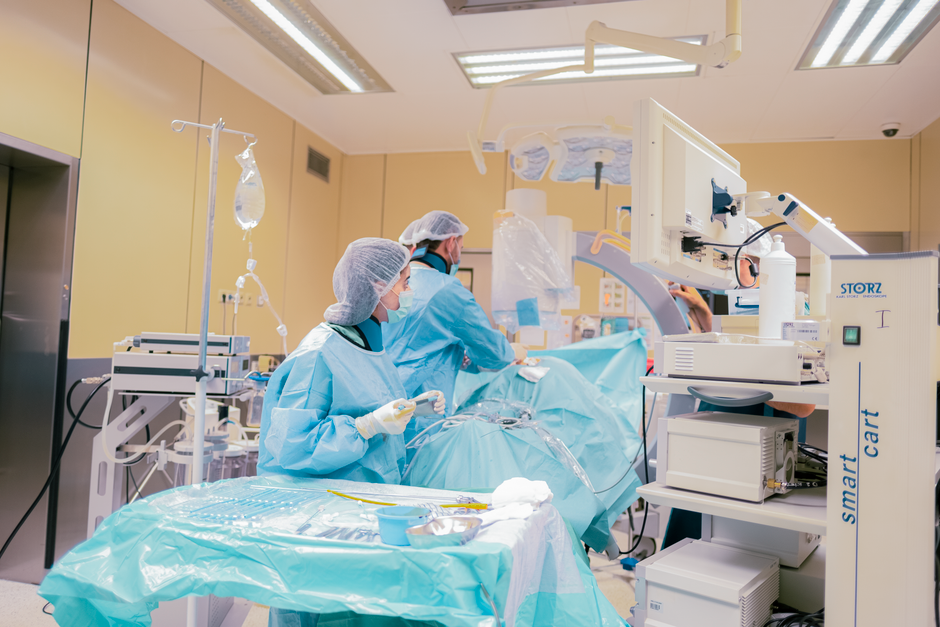
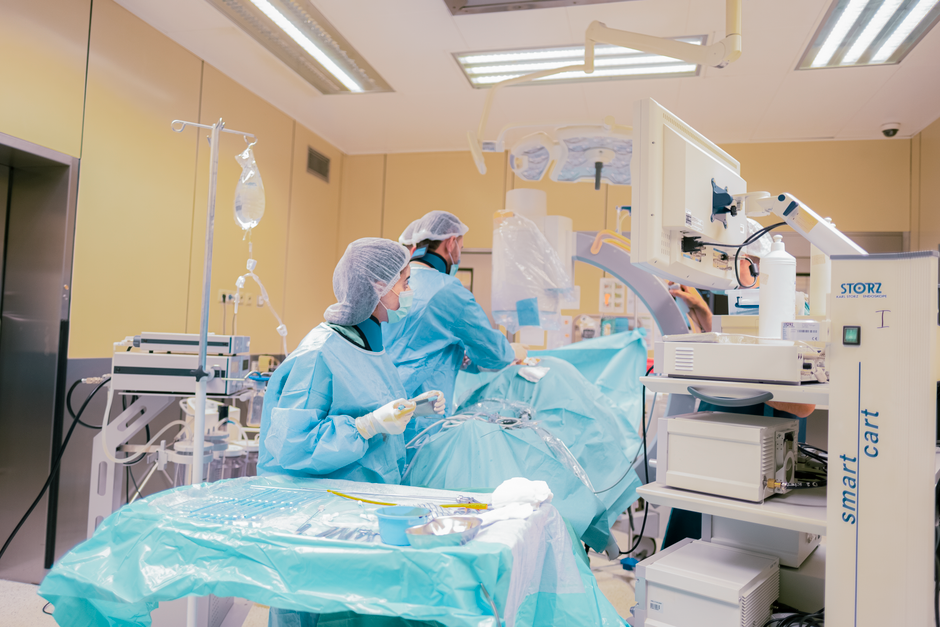
The da Vinci system is docked over the patient. The robotic arms are introduced through the ports. The surgeon operates from a console, viewing a magnified 3D image of the operative field.
Thyroid dissection
The isthmus and relevant thyroid lobe are identified. Surgeons carefully dissect around the parathyroid glands (to preserve calcium regulation) and both recurrent laryngeal nerves under continuous electromyographic monitoring.
Specimen removal and closure
The lobe or entire gland is removed through the access port. A drain may be placed. The incision is closed in layers, leaving no neck wound.
Recovery Timeline
Recovery from robotic thyroidectomy in Korea follows a predictable progression, and most international patients can plan their itinerary around these phases.
Days 1–2 (in hospital)
- Pain is generally mild to moderate; oral analgesia is typically sufficient
- Calcium levels are monitored if total thyroidectomy was performed
- Drain (if placed) is checked and usually removed within 24–48 hours
- Voice assessment performed; hoarseness, if present, is usually transient
Days 3–5 (discharge and local rest)
- Most patients discharge by day 3–5
- Arm or chest soreness on the access side is common and resolves over 1–2 weeks
- Soft diet recommended initially; normal diet resumable within a few days
- Light walking encouraged; no lifting
Week 1–2 (recovery hotel or serviced apartment in Korea)
- Pathology results reviewed at follow-up consultation (usually day 7–10 post-op)
- If cancer confirmed, further treatment planning (radioactive iodine, TSH suppression therapy) is discussed
- Numbness or altered sensation in the anterior chest wall may persist for several weeks — this is a known effect of flap creation
Week 3–4 onward (home country)
- Most patients return to desk work within 2–4 weeks
- Physical labor or heavy exercise typically cleared at 4–6 weeks
- Thyroid hormone replacement (levothyroxine) initiated if indicated and continued lifelong after total thyroidectomy
Cost Breakdown
Robotic thyroidectomy in Korea costs considerably less than equivalent procedures in the United States or Western Europe, while being performed at comparable or higher case volumes in accredited facilities.
For international (self-pay) patients, the all-in surgical cost — covering operating room, robotic system use, anesthesia, consumables, and hospital stay — generally falls in the $8,000–$18,000 USD range. Variation depends on:
- Extent of surgery: Lobectomy (one lobe) is at the lower end; total thyroidectomy with lymph node dissection is at the higher end
- Approach chosen: Transoral (TORT) may carry a premium over transaxillary or BABA at some centers
- Facility tier: Major university hospitals in Gangnam or central Seoul tend to have higher base fees than regional centers, offset by higher volume experience
Costs not always included in the surgical quote:
- Pre-operative diagnostics (ultrasound, FNAB, thyroid panel): $300–$900
- Post-operative pathology: $200–$600
- Radioactive iodine (RAI) ablation if required for cancer: $1,500–$3,500
- Thyroid hormone medication (ongoing): modest, widely available
- Accommodation and transport during the 10–14 day stay: variable
Korea's national health system supports domestic patients through the National Health Insurance Service (NHIS), but international patients pay as self-pay or through travel medical insurance. Some Korean hospitals offer international patient departments with bundled pricing — it is worth confirming what is and is not included before booking.
| Item | Typical Cost in Korea (USD) |
|---|---|
| Robotic lobectomy (one lobe, transaxillary) | $8,000–$11,000 |
| Robotic total thyroidectomy (BABA or transaxillary) | $11,000–$16,000 |
| Robotic total thyroidectomy + lymph node dissection | $14,000–$18,000 |
| Pre-operative diagnostics (ultrasound, FNAB, labs) | $300–$900 |
| Radioactive iodine (RAI) ablation if indicated | $1,500–$3,500 |
Why Korea
Korea has one of the highest per-capita rates of thyroid surgery in the world, driven partly by an active national cancer screening program and partly by genuine clinical expertise that has attracted patients from across Asia, the Middle East, and Africa.
Several factors make Korea a compelling destination for robotic thyroidectomy specifically:
Pioneer in technique development
Korean surgical teams contributed foundational research on both the transaxillary gasless approach and the BABA technique. Peer-reviewed publications from Seoul institutions appear regularly in journals including Nature Scientific Reports and Head & Neck, documenting outcomes at scale.
Volume and experience
High case volume correlates with surgical precision. Major tertiary centers in Seoul and Gangnam perform robotic thyroidectomies routinely — not as occasional cases — meaning the entire perioperative team (anesthesia, nursing, instrument technicians) is experienced with the robotic workflow.
MFDS-approved robotic systems
Korea's Ministry of Food and Drug Safety (MFDS) regulates surgical robots under a rigorous device approval pathway. South Korea also introduced a fast-track pathway for innovative medical devices, allowing rapid adoption of advances like the da Vinci SP (single-port) system as evidence accumulates.
Medical tourism infrastructure
The Korea Health Industry Development Institute (KHIDI) and the Medical Korea initiative actively support inbound medical tourists with coordination services, translation support, and verified hospital information. International patient centers at major hospitals handle visa letters, insurance documentation, and care coordination.
Cost advantage
Even at top-tier Seoul facilities, robotic thyroidectomy costs a fraction of equivalent surgery in the US or UK, without compromising on equipment, sterile standards, or post-operative monitoring.
Key Takeaways
- Korea is a global leader in remote-access robotic thyroidectomy, having pioneered and extensively published on BABA and gasless transaxillary techniques.
- No visible neck scar is the defining advantage; access incisions are hidden in the axilla, breast fold, or oral cavity depending on approach.
- All-in cost for international patients typically ranges from $8,000–$18,000 USD — significantly below US or UK equivalents.
- Plan for a 10–14 day stay in Korea to cover surgery, post-op monitoring, and pathology review before flying home.
Frequently Asked Questions
Will I have any visible scar after robotic thyroidectomy in Korea?
No neck scar is created. The transaxillary approach leaves a small scar hidden in the armpit; BABA leaves tiny scars in the armpits and inframammary folds; the transoral approach leaves no external scar at all. Your surgeon will recommend the best route based on your anatomy and the size of the thyroid being removed.
Is robotic thyroidectomy safe compared to conventional open surgery?
Published outcomes from high-volume Korean centers show comparable safety profiles to open thyroidectomy for appropriately selected patients. Key risks — recurrent laryngeal nerve injury and hypoparathyroidism — occur at similar rates when the robotic approach is performed by experienced surgeons. Continuous nerve monitoring during surgery is standard practice.
How long do I need to stay in Korea after the surgery?
Most patients are discharged from hospital within 2–5 days. A total recommended stay of 10–14 days allows time for a follow-up consultation, pathology results (which determine if additional cancer treatment such as radioactive iodine is needed), and physician clearance to fly.
What happens if my pathology shows cancer after surgery?
If differentiated thyroid cancer is confirmed, your Korean care team will discuss further management. This may include radioactive iodine (RAI) ablation, which can often be arranged in Korea before you return home, or TSH suppression therapy with levothyroxine continued in your home country. A discharge summary and histopathology report will be provided in English.
Does MFDS approval of the robotic system matter for international patients?
Yes — MFDS approval means the robotic surgical device has passed South Korea's national regulatory review for safety and efficacy. It also means the hospital must meet maintenance and operator-credentialing requirements to use the system. This is comparable to FDA clearance in the United States.
Can I combine robotic thyroidectomy with lymph node removal if I have thyroid cancer?
Yes. Experienced Korean surgeons perform robotic central and lateral cervical lymph node dissection through the same remote-access ports, avoiding additional neck incisions. This is one area where Korean centers have published extensively, documenting feasibility even for advanced nodal disease in selected patients.
Related Topics
Sources
- Overview of robotic thyroidectomy — PMC / NIH
- Surgical outcomes of robotic thyroidectomy via BABA for tumors over 4 cm — Nature Scientific Reports
- Safety and feasibility of single-port transaxillary robotic thyroidectomy (100 cases) — PMC
- Outcomes of minimally invasive thyroid surgery — systematic review — PMC
- Costs and cost-effectiveness of robotic-assisted surgery in South Korea — Frontiers in Public Health
Ready to Begin Your Journey?
Get matched with KAHF-accredited hospitals and receive a personalized treatment plan.
Quick Facts
Typical Cost
$8000 - $15000
Duration
5 days
Accredited Hospitals
0+ Available
Top Hospitals
Medical Information Disclaimer
The information provided on this page about Robotic Thyroidectomy is for general educational and informational purposes only. It is not intended as, and should not be construed as, medical advice, diagnosis, or treatment recommendations.
Always seek the advice of a qualified healthcare professional regarding any medical condition or treatment. Never disregard professional medical advice or delay seeking it because of information found on this website. Individual treatment outcomes may vary. Costs shown are estimates and may differ based on individual circumstances.
KmedTour acts as a medical tourism facilitator and does not provide direct medical services. All treatments are performed by independently accredited healthcare providers in South Korea.