Cancer$5000 - $12000⭐ KAHF Accredited Hospitals
Radiofrequency Ablation for Liver in Korea
Minimally invasive heat-based destruction of liver tumors (HCC or metastases) at world-class Korean interventional radiology centers.
Quick Answer
- RFA uses high-frequency electrical current to generate heat that destroys liver tumor cells without open surgery.
- Best candidates are patients with early-stage HCC or limited liver metastases, typically tumors under 3 cm and away from major vessels.
- Korea's interventional radiologists helped pioneer no-touch RFA and fusion-imaging guidance, with published 2023 consensus guidelines recognized internationally.
- Approximate cost in Korea: $8,000–$18,000 USD depending on tumor count, imaging guidance used, and hospital tier.
At a Glance
| Procedure time | 30–90 minutes per session |
|---|---|
| Anesthesia | Local with conscious sedation or general anesthesia |
| Hospital stay | 1–3 nights (percutaneous approach) |
| Recommended stay in Korea | 7–14 days (pre-procedure imaging + post-procedure monitoring) |
| Recovery | Most patients resume light activity within 1–2 weeks; full recovery 2–4 weeks |
| Typical cost in Korea | Approx. $8,000–$18,000 USD |
Overview
Radiofrequency ablation (RFA) is a minimally invasive oncological procedure that destroys liver tumors using heat. A thin needle electrode is inserted through the skin — or, in select cases, laparoscopically — and positioned directly inside the tumor under imaging guidance.
Alternating radiofrequency current passes through the electrode, causing friction among surrounding molecules. That friction raises local tissue temperature high enough to produce irreversible tumor necrosis while sparing most of the surrounding liver.
RFA is recognized by Korean and international liver cancer guidelines as a first-line curative-intent option for early-stage hepatocellular carcinoma (HCC). It is also used for a limited number of liver metastases from colorectal and other primary cancers.
Unlike surgical resection, RFA does not require large incisions, general anesthesia is often avoidable, blood loss is minimal, and the intact liver parenchyma is preserved — a critical consideration for patients with underlying liver disease such as cirrhosis.
Korean academic medical centers have been central to developing and publishing clinical guidelines for RFA since the early 2000s, with the Korean Liver Cancer Association and Korean Society of Image-guided Tumor Ablation issuing regularly updated consensus recommendations.
Bring complete imaging before you travel
Korean centers will review your existing CT or MRI scans (DICOM files preferred) before confirming candidacy. Uploading these through the hospital's international patient portal can secure a preliminary assessment and cost estimate without requiring an in-person visit first.

Am I a Candidate?
RFA is not suitable for every liver tumor patient. Suitability is evaluated by an interventional radiologist and hepatologist together, reviewing imaging, liver function tests, and overall health status.
Typical candidates share traits. Most have early-stage HCC (Barcelona Clinic Liver Cancer stage 0 or A): a single tumor generally under 3 cm, or up to 3 tumors each under 3 cm, plus adequate liver function (Child-Pugh class A or well-compensated B).
Others include patients with limited colorectal or other liver metastases unsuitable for surgery, and those with recurrent HCC after prior resection or ablation.
Factors that may reduce suitability: - Tumors larger than 5 cm (incomplete ablation risk increases) - Tumor location adjacent to major bile ducts, gallbladder, or large portal vein branches - Severe portal hypertension or decompensated cirrhosis - Uncorrectable bleeding disorders - Active biliary infection
Advanced imaging — including contrast-enhanced ultrasound (CEUS) and CT/MRI fusion — performed at Korean centers helps identify borderline cases where standard RFA may be replaced by microwave ablation or a combination approach. A thorough pre-procedure workup is standard before any treatment decision is finalized.
How the Procedure Works
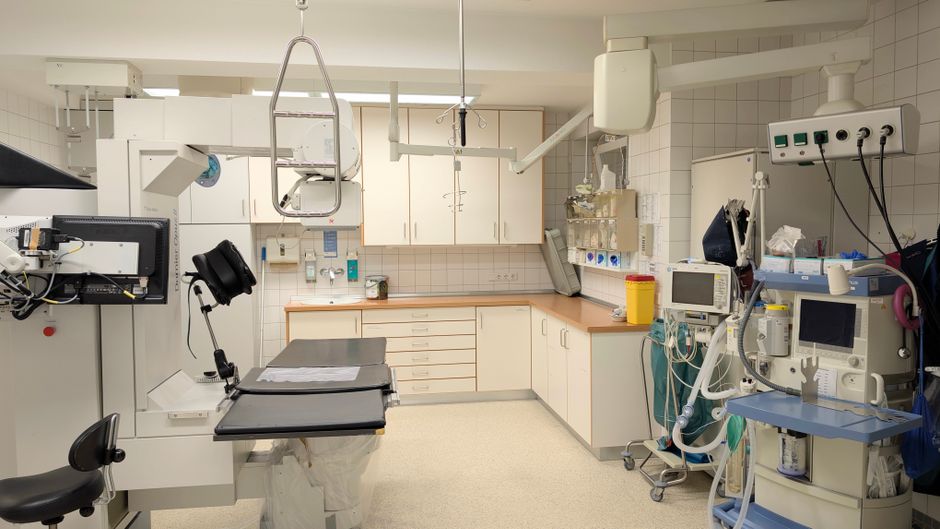
The percutaneous (through-the-skin) approach is most common. The patient lies on an imaging table and the target area is sterilized and anesthetized with local anesthetic. Sedation is administered for comfort.
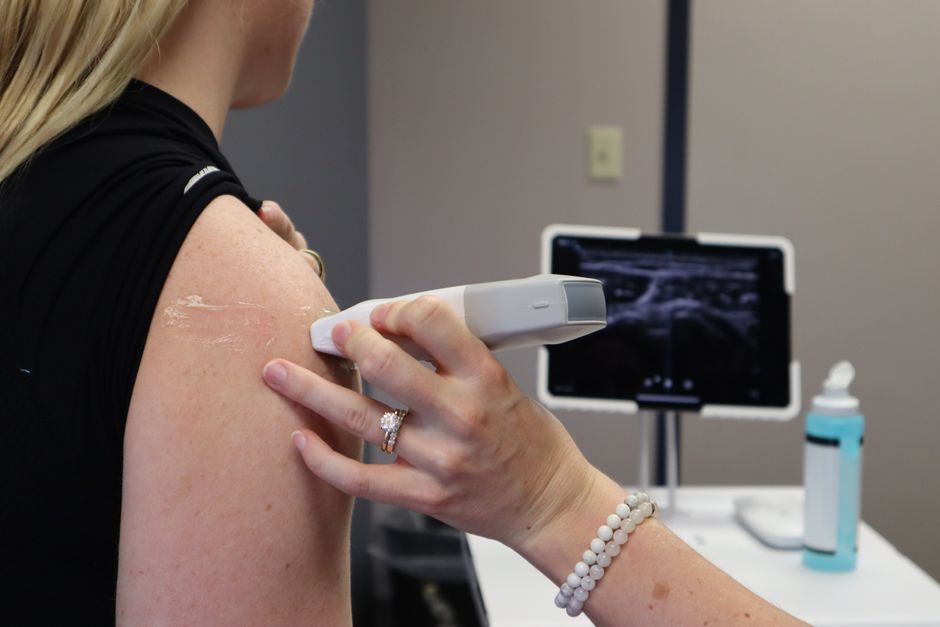
Imaging guidance — ultrasound alone, CT fluoroscopy, or fusion imaging combining real-time ultrasound with pre-acquired CT or MRI — is used to navigate the electrode precisely into the tumor center.
Conventional RFA involves inserting the electrode needle directly through the tumor to deliver energy from inside outward.
No-touch RFA, formalized in the 2023 Korean Society of Image-guided Tumor Ablation guidelines, places multiple electrodes around the tumor periphery rather than puncturing the tumor itself. This approach aims to reduce the theoretical risk of needle-track seeding and improve margins around the tumor edge.
Once the electrode is positioned, the radiofrequency generator delivers energy in a controlled cycle. The treating physician monitors temperature or impedance in real time to confirm adequate ablation.
After the session the electrode is removed and the needle track may be cauterized. The patient moves to a recovery area for observation. Post-procedure contrast-enhanced imaging (CT or MRI) is typically performed within 24–48 hours to assess technical success.
Recovery Timeline
Recovery from percutaneous liver RFA is substantially shorter than open surgery. Most patients experience a predictable pattern:
Immediately after (day 0–1): - Recovery room monitoring for 2–4 hours - Mild to moderate right upper abdominal discomfort, managed with oral analgesics - Observation for rare complications (bleeding, pneumothorax)
Hospital stay (days 1–3): - Pain typically well-controlled by day 2 - Liver function tests monitored - Post-ablation syndrome (low-grade fever, fatigue, mild nausea) is common and self-limiting
Week 1–2: - Discharge to hotel or short-stay accommodation - Light walking encouraged; no strenuous activity - Follow-up imaging review with the care team before departure from Korea
Weeks 2–4: - Most patients resume desk work and daily activities - Driving and moderate exercise can typically resume around weeks 2–3
1–3 months: - First post-procedure contrast CT or MRI to confirm complete response - Oncologist review to plan surveillance schedule or any adjuvant therapy - Ongoing surveillance imaging every 3–6 months is standard practice for HCC patients
Cost Breakdown
Korean hospital pricing for liver RFA is generally significantly lower than equivalent procedures in the United States or Western Europe, while the equipment, imaging technology, and clinical protocols remain at international standard.
Approximate cost components in Korea (USD):
- Pre-procedure workup (contrast CT or MRI, blood panel, anesthesia consult): $800–$2,000
- RFA procedure itself (single tumor, percutaneous): $5,000–$10,000
- Hospital stay (1–3 nights including nursing, monitoring): $1,200–$3,500
- Post-procedure imaging and oncology review: $600–$1,500
- Interpreter/coordination services: $200–$600
Total all-in range for a single-tumor percutaneous case is approximately $8,000–$18,000 USD. Multiple tumors or laparoscopic approaches increase cost toward the upper end.
By comparison, the same procedure in the United States can exceed $30,000–$50,000 even with insurance complications. The Korea Health Industry Development Institute (KHIDI) publishes reference cost data for medical tourists through the Medical Korea portal.
Most Korean tertiary hospitals offer international patient coordinators who can provide itemized estimates before travel. Patients should budget separately for flights, accommodation (7–14 day stay recommended), and travel insurance covering oncological procedures.
| Item | Typical Cost in Korea (USD) |
|---|---|
| Pre-procedure imaging & labs (CT/MRI, blood panel) | $800–$2,000 |
| RFA procedure (single tumor, percutaneous) | $5,000–$10,000 |
| Hospital stay (1–3 nights, monitoring included) | $1,200–$3,500 |
| Post-procedure imaging & oncology review | $600–$1,500 |
| Coordination & interpreter services | $200–$600 |
Why Korea
Korea has built one of Asia's most respected interventional radiology and hepatology ecosystems, supported by national health policy prioritizing liver cancer — a historically significant disease burden in Korea due to hepatitis B prevalence.
The Korean Liver Cancer Association (KLCA) and the Korean Society of Image-guided Tumor Ablation (KSITA) publish internationally recognized clinical guidelines that have advanced RFA technique globally, including the 2023 no-touch RFA guidelines and the 2024 expert consensus for local ablation of HCC.
Korean academic medical centers operate dedicated interventional oncology units rather than general radiology departments handling occasional ablations. This concentration of case volume is clinically meaningful: teams performing high numbers of procedures develop institutional expertise in challenging tumor locations and complex patients.
Imaging technology at major centers includes fusion ultrasound/CT navigation, cone-beam CT suites, and contrast-enhanced ultrasound — tools that improve needle placement accuracy and post-ablation assessment.
The Medical Korea program, administered by KHIDI under the Ministry of Health and Welfare, provides infrastructure for international patients: registered hospitals, coordinator services, multilingual support, and cost transparency benchmarks. Patients from Africa, the GCC, and Southeast Asia represent a growing share of medical tourists seeking liver cancer treatment in Korea.
Korean hospitals accredited under KOIHA (Korean Institute for Healthcare Accreditation) or holding JCI accreditation meet rigorous patient safety and quality standards. The combination of technique innovation, institutional case volume, and organized international patient services makes Korea a substantive choice for patients evaluating liver RFA abroad.
Key Takeaways
- RFA is a guideline-endorsed curative-intent treatment for early HCC and selected liver metastases — it is not experimental.
- Korea's interventional radiology teams helped develop no-touch RFA and publish consensus guidelines used internationally, including the 2023 KSITA and 2024 KLCA standards.
- All-in costs in Korea ($8,000–$18,000 USD) are substantially below equivalent US or Western European pricing for comparable equipment and expertise.
- Plan for a 7–14 day Korea stay to accommodate pre-procedure imaging, the procedure, inpatient monitoring, and a post-ablation imaging check before departure.
Frequently Asked Questions
How is RFA different from microwave ablation or cryoablation?
All three are thermal ablation techniques that destroy tumors without surgery, but they use different energy sources. RFA uses radiofrequency electrical current to heat tissue. Microwave ablation uses electromagnetic energy and can achieve higher temperatures more quickly, which can be advantageous for larger tumors. Cryoablation freezes tissue instead of heating it. Korean centers offer all three; the interventional radiologist will recommend the best option based on tumor size, location, and your liver function.
What is 'no-touch RFA' and why does it matter?
In conventional RFA, the electrode needle is inserted through the center of the tumor. No-touch RFA places multiple electrodes around the tumor margin without puncturing it directly. The Korean Society of Image-guided Tumor Ablation published dedicated guidelines for this technique in 2023. The approach is associated with improved ablative margins in certain tumor locations and reduces theoretical concern about needle-track tumor cell displacement, though the technique requires greater procedural skill and planning.
Can RFA be repeated if the tumor recurs?
Yes. One of the advantages of RFA over surgical resection is that it can be repeated at the same site or applied to new tumors while preserving liver tissue. Repeat ablation of recurrent small HCC is a well-established clinical practice in Korea and is addressed in national guidelines. Suitability for repeat RFA depends on liver function at the time of recurrence, tumor size, and location.
What are the main risks of liver RFA?
Liver RFA is generally considered a low-complication procedure when performed at experienced centers. Possible risks include post-ablation syndrome (fever, fatigue, mild pain — usually self-limiting over a few days), bleeding, infection, injury to adjacent structures such as bile ducts or bowel, and incomplete tumor ablation requiring additional treatment. Serious complications are uncommon at high-volume Korean centers but should be discussed with your interventional radiologist during the pre-procedure consultation.
Does Korea require a referral letter from my home oncologist?
Most Korean tertiary hospitals do not legally require a formal referral, but it is strongly recommended. A referral letter and your complete oncology records — including pathology reports, prior imaging (DICOM format preferred), and current medications — allow the Korean team to assess your case thoroughly before your arrival and prepare an accurate treatment plan and cost estimate.
Is RFA covered by Korean national health insurance for international patients?
Korean National Health Insurance (NHIS) covers RFA for Korean citizens diagnosed with liver cancer under the national cancer management program. International patients are not enrolled in NHIS and pay out-of-pocket at hospital listed rates for foreigners. The Medical Korea program, administered by KHIDI, provides reference pricing to help patients compare costs across registered hospitals before committing to travel.
Related Topics
Sources
Ready to Begin Your Journey?
Get matched with KAHF-accredited hospitals and receive a personalized treatment plan.
Quick Facts
Typical Cost
$5000 - $12000
Duration
3 days
Accredited Hospitals
0+ Available
Top Hospitals
Medical Information Disclaimer
The information provided on this page about Radiofrequency Ablation for Liver is for general educational and informational purposes only. It is not intended as, and should not be construed as, medical advice, diagnosis, or treatment recommendations.
Always seek the advice of a qualified healthcare professional regarding any medical condition or treatment. Never disregard professional medical advice or delay seeking it because of information found on this website. Individual treatment outcomes may vary. Costs shown are estimates and may differ based on individual circumstances.
KmedTour acts as a medical tourism facilitator and does not provide direct medical services. All treatments are performed by independently accredited healthcare providers in South Korea.