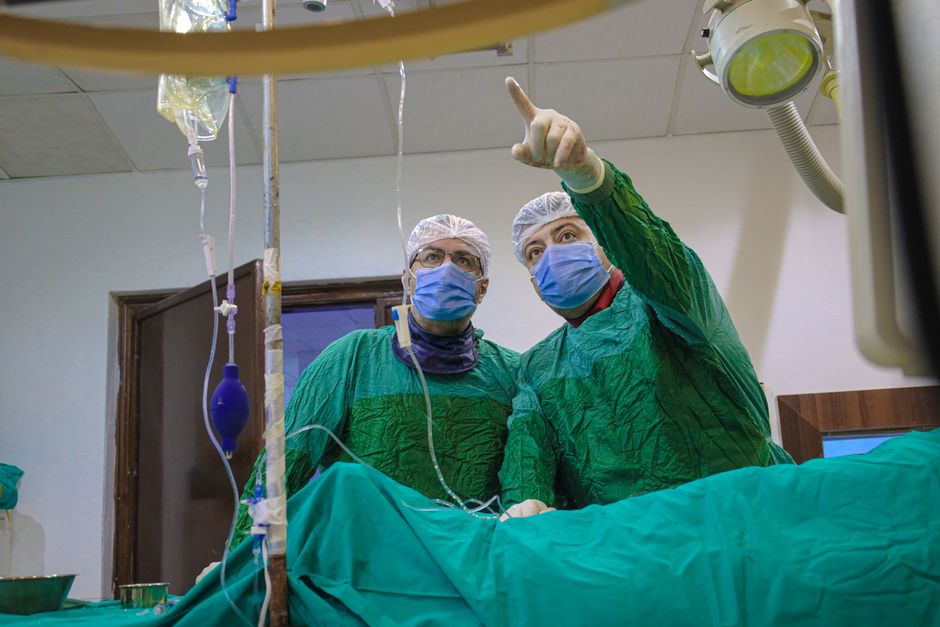
Cardiac$8000 - $18000⭐ KAHF Accredited Hospitals
Radial Artery Approach PCI in Korea
Minimally invasive stenting via the wrist artery — less bleeding, faster recovery, performed at world-class Korean cardiac centers.
Quick Answer
- Radial (wrist) access replaces the older femoral (groin) approach, dramatically cutting access-site bleeding and allowing patients to sit up and walk hours after the procedure.
- Procedure time is typically 45–90 minutes for a single-vessel case; complex multi-vessel work takes longer.
- Korea's cardiac volumes — with centers performing thousands of PCIs annually — give Korean interventional cardiologists extensive radial-access experience.
- All-in cost for PCI with stenting in Korea is broadly $15,000–$22,000 USD, well below equivalent pricing in the US or Western Europe.
At a Glance
| Procedure time | 45–90 minutes (single vessel); up to 2–3 hours for complex multi-vessel cases |
|---|---|
| Anesthesia | Local anesthesia at the wrist access site; conscious sedation as needed |
| Hospital stay | 1–2 nights (uncomplicated radial-access PCI) |
| Recommended stay in Korea | 7–10 days (pre-procedure assessment, procedure, recovery monitoring, follow-up) |
| Recovery | Light activity within 24–48 hours; wrist site heals in 1–2 weeks; full return to normal activity typically 1–2 weeks post-discharge |
| Typical cost in Korea | Approximately $15,000–$22,000 USD all-in (varies by vessel complexity and stent count) |
Overview
Percutaneous Coronary Intervention (PCI) is a catheter-based procedure used to open narrowed or blocked coronary arteries and restore blood flow to the heart muscle, usually by deploying a drug-eluting stent.
In the radial artery approach, the interventional cardiologist inserts a thin sheath into the radial artery at the wrist rather than the femoral artery in the groin.
From there, a long flexible catheter is threaded through the arterial system to the coronary circulation, guided in real time by X-ray fluoroscopy (a technique called coronary angiography).
Once the blockage is located, a balloon catheter is advanced across the narrowing and inflated — a step called balloon angioplasty — and a metal mesh stent (most often drug-eluting) is placed to hold the artery open.
The radial approach has become the preferred access route at high-volume cardiac centers worldwide because of its favorable safety profile and patient comfort advantages compared to the femoral approach.
Korea's adoption of transradial access began in the late 2000s and has grown steadily, with major academic centers now routinely using radial or distal radial access as their default route for both elective and urgent PCI.
Recent Korean research has extended this further to distal radial access at the anatomical snuffbox on the back of the hand, a refinement that reduces even the small risk of radial artery occlusion associated with conventional wrist access.
Bring all prior cardiac records
Bring ECGs, stress test reports, echocardiograms, and any prior angiogram images or reports to Korea. Korean cardiac teams can often review these before your cath lab appointment, reducing duplicate testing and shortening your stay.
Am I a Candidate?
Good candidates for radial-approach PCI are patients with significant coronary artery disease — including stable angina, unstable angina, or confirmed acute coronary syndrome — whose anatomy is suitable for catheter-based intervention rather than bypass surgery.
- Stable CAD: patients with documented ischemia on stress testing or functional imaging who have not responded adequately to optimal medical therapy
- Acute coronary syndromes (NSTEMI/STEMI): urgent PCI is frequently performed via radial access even in emergencies
- Patients at higher bleeding risk are particularly well served by radial access, since groin closure and compression are eliminated
- Patients who need early mobilization benefit from the faster post-procedure movement radial access allows
Radial access may not be the first choice when the radial artery is very small, spastic, or previously used and scarred. An Allen test or Barbeau test is routinely performed before the procedure to confirm adequate ulnar collateral circulation to the hand.
Your Korean cardiologist will review coronary CT angiography, stress test results, and prior cardiac history to confirm whether PCI (versus medical management or bypass surgery) is appropriate, and whether the radial route is anatomically favorable for you specifically.
How the Procedure Works
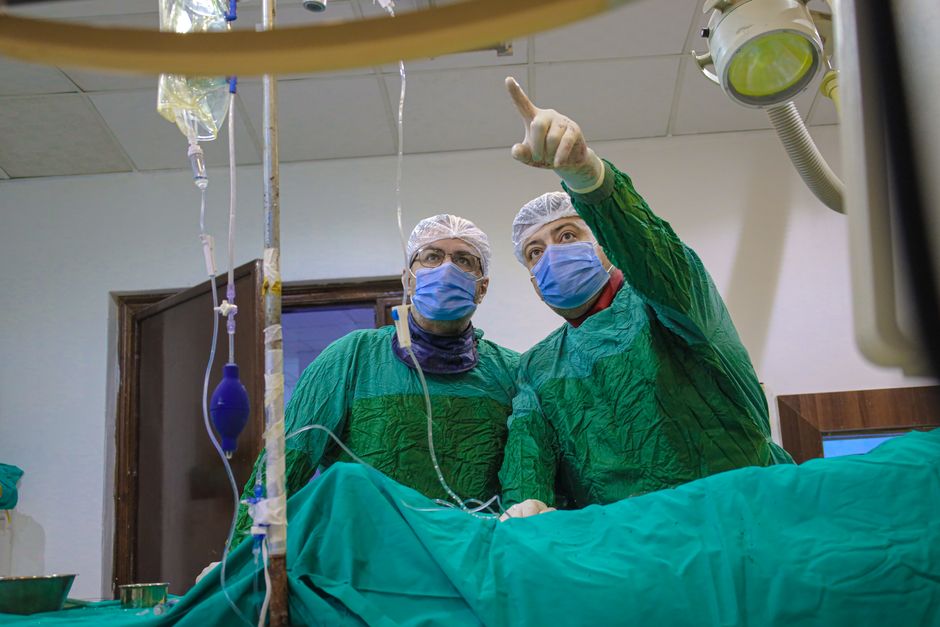
The procedure is performed in a cardiac catheterization laboratory (cath lab) under continuous electrocardiographic monitoring.
Access and sheath insertion
- The wrist is cleaned and draped; local anesthetic is injected into the skin overlying the radial artery.
- A small needle punctures the artery, a guidewire is passed, and a short plastic sheath (typically 5–7 French gauge) is inserted to maintain access.
- A vasodilating cocktail (often nitroglycerin and a calcium-channel blocker) is given through the sheath to prevent radial artery spasm.
Navigation and imaging
- Long flexible catheters are advanced from the wrist through the aorta to the coronary ostia under fluoroscopic guidance.
- Iodinated contrast dye is injected to produce coronary angiograms — X-ray movies that precisely map the location and severity of blockages.
- The team may use intravascular ultrasound (IVUS) or fractional flow reserve (FFR) pressure wire measurements to assess lesion significance.
Balloon and stent deployment
- A thin guidewire is steered across the blockage; a balloon catheter is advanced and inflated to widen the artery.
- A drug-eluting stent is crimped on a balloon, positioned precisely at the lesion, and expanded — embedding the stent in the arterial wall.
- Final angiograms confirm the result and check that blood flow is restored.
Closure
- The sheath is removed and a dedicated radial compression device (a small inflatable wristband) holds pressure on the puncture site for 1–2 hours.
- No sutures are required; the wrist is monitored as the band is gradually deflated.
Recovery Timeline
Radial-access PCI offers substantially faster early recovery compared to the femoral approach.
Day of procedure
- The compression device is removed within 2–4 hours.
- Patients sit up, eat, and use the bathroom without the prolonged bed rest required after femoral access.
- Most patients transfer to a monitored step-down bed for overnight observation.
Days 1–2 (hospital)
- Cardiac monitoring continues for at least one overnight stay.
- Nursing staff assess the wrist site for bruising, swelling, or pulse changes.
- Dual antiplatelet therapy (aspirin plus a P2Y12 inhibitor such as clopidogrel or ticagrelor) is started or continued to protect the new stent.
- Discharge typically occurs on day 1 or 2 for uncomplicated cases.
Week 1–2 (in Korea)
- Light activities are fine; heavy lifting with the access-arm wrist is avoided for 7–10 days.
- A follow-up cardiology appointment is strongly recommended before departing Korea.
- Your care team will confirm stent medications, target heart rate and blood pressure goals, and signs to watch.
Weeks 2–6 (after returning home)
- Most patients resume desk work and gentle walking within 1–2 weeks of discharge.
- Driving restrictions depend on local regulations and whether the procedure was urgent versus elective.
- Strenuous exercise is generally reintroduced gradually over 4–6 weeks, guided by the follow-up cardiologist.
Cost Breakdown
Korean cardiac procedures typically cost well below equivalent pricing in the United States, United Kingdom, or Australia, making Korea a compelling destination for patients without comprehensive insurance or those facing long waiting lists.
Estimated cost ranges (approximate USD, self-pay)
- A single-vessel radial PCI with one drug-eluting stent is generally in the range of $15,000–$19,000 USD all-in at major academic centers.
- Multi-vessel PCI or complex lesion work (bifurcation, chronic total occlusion) can push total costs toward $20,000–$25,000 USD or above.
- Diagnostic coronary angiography alone (without intervention) is considerably less — roughly $1,500–$4,000 USD.
What is typically included
- Pre-procedure cardiac work-up (ECG, echocardiogram, blood tests)
- Cath lab fees, fluoroscopy, contrast, interventional equipment
- Drug-eluting stent(s)
- Cardiac monitoring during hospital stay
- Discharge medications for the initial supply
What is often additional
- International patient coordination and interpretation
- Hotel accommodation during the recommended 7–10 day Korea stay
- Return air travel and travel insurance
- Follow-up imaging after returning home
Always obtain a detailed written cost estimate from the hospital's international patient center before travel.
| Item | Typical Cost in Korea (USD) |
|---|---|
| Diagnostic coronary angiography (radial access, no stenting) | $1,500–$4,000 |
| Single-vessel PCI with one drug-eluting stent | $15,000–$19,000 |
| Multi-vessel PCI (2–3 vessels) | $20,000–$26,000 |
| Complex PCI with IVUS / FFR guidance add-on | $2,000–$4,000 |
| 7–10 day hotel + meals (estimated) | $700–$1,400 |
Why Korea
South Korea has built one of Asia's most technically sophisticated cardiac care ecosystems, with major academic medical centers consistently ranked among the region's best for interventional cardiology.
High procedural volume
Korea's largest cardiac centers perform thousands of PCI procedures annually. High operator and institutional volume is directly associated with better outcomes in interventional cardiology.
Early and sustained adoption of radial access
Korean interventional cardiologists began adopting transradial access in the late 2000s, and Korean academic groups have contributed published research to the global literature on both conventional and distal radial access techniques.
This institutional experience matters: radial PCI has a recognized learning curve, and patients benefit from operators who have performed thousands of radial cases.
Regulatory and quality framework
Korea's Ministry of Health and Welfare, together with the Korea Health Industry Development Institute (KHIDI), actively promotes and monitors international patient services through the Medical Korea program. This framework encourages hospitals to maintain transparent outcome data and internationally oriented care pathways.
Cost and accessibility
Medical procedures in Korea typically cost a fraction of equivalent care in the United States or Western Europe while using the same generation of equipment — drug-eluting stents, IVUS, FFR pressure wires, and rotational atherectomy are all available at leading centers.
Language and coordination support
Major Korean hospitals with established international patient departments offer medical interpretation, translated reports, visa assistance, and telemedicine follow-up — reducing friction for patients traveling from Africa, the Gulf Cooperation Council region, and Southeast Asia.
Key Takeaways
- Radial-access PCI is clinically equivalent to femoral-access PCI for opening blocked coronary arteries, with a well-documented reduction in access-site bleeding and faster early mobilization.
- Korea's high-volume cardiac centers have extensive transradial experience, with academic groups publishing research on both conventional and distal radial techniques.
- All-in costs for PCI with stenting in Korea are broadly $15,000–$22,000 USD — substantially less than comparable care in the US — while using the same equipment generation.
- A minimum 7–10 day stay in Korea is recommended: allow time for pre-procedure work-up, the procedure itself, overnight monitoring, and a follow-up cardiology visit before departure.
Frequently Asked Questions
Why is the wrist (radial) approach considered safer than the groin (femoral) approach?
The radial artery is a smaller, more superficial vessel that is easily compressed against the underlying bone after the sheath is removed. This makes it straightforward to achieve hemostasis with an external wristband device rather than manual compression or a closure device over the deeper femoral artery. Access-site bleeding complications — including the serious risk of retroperitoneal bleeding that can occur with femoral access — are substantially reduced with radial entry.
Will I need general anesthesia?
No. Radial-access PCI is performed under local anesthesia at the wrist puncture site, usually combined with light intravenous conscious sedation to keep you comfortable and relaxed. You remain awake enough to communicate with the team during the procedure. General anesthesia is not required and is not standard for elective PCI.
How long will I need to take medications after my stent?
Dual antiplatelet therapy — typically aspirin plus a P2Y12 inhibitor (such as ticagrelor or clopidogrel) — is prescribed for a minimum of 6–12 months after a drug-eluting stent is placed, and sometimes longer depending on your individual cardiovascular risk. Do not stop either medication without consulting your cardiologist; premature discontinuation significantly increases the risk of stent thrombosis.
Can I fly back home shortly after a radial PCI?
Most stable patients can fly within 3–5 days of an uncomplicated elective PCI, but your Korean cardiologist will make this determination based on your post-procedure stability, stent result, and cardiac function. Patients treated urgently for acute coronary syndrome generally need a longer observation period before long-haul travel. Always carry a copy of your cath report, stent card, and current medication list when you travel.
What is the Allen test and why is it done before radial PCI?
The Allen test (or the more sensitive Barbeau test using pulse oximetry) checks that the ulnar artery can adequately supply blood to the hand if the radial artery were to become temporarily occluded after the procedure. Because the hand has dual blood supply from both the radial and ulnar arteries, most patients have sufficient collateral flow, making radial access safe. Patients with poor ulnar collateral flow may be directed to femoral access instead.
Is distal radial access (at the hand, not the wrist) available in Korea?
Yes. Korean interventional teams have published research on distal radial access at the anatomical snuffbox — the small depression on the back of the hand near the base of the thumb. This refinement further reduces the small risk of radial artery occlusion associated with conventional wrist access and may be offered to suitable patients at centers with specific expertise in the technique.
Related Topics
Sources
- Current Practices in Korea: Coronary Angiography and Intervention Using Radial Access (PMC)
- Comparison of Access Site Complications in Primary PCI: Radial vs Femoral (PMC, 2024)
- Feasibility of PCI Using 7-Fr Thin-Walled Sheath via Distal Radial Access, Korea (Nature Scientific Reports, 2025)
- Medical Korea — Heart Procedures
- Medical tourism in South Korea (Wikipedia)
Ready to Begin Your Journey?
Get matched with KAHF-accredited hospitals and receive a personalized treatment plan.
Quick Facts
Typical Cost
$8000 - $18000
Duration
2 days
Accredited Hospitals
0+ Available
Top Hospitals
Medical Information Disclaimer
The information provided on this page about Radial Artery Approach PCI is for general educational and informational purposes only. It is not intended as, and should not be construed as, medical advice, diagnosis, or treatment recommendations.
Always seek the advice of a qualified healthcare professional regarding any medical condition or treatment. Never disregard professional medical advice or delay seeking it because of information found on this website. Individual treatment outcomes may vary. Costs shown are estimates and may differ based on individual circumstances.
KmedTour acts as a medical tourism facilitator and does not provide direct medical services. All treatments are performed by independently accredited healthcare providers in South Korea.