Dentistry$800 - $3000⭐ KAHF Accredited Hospitals
Prosthodontic Treatment in Korea
Restore damaged or missing teeth in South Korea with crowns, bridges, veneers, and dentures at 50–70% less than Western prices.
Quick Answer
- Prosthodontic treatment covers crowns, bridges, porcelain veneers, and full or partial dentures — all available at Seoul clinics using same-day CAD/CAM milling.
- Cost advantage: procedures typically run 50–70% below US or Australian prices, with single zirconia crowns starting around $200–$500.
- Korean labs use MFDS-approved zirconia and lithium disilicate ceramics milled to micron-level tolerances — materials identical to those used in North America and Europe.
- Most restorative work (crowns, veneers) requires 2–5 clinic visits spread over 1–2 weeks, making Korea practical for international patients.
At a Glance
| Procedure time | 1–3 hours per session (multiple sessions typical) |
|---|---|
| Anesthesia | Local anesthesia; sedation available on request |
| Hospital stay | Outpatient — no overnight stay required |
| Recommended stay in Korea | 7–14 days depending on complexity |
| Recovery | Mild soreness 1–3 days; normal diet within 1–2 weeks |
| Typical cost in Korea | $200–$1,200 per unit depending on restoration type |
Overview
Prosthodontics is the dental specialty focused on diagnosing, planning, and executing the restoration or replacement of teeth using manufactured devices. In South Korea, this encompasses zirconia and lithium disilicate crowns, ceramic and porcelain-fused-to-metal bridges, full and partial removable dentures, implant-supported dentures, and thin porcelain or composite veneers.
Korean dental clinics — particularly those concentrated in Seoul's Gangnam district — have invested heavily in digital workflow technology. In-house CAD/CAM milling units allow same-day or next-day fabrication of crowns and veneers, reducing the traditional two-week turnaround to a matter of hours at many practices.
All restorative materials used in accredited Korean clinics must be approved by the Ministry of Food and Drug Safety (MFDS), South Korea's equivalent of the US FDA. This regulatory framework ensures biocompatibility and long-term durability standards are enforced before any material reaches patients.
For international patients, the combination of quality materials, precision laboratory work, and substantially lower fees has made South Korea one of Asia's primary destinations for complex restorative dentistry.
The Korean Health Industry Development Institute (KHIDI) and the Medical Korea initiative both actively support foreign patients navigating dental and medical services in the country.
Book a digital consultation before you fly
Most Seoul clinics serving international patients accept digital X-rays and intraoral photos by email or WhatsApp before your arrival. Sending records in advance lets the clinic prepare a treatment plan and cost estimate so your first in-person appointment goes straight to diagnostics rather than paperwork.
Am I a Candidate?
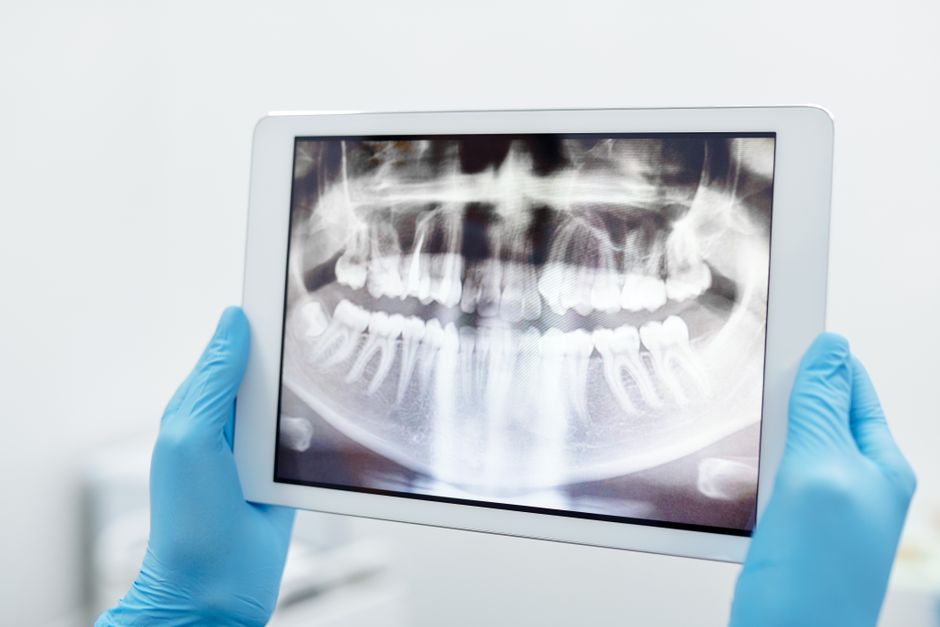
Prosthodontic treatment in Korea is appropriate for a wide range of patients. A thorough digital X-ray and, where needed, a 3D cone-beam CT scan are conducted at the first consultation to determine eligibility.
You may be a candidate if you have:
- One or more cracked, fractured, or severely decayed teeth requiring crown coverage
- Missing one or more teeth where a bridge or implant-supported prosthetic is indicated
- Significant wear, discolouration, or minor misalignment that veneers can address without orthodontics
- Partial or full edentulism (tooth loss) requiring removable or implant-retained dentures
- Existing failing restorations — old metal crowns, cracked bridges, or ill-fitting dentures needing replacement
Patients with uncontrolled periodontal (gum) disease or active decay must complete initial treatment before prosthodontic work begins. Smokers and individuals with diabetes are accepted but counselled on the impact these factors have on healing and restoration longevity.
Patients on blood thinners should disclose all medications at the initial consultation so treatment can be sequenced safely.
How the Procedure Works
The prosthodontic workflow in Korea follows a structured digital pathway.
Initial consultation and diagnostics Digital periapical X-rays and, for complex cases, a cone-beam CT scan map bone structure and remaining tooth anatomy. Intraoral digital scans replace traditional alginate impressions at most modern Seoul clinics, producing more accurate models and eliminating patient discomfort.
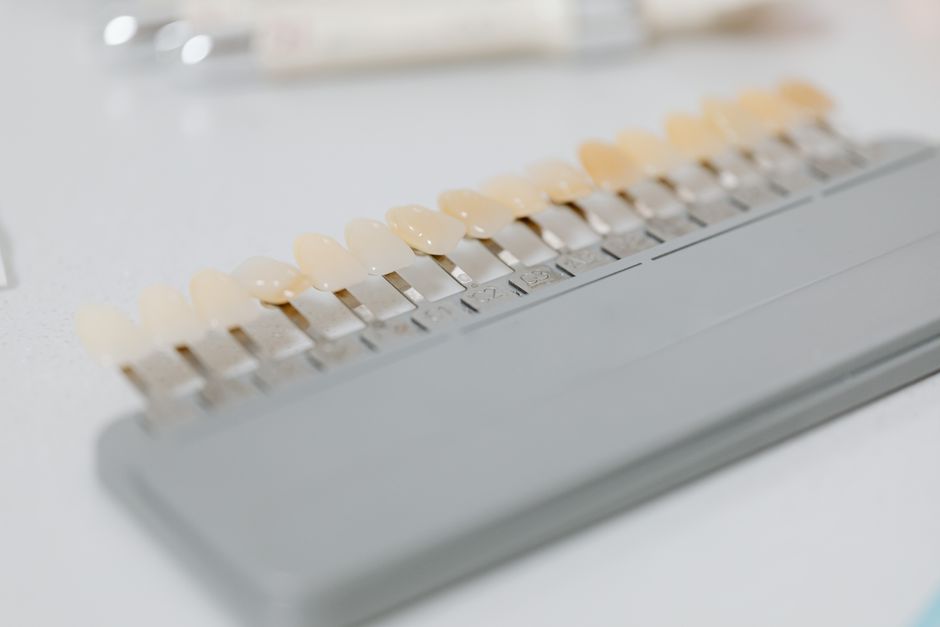
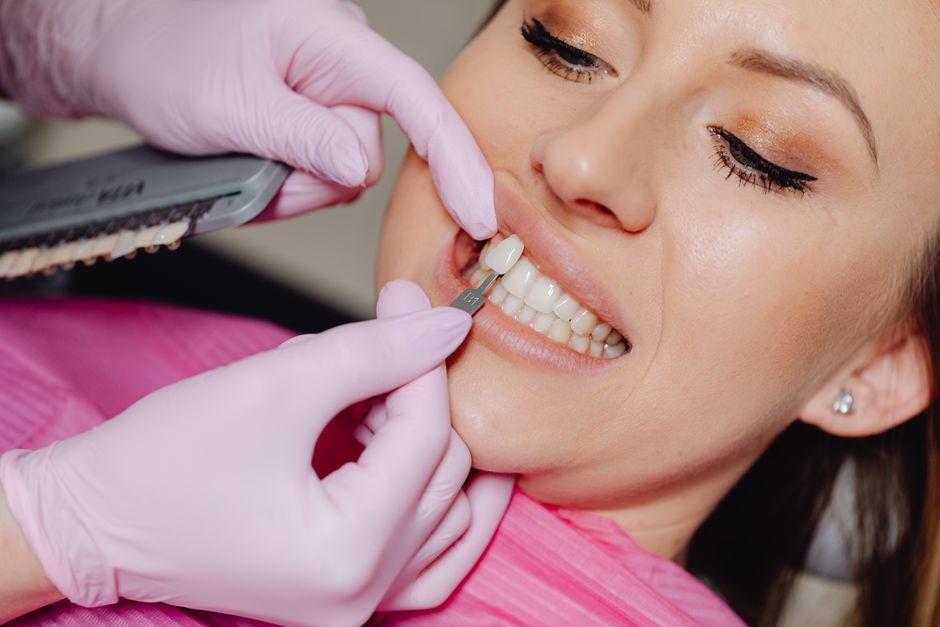
Treatment planning and shade matching The dentist presents a digital smile design or wax-up model showing the planned outcome before any tooth is prepared. Shade selection for ceramics uses a spectrophotometer rather than subjective visual matching, ensuring colour consistency across multiple units.
Tooth preparation For crowns and bridges, the affected tooth is shaped under local anaesthesia to accommodate the restoration. Veneers require minimal reduction — as little as 0.3–0.5 mm of enamel — preserving more natural tooth structure than full crowns.
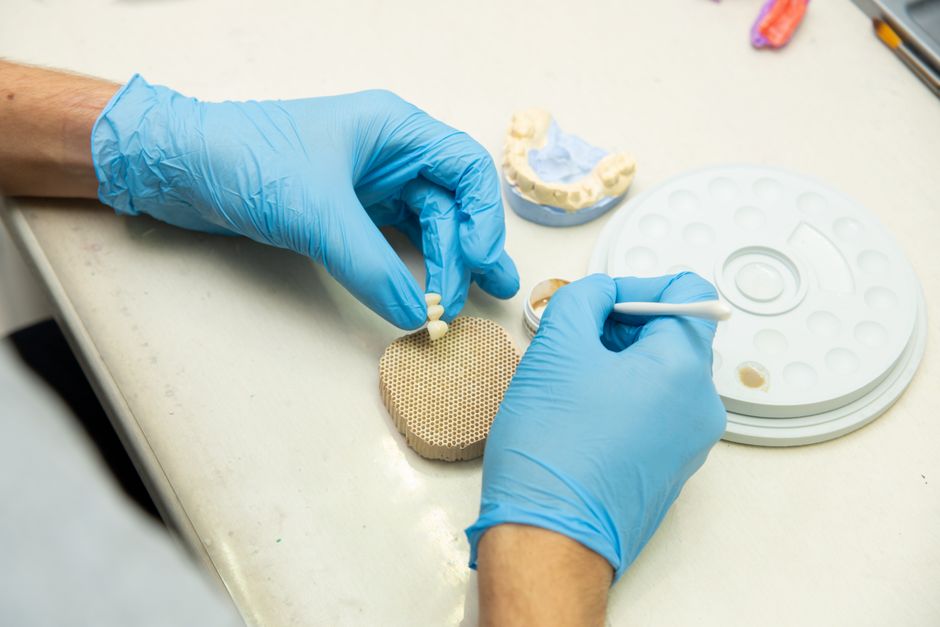
CAD/CAM fabrication The digital scan is transmitted to an in-house or nearby dental lab equipped with 5-axis milling machines. Zirconia and lithium disilicate blocks are milled, then sintered or crystallised in precision ceramic furnaces to achieve final strength and translucency.
Fitting and cementation The restoration is tried in for fit and occlusion adjustments before final cementation with a resin or glass-ionomer luting agent. The dentist checks bite alignment with articulating paper and makes micro-adjustments before the patient leaves.
Follow-up A check appointment 24–48 hours later and a final review before departure are standard practice for international patients.
Recovery Timeline
Prosthodontic procedures are generally low-disruption. Most patients resume normal activities the same day.
Days 1–3 Mild sensitivity and gum soreness around prepared teeth are common. Over-the-counter analgesics are sufficient. Cold or very hot foods should be avoided. Temporary crowns or veneers (worn while the final restoration is fabricated) may feel different to natural teeth — this is expected.
Days 4–7 Sensitivity typically resolves. Patients can return to a normal diet, avoiding very hard foods like ice or tough meat directly on new restorations.
Week 2 Final restorations are seated. Minor occlusal (bite) adjustments are made if needed. Patients cleared for departure by the treating dentist.
Long-term Zirconia and lithium disilicate restorations have documented clinical lifespans of 10–15 years or longer with proper home care and regular check-ups. Dentures typically require relining every 3–5 years as jaw bone remodels over time.
Patients are provided with written aftercare instructions in English and a direct contact channel to the clinic for questions after returning home. Most Seoul practices serving international patients also offer remote follow-up consultations via video call.
Cost Breakdown
South Korean prosthodontic costs are substantially lower than equivalent treatments in the United States, United Kingdom, or Australia — typically 50–70% less — without a reduction in material quality or clinical standards.
The primary cost drivers are:
- Material choice — zirconia and lithium disilicate cost more than metal-ceramic or resin composites
- Number of units — each crown, veneer, or pontic in a bridge is priced individually
- Complexity — full-arch rehabilitation or implant-supported cases involve more clinical time and lab work
- Location — Gangnam-district clinics targeting international patients may price slightly above neighbourhood clinics
What is typically included in the quoted fee:
- Digital consultation and diagnostic imaging
- Tooth preparation under local anaesthesia
- Temporary restoration while the final unit is fabricated
- Final cementation and bite adjustment
- Short follow-up before departure
What may be billed separately:
- 3D cone-beam CT scan (approximately $50–$150 if required)
- Periodontal pre-treatment if gum disease is present
- Translation or coordination services at some clinics
International patients should request an itemised written estimate at the first consultation. Reputable clinics serving medical tourists routinely provide English-language treatment plans with line-item pricing before any work begins.
| Item | Typical Cost in Korea (USD) |
|---|---|
| Zirconia crown (per unit) | $200–$500 |
| Porcelain-fused-to-metal crown (per unit) | $150–$350 |
| 3-unit ceramic bridge | $600–$1,200 |
| Porcelain veneer (per tooth) | $250–$600 |
| Removable full denture (per arch) | $450–$1,200 |
| Implant-supported denture (per arch) | $3,000–$5,500 |
Why Korea
South Korea has developed one of the world's most technically advanced dental ecosystems, driven by a combination of rigorous regulatory oversight, a domestic manufacturing industry, and cultural emphasis on aesthetic precision.
CAD/CAM and digital workflow leadership Korean dental labs and chair-side clinics were early adopters of CAD/CAM milling, with Seoul-based companies developing AI-integrated crown design software now used internationally. The result is restoration precision measured in microns and turnaround times that make same-day or next-day delivery realistic.
MFDS-regulated materials All dental materials — zirconia, lithium disilicate, PMMA, hybrid ceramics — must clear the Ministry of Food and Drug Safety before clinical use. This parallels CE marking in Europe and FDA clearance in the US, giving international patients confidence that no unapproved substitutes are used to cut costs.
Strong domestic manufacturing base South Korea is home to globally recognised dental implant manufacturers such as Osstem Implant and Dentium, whose prosthetic components are used worldwide. This domestic supply chain keeps material costs lower than in countries that must import everything.
KHIDI and Medical Korea infrastructure The Korea Health Industry Development Institute (KHIDI) operates the Medical Korea programme, which vets dental and medical clinics for international patient services, provides patient support centres, and publishes transparent data on registered facilities. This gives international dental patients an official framework for choosing accredited providers.
K-beauty aesthetic culture Korea's global reputation for aesthetic excellence — rooted in its beauty and cosmetic industry — has created a culture of high standards in smile design.
Korean prosthodontists and dental technicians are trained with meticulous attention to shade layering, incisal translucency, and surface texture, producing restorations that closely mimic natural tooth anatomy.
Key Takeaways
- South Korea offers prosthodontic restorations using the same MFDS-approved zirconia and lithium disilicate materials as Western clinics, at fees typically 50–70% lower.
- Seoul's Gangnam-district clinics use in-house CAD/CAM milling and AI-assisted design software, enabling same-day or next-day crown and veneer delivery.
- KHIDI's Medical Korea programme provides an official framework for vetting accredited dental providers, giving international patients a structured way to identify quality clinics.
- Most prosthodontic treatments require 7–14 days in Korea — manageable for international visitors combining dental work with travel.
Frequently Asked Questions
How many trips to the clinic will I need during my stay in Korea?
For a straightforward crown or veneer, expect two to three visits: an initial consultation with digital scanning, a fitting appointment when the restoration comes back from the lab (typically 1–3 days later), and a short follow-up before departure. More complex multi-unit cases or full-arch rehabilitation may require four to five appointments spread across 10–14 days.
Are the zirconia and ceramic materials used in Korea the same quality as in the US or Europe?
Yes. All restorative materials used in accredited Korean clinics must be cleared by the Ministry of Food and Drug Safety (MFDS), which applies standards comparable to FDA clearance in the US and CE marking in Europe. Brands of zirconia and lithium disilicate commonly used in Korea are the same globally traded products found in Western dental labs.
Will my new crowns or veneers look natural?
Korean dental labs use spectrophotometric shade matching and hand-layered ceramic glazing to achieve close matches to adjacent natural teeth. Zirconia restorations in particular offer high translucency options that mimic the light-scattering behaviour of natural enamel. The country's strong aesthetic culture — rooted in its cosmetic and K-beauty industries — sets a high bar for visible restorations.
What happens if a restoration has a problem after I return home?
Reputable Seoul clinics serving international patients typically provide written warranties (commonly 1–3 years on restorations) and offer remote follow-up via video call. For physical adjustments, you would need to visit a local dentist. Before leaving Korea, ask your clinic for full written documentation — X-rays, shade records, and the material specifications — so any dentist in your home country can assess the work accurately.
Is prosthodontic treatment in Korea safe for patients who are not fluent in Korean?
Most clinics in Seoul's medical tourism areas employ English-speaking coordinators or staff dentists, and many have arrangements with professional medical interpreters for Arabic, Chinese, and other languages. The Medical Korea programme, administered by KHIDI, also operates patient support centres that can assist with communication, scheduling, and complaint resolution.
Related Topics
Ready to Begin Your Journey?
Get matched with KAHF-accredited hospitals and receive a personalized treatment plan.
Quick Facts
Typical Cost
$800 - $3000
Duration
7 days
Accredited Hospitals
0+ Available
Top Hospitals
Medical Information Disclaimer
The information provided on this page about Prosthodontic Treatment is for general educational and informational purposes only. It is not intended as, and should not be construed as, medical advice, diagnosis, or treatment recommendations.
Always seek the advice of a qualified healthcare professional regarding any medical condition or treatment. Never disregard professional medical advice or delay seeking it because of information found on this website. Individual treatment outcomes may vary. Costs shown are estimates and may differ based on individual circumstances.
KmedTour acts as a medical tourism facilitator and does not provide direct medical services. All treatments are performed by independently accredited healthcare providers in South Korea.