Urology$10000 - $20000⭐ KAHF Accredited Hospitals
Prostate Surgery in Korea
Robotic prostatectomy, HoLEP, and TURP in Seoul for prostate cancer and enlarged prostate, with English-speaking urology coordination.
Quick Answer
- Korea treats prostate problems with two main paths: robotic radical prostatectomy for prostate cancer and laser or resection procedures (HoLEP, TURP) for an enlarged prostate (BPH).
- Robotic da Vinci prostatectomy in Seoul commonly ranges $16,000–$26,000, while BPH laser surgery is typically far less, often $5,000–$10,000.
- Most patients plan 2–4 weeks in Korea to cover pre-op tests, surgery, catheter removal, and an early follow-up.
- Seoul's large university hospitals are KHIDI-registered for international patients and pioneered robotic urology in Korea.
At a Glance
| Procedure time | Roughly 2–4 hours for robotic prostatectomy; about 1–2 hours for HoLEP or TURP |
|---|---|
| Anesthesia | General anesthesia (spinal sometimes used for TURP/HoLEP) |
| Hospital stay | About 3–7 nights for robotic prostatectomy; 1–2 nights for laser/resection BPH surgery |
| Recommended stay in Korea | Approximately 2–4 weeks including testing, surgery, catheter removal and follow-up |
| Recovery | Catheter for several days to ~2 weeks; light activity in 2–4 weeks, fuller recovery over 6–8 weeks |
| Typical cost in Korea | Robotic prostatectomy ~$16,000–$26,000; BPH laser surgery ~$5,000–$10,000 (approximate, USD) |
Overview
"Prostate surgery" covers two very different situations, and Korean urology centers handle both.
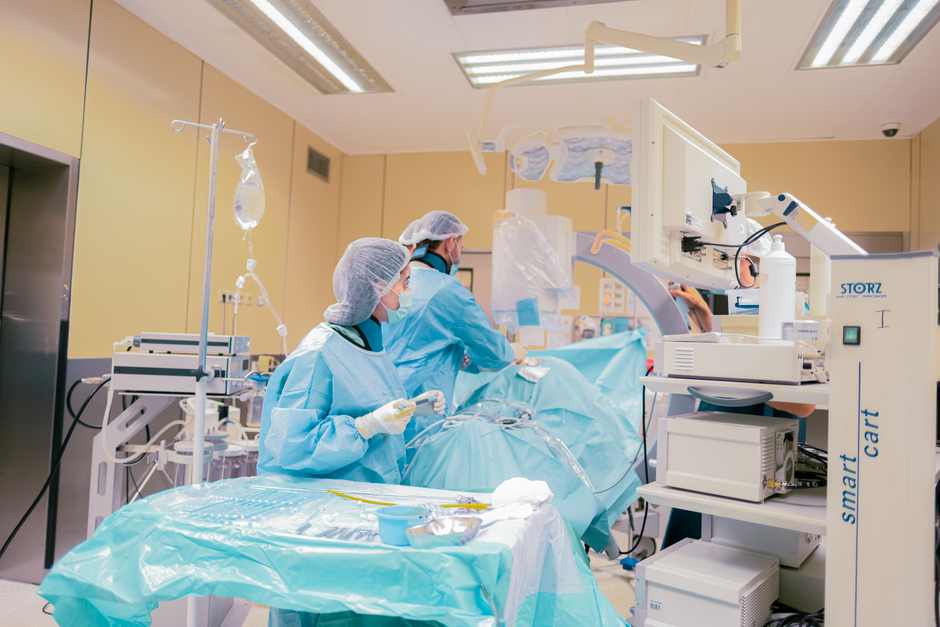
For prostate cancer, the standard operation is a radical prostatectomy — removing the whole prostate gland. In Seoul this is most often done with the da Vinci robotic system, which uses small keyhole incisions and a magnified 3D view.
For an enlarged prostate (benign prostatic hyperplasia, or BPH), surgery instead relieves blocked urine flow. Common options are HoLEP (holmium laser enucleation), TURP (transurethral resection), and KTP/laser vaporization.
Korea adopted robotic urology early, and laser BPH procedures such as HoLEP have grown steadily since around 2010. Choosing the right operation depends on your diagnosis, prostate size, and goals, which a urologist confirms after imaging and tests.
Bring your scans and biopsy reports
Carrying prior PSA results, prostate MRI, and any biopsy pathology lets the Korean team plan surgery faster and may avoid repeating costly tests after you arrive.
Cancer surgery and BPH surgery are not the same
Make sure your diagnosis is clear before booking. Robotic prostatectomy treats prostate cancer; HoLEP and TURP relieve an enlarged prostate. The right operation depends entirely on your urologist's assessment.

Am I a Candidate?
A urologist decides the right path after a focused work-up. You are generally considered for surgery if:
- You have localized prostate cancer suitable for removal rather than radiation or active monitoring.
- You have BPH with bothersome symptoms — weak stream, frequency, incomplete emptying, or urinary retention — not controlled by medication.
- You are fit enough for general anesthesia and a short hospital stay.
Typical pre-op testing includes PSA blood tests, prostate MRI or ultrasound, biopsy results (for cancer), uroflow and bladder studies (for BPH), plus routine bloodwork and heart screening.
Surgery may be delayed or reconsidered if there is active urinary infection, uncontrolled bleeding risk, or other medical conditions that need stabilizing first. Bring prior scans, biopsy reports, and a current medication list so the Korean team can plan accurately and avoid repeating tests.
How the Procedure Works
The exact steps depend on which operation you need.
Robotic prostatectomy (cancer):
- You receive general anesthesia.
- The surgeon makes a few small abdominal incisions and works through the da Vinci robotic console.
- The whole prostate is removed, often with nearby lymph nodes, and the bladder is reconnected to the urethra.
- A urinary catheter stays in for roughly one to two weeks.
HoLEP or TURP (enlarged prostate):
- A scope passes through the urethra — no external cuts.
- Laser energy (HoLEP) enucleates the obstructing tissue, or an electrical loop (TURP) resects it.
- A catheter drains the bladder for a short period, often one to a few days.
In both pathways, removed tissue is sent for pathology, and the surgical team reviews results with you before discharge.
Recovery Timeline
Recovery differs by procedure, but a general pattern looks like this:
- Days 1–3: Hospital stay with catheter in place, pain managed, early walking encouraged.
- First 1–2 weeks: Catheter typically removed at a follow-up visit; mild blood in urine and urgency can occur and usually settle.
- Weeks 2–4: Light daily activity resumes; avoid heavy lifting and strenuous exercise.
- Weeks 6–8 and beyond: Fuller recovery; urinary control and (after prostatectomy) erectile function often continue improving over months.
After robotic prostatectomy, PSA monitoring continues long-term to watch for cancer recurrence, and your home urologist should receive operative and pathology reports. After BPH surgery, urinary flow generally improves over several weeks.
Long-haul flights are usually discouraged in the first couple of weeks, which is why a planned 2–4 week stay in Korea is sensible.
Cost Breakdown
Costs in Korea are quoted in approximate USD ranges and vary by hospital, surgeon, and how complex your case is.
Robotic da Vinci prostatectomy for cancer commonly falls in the $16,000–$26,000 range, and some centers offer bundled packages that include several nights of inpatient care. Laparoscopic (non-robotic) prostatectomy can be a lower-cost minimally invasive alternative.
BPH surgery such as HoLEP or TURP is typically much less than cancer surgery, often in the rough $5,000–$10,000 range depending on technique and stay.
Many international patients report meaningful savings versus Western prices for comparable robotic technology. Always request an itemized quote covering surgeon fees, anesthesia, hospital nights, pathology, medications, and follow-up. Build in a separate budget for accommodation, an interpreter if needed, and any extended stay for catheter removal.
| Item | Typical Cost in Korea (USD) |
|---|---|
| Robotic da Vinci radical prostatectomy (cancer) | $16,000–$26,000 |
| Laparoscopic radical prostatectomy (alternative) | $10,000–$15,000 |
| HoLEP / TURP for enlarged prostate (BPH) | $5,000–$10,000 |
| Pre-op tests (PSA, MRI/ultrasound, bloodwork) | $500–$1,500 |
| Extra inpatient night / extended stay | $200–$600 per night |
Why Korea
Seoul is one of Asia's most established hubs for robotic and minimally invasive urology. Large university hospitals here were early adopters of the da Vinci system and now perform robotic prostate surgery across high volumes, alongside laser BPH techniques like HoLEP.
Korea's medical-tourism sector is overseen by the Ministry of Health and Welfare and the Korea Health Industry Development Institute (KHIDI), which registers hospitals serving foreign patients and supports quality and safety standards. The Medical Korea initiative promotes this system internationally.
Medical devices and procedures are regulated by the Ministry of Food and Drug Safety (MFDS).
Major Seoul and Gangnam centers run international patient offices with interpreters and care coordination, which helps travelers from Africa manage scheduling, payment, and follow-up. Confirm a hospital's international-patient registration and your surgeon's specific experience before committing.
Key Takeaways
- Korea offers both robotic prostatectomy for prostate cancer and laser/resection surgery (HoLEP, TURP) for an enlarged prostate, with the right choice based on your diagnosis.
- Plan a 2–4 week stay to cover testing, surgery, catheter removal, and early follow-up, and choose a KHIDI-registered hospital with an international patient office.
Frequently Asked Questions
Is prostate surgery in Korea done with a robot?
For prostate cancer, Korean centers most often use the da Vinci robotic system for radical prostatectomy. For an enlarged prostate, surgery is usually done through the urethra with a laser (HoLEP) or resection loop (TURP) rather than a robot. Your urologist recommends the approach based on your diagnosis.
How long should I stay in Korea for prostate surgery?
Most patients plan about 2–4 weeks. That covers pre-operative testing, the surgery and hospital stay, catheter removal a week or two later, and at least one follow-up visit before flying home. Long flights are generally discouraged in the first couple of weeks.
How much does robotic prostate surgery cost in Korea?
Robotic da Vinci prostatectomy commonly ranges from roughly $16,000 to $26,000, depending on the hospital and case complexity. BPH procedures like HoLEP or TURP typically cost much less, often around $5,000 to $10,000. Always ask for an itemized quote, as prices vary.
Will surgery affect urinary control and sexual function?
Temporary urinary leakage and changes in erectile function are common after radical prostatectomy and often improve over weeks to months. Outcomes vary by individual, cancer stage, and technique. Discuss realistic expectations and nerve-sparing options with your surgeon before deciding.
How are international patients supported in Seoul?
Major Seoul and Gangnam hospitals registered through KHIDI run international patient offices with interpreters and care coordinators who help with scheduling, quotes, payment, and follow-up. Confirm a hospital's international-patient registration and your surgeon's experience before booking.
Related Topics
Sources
Ready to Begin Your Journey?
Get matched with KAHF-accredited hospitals and receive a personalized treatment plan.
Quick Facts
Typical Cost
$10000 - $20000
Duration
7 days
Accredited Hospitals
3+ Available
Top Hospitals
Available Cities
Medical Information Disclaimer
The information provided on this page about Prostate Surgery is for general educational and informational purposes only. It is not intended as, and should not be construed as, medical advice, diagnosis, or treatment recommendations.
Always seek the advice of a qualified healthcare professional regarding any medical condition or treatment. Never disregard professional medical advice or delay seeking it because of information found on this website. Individual treatment outcomes may vary. Costs shown are estimates and may differ based on individual circumstances.
KmedTour acts as a medical tourism facilitator and does not provide direct medical services. All treatments are performed by independently accredited healthcare providers in South Korea.