Fertility$3000 - $8000⭐ KAHF Accredited Hospitals
Ovarian Tissue Cryopreservation in Korea
Fertility preservation by freezing ovarian cortex strips before cancer treatment, with retransplantation to restore natural ovarian function.
Quick Answer
- Ovarian tissue cryopreservation (OTC) removes, freezes, and later re-transplants ovarian cortex strips to restore fertility and hormonal function.
- Best suited for oncology patients who cannot delay treatment for egg or embryo freezing, including pre-pubertal girls.
- Korea's major teaching hospitals perform OTC via minimally invasive laparoscopy, with cryo labs supporting both slow-freeze and vitrification protocols.
- Approximate all-in cost in Korea ranges from $8,000–$14,000, meaningfully below equivalent programs in the US or Western Europe.
At a Glance
| Procedure time | 60–120 minutes (laparoscopic retrieval) |
|---|---|
| Anesthesia | General anesthesia |
| Hospital stay | 1–2 days |
| Recommended stay in Korea | 7–10 days (retrieval + clearance; retransplantation is a separate future visit) |
| Recovery | Return to light activity in 5–7 days; full recovery 2–4 weeks |
| Typical cost in Korea | $8,000–$14,000 (retrieval, processing, and first-year storage) |
Overview
Ovarian tissue cryopreservation (OTC) is a fertility preservation technique primarily designed for patients facing gonadotoxic cancer treatments such as chemotherapy or pelvic radiotherapy. It is currently the only method available to preserve fertility in pre-pubertal girls and in adult women who cannot undergo ovarian stimulation before urgent treatment begins.
The procedure involves laparoscopically removing ovarian cortex strips — the thin outer layer of the ovary that contains immature follicles. These strips are processed in a laboratory and cryopreserved, typically at temperatures below −190°C in liquid or vapour nitrogen.
When the patient is ready to attempt pregnancy — often years or even decades later — the thawed tissue is surgically retransplanted, usually to the remaining ovary or a peritoneal window in the pelvis.
Most retransplants restore spontaneous ovarian endocrine function within 3–6 months, and natural conception without IVF has been documented following successful retransplantation.
The European Society of Human Reproduction and Embryology (ESHRE) recognizes OTC as an established fertility preservation option, no longer experimental, for appropriate candidates. Korean reproductive medicine centers follow international ESHRE-aligned protocols and have documented successful OTC cases.
Coordinate with your oncologist before booking
OTC retrieval must be timed to begin cancer treatment as quickly as possible after surgery. Korean centers experienced in oncofertility can often compress the pre-operative workup to 2–3 days if your oncology records are sent in advance.

Am I a Candidate?
OTC is most appropriate for patients in these situations:
- Cancer diagnoses requiring immediate gonadotoxic treatment — breast cancer, lymphoma, leukemia, cervical cancer, and others — where ovarian stimulation delay is not clinically acceptable.
- Pre-pubertal girls facing chemotherapy or bone marrow transplant conditioning, for whom egg or embryo freezing is not possible.
- Women with conditions causing premature ovarian insufficiency, such as Turner syndrome mosaicism or certain autoimmune disorders, who wish to preserve ovarian endocrine and reproductive function.
- Women who are poor responders to ovarian stimulation, where tissue banking may complement or replace egg freezing.
Patients who are not ideal candidates include those with cancers that carry a risk of ovarian metastasis (certain leukemias, advanced ovarian cancer), where retransplanting the tissue could reintroduce malignant cells. A multidisciplinary oncology-reproductive medicine team assessment is required before proceeding.
Age, ovarian reserve, cancer type, and chemotherapy protocol all factor into the candidacy evaluation. In Korean academic hospitals, an oncofertility consultation — involving both the oncology team and reproductive endocrinologists — is standard practice before scheduling retrieval.
How the Procedure Works
The OTC procedure unfolds in two distinct phases: retrieval and cryopreservation, then later retransplantation.
Retrieval phase:
- Pre-operative evaluation includes pelvic ultrasound, anti-Müllerian hormone (AMH) testing, and oncology review.
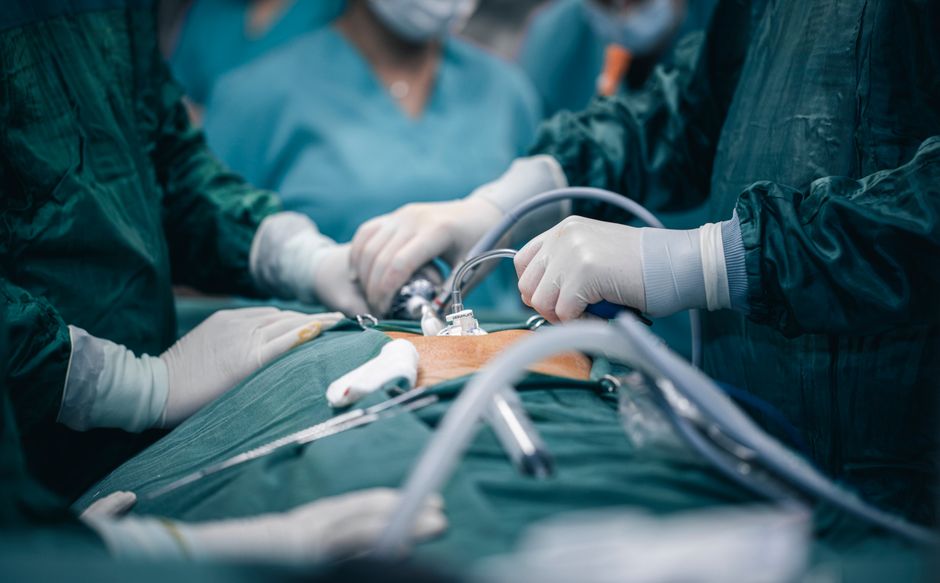
- Under general anesthesia, a laparoscope is inserted through small abdominal incisions.
- The surgeon removes one ovary or harvests cortex strips from one or both ovaries, depending on the patient's ovarian reserve and clinical needs.
- The harvested tissue is transported immediately to the cryo laboratory in a temperature-controlled medium.
- In the lab, cortex strips are dissected to approximately 1–2 mm thickness to maximize cryoprotectant penetration.
- Strips are cryopreserved using either slow-freeze (controlled-rate cooling) or vitrification (ultra-rapid freezing) protocols, then stored in liquid nitrogen.
Retransplantation phase (a separate future procedure):
- Once the patient is in remission and ready to conceive, thawed tissue strips are sutured orthotopically (onto the remaining ovary) or heterotopically (to a peritoneal pocket or subcutaneous site).
- Laparoscopic orthotopic retransplantation is the standard approach in Korea and internationally, as it allows for natural conception.
- Ovarian function typically resumes within 3–6 months post-retransplantation, confirmed by ultrasound follicle monitoring and hormone levels.
Recovery Timeline
Recovery from the retrieval procedure is generally straightforward:
- Day 0–1: Overnight hospital observation, pain managed with standard analgesics, monitoring for laparoscopic complications.
- Day 2–5: Discharge with activity restrictions; most patients describe discomfort similar to a minor laparoscopic surgery.
- Week 1: Light activity permitted; heavy lifting and strenuous exercise avoided.
- Week 2–4: Full return to daily activities for most patients; oncology treatment may begin within days of discharge if clinically urgent.
For international patients coordinating OTC with cancer treatment in their home country, the typical Korea stay covers the retrieval procedure only. The tissue is stored indefinitely in Korea until the patient returns for retransplantation.
Retransplantation recovery (a separate future visit) follows a similar post-laparoscopic timeline. After retransplantation, ovarian function monitoring begins at approximately 4–6 weeks and continues until follicular activity is confirmed. Patients should plan a follow-up visit or arrange monitoring with a local reproductive endocrinologist in their home country.
Cost Breakdown
Korea does not publish standardized government price lists for OTC, but costs are meaningfully lower than in the United States or major Western European centers.
The retrieval and initial cryopreservation package at Korean reproductive medicine centers typically covers the surgical fee, anesthesia, hospital stay, laboratory processing, and first-year storage. This generally falls in the $8,000–$14,000 range depending on the center, the extent of tissue harvested, and whether additional fertility diagnostics are included.
Annual long-term storage adds approximately $300–$600 per year after the first year.
Retransplantation, when the patient returns, is priced separately and typically runs $4,000–$8,000 in Korea depending on surgical complexity.
For comparison, equivalent OTC retrieval programs in the United States are commonly quoted at $10,000–$15,000 for retrieval alone, with storage on top.
All cost figures are approximate USD ranges. Patients should request itemized quotes directly from the treating center before travel.
| Item | Typical Cost in Korea (USD) |
|---|---|
| OTC retrieval, anesthesia, and hospital stay | $5,500–$9,000 |
| Cryo laboratory processing and first-year storage | $1,500–$2,500 |
| Pre-operative fertility diagnostics (AMH, ultrasound, consult) | $300–$700 |
| Annual long-term storage (subsequent years) | $300–$600/yr |
| Retransplantation (separate future procedure) | $4,000–$8,000 |
Why Korea
Korea has developed particular strength in reproductive medicine and laparoscopic gynecologic surgery, concentrated in major teaching hospitals in Seoul and Busan.
Laparoscopic surgical expertise is a core driver. Korean gynecologic surgeons perform high volumes of minimally invasive procedures, and the infrastructure for same-session surgical-to-laboratory tissue handoff — critical for OTC — is well established at academic medical centers.
Cryo laboratory standards at Korean reproductive medicine programs align with international benchmarks. The Korea Health Industry Development Institute (KHIDI) supports international patient coordination under the Medical Korea framework, and facilities treating foreign patients are subject to oversight by the Ministry of Food and Drug Safety (MFDS).
Oncofertility as a subspecialty has grown alongside Korea's oncology sector. The country's tertiary hospitals manage high case volumes of breast cancer, cervical cancer, and hematologic malignancies — the same diagnoses most commonly referred for OTC. This means the multidisciplinary team (oncologist, reproductive endocrinologist, embryologist) works within an integrated clinical environment.
International patient infrastructure is a real advantage. Major Seoul hospitals with reproductive medicine programs have English-language international patient centers, dedicated coordinator teams, and established relationships with KHIDI's Medical Korea patient support network.
Turnaround from consultation to retrieval can often be arranged within a compressed timeline — important for oncology patients who cannot delay treatment.
Cost remains favorable relative to US and UK programs, without meaningful compromise on laboratory or surgical standards.
Key Takeaways
- OTC is the only fertility preservation option available to pre-pubertal girls and women who cannot delay cancer treatment for ovarian stimulation.
- Korea's teaching hospitals offer laparoscopic OTC with cryo lab protocols aligned to ESHRE international standards, within the Medical Korea patient support framework.
- All-in retrieval costs in Korea are broadly $8,000–$14,000 — lower than equivalent US programs — with retransplantation priced separately on a future visit.
- An oncofertility multidisciplinary team review is required before proceeding; OTC is not appropriate for all cancer types due to the theoretical risk of reintroducing malignant cells at retransplantation.
Frequently Asked Questions
How long can ovarian tissue be stored before retransplantation?
Ovarian cortex strips stored in liquid nitrogen at below −190°C can remain viable for many years. Published cases have documented successful retransplantation and live births after more than a decade of storage, though each case is evaluated individually.
Is OTC experimental or established?
ESHRE removed OTC from experimental status and classifies it as an established fertility preservation technique for appropriate candidates. Korean reproductive medicine programs follow ESHRE-aligned protocols.
Can OTC restore hormonal function even without a pregnancy attempt?
Yes. A key benefit of orthotopic retransplantation is the restoration of natural ovarian endocrine function — producing estrogen and progesterone — which can relieve premature menopause symptoms independently of any fertility goal.
Is the tissue shipped internationally, or must I return to Korea for retransplantation?
Practices vary by center. Some Korean facilities can arrange international tissue transfer to a reproductive medicine program in your home country, subject to cryogenic transport regulations and the receiving center's capabilities. Confirm logistics directly with the Korean center before storage begins.
Does OTC increase the risk of cancer recurrence?
For most solid tumors, international guidance considers the risk low, and many successful cases have been published. However, for certain blood cancers (particularly leukemia) the tissue may harbor malignant cells, making retransplantation higher-risk. An oncology review of the stored tissue is recommended before any retransplantation.
How soon after cancer diagnosis can the retrieval procedure be scheduled in Korea?
With pre-operative records sent in advance, Korean oncofertility centers can often complete the consultation and retrieval within 3–5 days of arrival. This compressed timeline exists specifically to avoid delaying cancer treatment.
Related Topics
Sources
- The Experience of Fertility Preservation in a Single Tertiary Center in Korea — PMC
- Ovarian tissue cryopreservation and transplantation in patients with cancer — PMC
- Cryopreservation of ovarian tissue — Frontiers in Reproductive Health
- Fresh and cryopreserved ovarian tissue transplantation: systematic review — PMC
Ready to Begin Your Journey?
Get matched with KAHF-accredited hospitals and receive a personalized treatment plan.
Quick Facts
Typical Cost
$3000 - $8000
Duration
7 days
Accredited Hospitals
0+ Available
Top Hospitals
Medical Information Disclaimer
The information provided on this page about Ovarian Tissue Cryopreservation is for general educational and informational purposes only. It is not intended as, and should not be construed as, medical advice, diagnosis, or treatment recommendations.
Always seek the advice of a qualified healthcare professional regarding any medical condition or treatment. Never disregard professional medical advice or delay seeking it because of information found on this website. Individual treatment outcomes may vary. Costs shown are estimates and may differ based on individual circumstances.
KmedTour acts as a medical tourism facilitator and does not provide direct medical services. All treatments are performed by independently accredited healthcare providers in South Korea.