Dentistry$2000 - $8000⭐ KAHF Accredited Hospitals
Orthodontic Treatment in Korea
Braces, clear aligners, and lingual orthodontics in South Korea — advanced care at 40–70% below Western prices.
Quick Answer
- Metal braces in Korea typically cost $2,100–$3,500 USD, ceramic braces $2,800–$4,500 USD — roughly 40–70% less than equivalent treatment in the US or Western Europe.
- Clear aligners (Invisalign and Korean-developed systems such as K-Line and Clippy-C) run $2,750–$5,500 USD for full-arch cases.
- Lingual braces (placed behind the teeth) cost $4,800–$8,200 USD and are widely available in Seoul's Gangnam dental district.
- Treatment timelines are standard — 12–24 months for most cases — but digital planning tools used by Korean clinics often reduce adjustment visits and chair time.
At a Glance
| Treatment duration | 12–24 months depending on case complexity (mild cases 6–12 months with accelerated protocols) |
|---|---|
| Anesthesia | Local anesthetic for bracket bonding only; routine adjustments require none |
| Hospital stay | None — outpatient visits every 4–8 weeks |
| Recommended stay in Korea | Initial setup: 3–5 days for consultation, imaging, records, and bonding; follow-up visits as needed or managed by a local orthodontist with shared records |
| Follow-up | Monthly or bi-monthly adjustment visits throughout treatment; retainer phase after alignment is achieved |
| Typical cost in Korea | $2,100–$8,200 USD depending on brace type and case complexity |
Overview
Orthodontic treatment realigns teeth and corrects bite issues — including crowding, spacing, overbite, underbite, and crossbite — using sustained, gentle mechanical force applied over months.
The three main systems available at Korean dental clinics are traditional metal braces, ceramic (tooth-colored) braces, and clear aligners such as Invisalign and domestically developed Korean aligner systems. A fourth option, lingual braces bonded to the inside surfaces of teeth, is widely practiced in Seoul and offers complete concealment.
Korea has become one of the leading destinations for orthodontic dental tourism.
Clinics — especially those in Seoul's Gangnam district — combine the full range of established techniques with 3D digital scanning, CAD/CAM planning, and digital smile simulation, all at fees that are substantially lower than comparable care in the United States, Canada, Australia, or Western Europe.
For international patients, a practical route is to complete the consultation, records, and bracket or aligner bonding in Seoul during an initial stay of approximately 3–5 days, then continue adjustment visits either back in Korea or with a cooperating local dentist at home who receives the treatment records digitally.
Plan your initial visit for 3–5 days
Korean orthodontists can complete all diagnostic records (3D scan, X-rays, photos) and bond brackets or deliver the first aligner set within a single extended visit of 3–5 days. Treatment records are then shareable digitally with a local orthodontist in your home country for routine adjustments, making Korea a viable starting point even for a multi-year treatment.
Am I a Candidate?
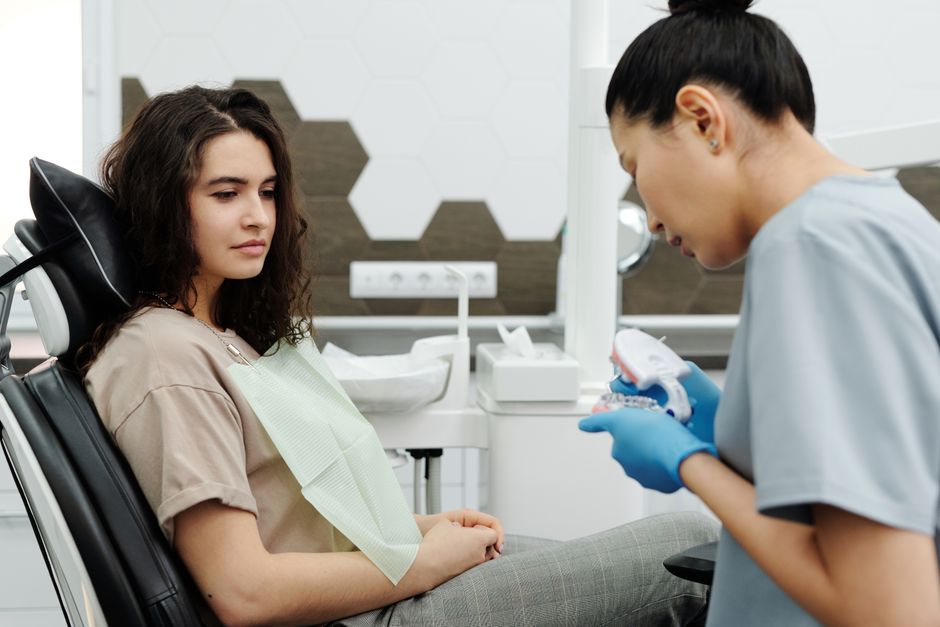
Most adults and teenagers with sufficient permanent teeth are candidates for orthodontic treatment. A full assessment — including panoramic X-rays and 3D intraoral scans — determines which system suits each patient.
Common conditions that orthodontics can correct:
- Crowded or overlapping teeth
- Excessive spacing or gaps
- Class II malocclusion (overbite)
- Class III malocclusion (underbite)
- Crossbite or open bite
- Midline discrepancies
Clear aligner systems such as Invisalign and K-Line are best suited to mild-to-moderate crowding and spacing. Severe skeletal malocclusions may require orthognathic surgery in combination with braces, a procedure also available at Korean university hospitals and specialty dental hospitals.
Lingual braces are available for most severity levels and are particularly popular among professional adults who require a fully invisible option throughout the treatment period.
Active gum disease or significant untreated decay must be resolved before orthodontic brackets or aligners are placed. Korean dental clinics routinely perform a pre-orthodontic examination that covers both periodontal status and cavity assessment in the same appointment.
How the Procedure Works
The orthodontic process follows the same clinical sequence regardless of which system is chosen.
Step 1 — Consultation and diagnostic records The initial appointment includes a clinical exam, digital panoramic X-ray, cephalometric X-ray, and 3D intraoral scan. No physical impressions (alginate or putty) are typically needed at modern Korean clinics.
A treatment simulation showing projected tooth movement is shown to the patient before any commitment is made.
Step 2 — Treatment plan and consent The orthodontist presents bracket type, aligner brand or system, estimated duration, fee structure, and adjustment schedule. For aligner cases, the digital setup (a simulation of each stage of tooth movement) is reviewed and approved.
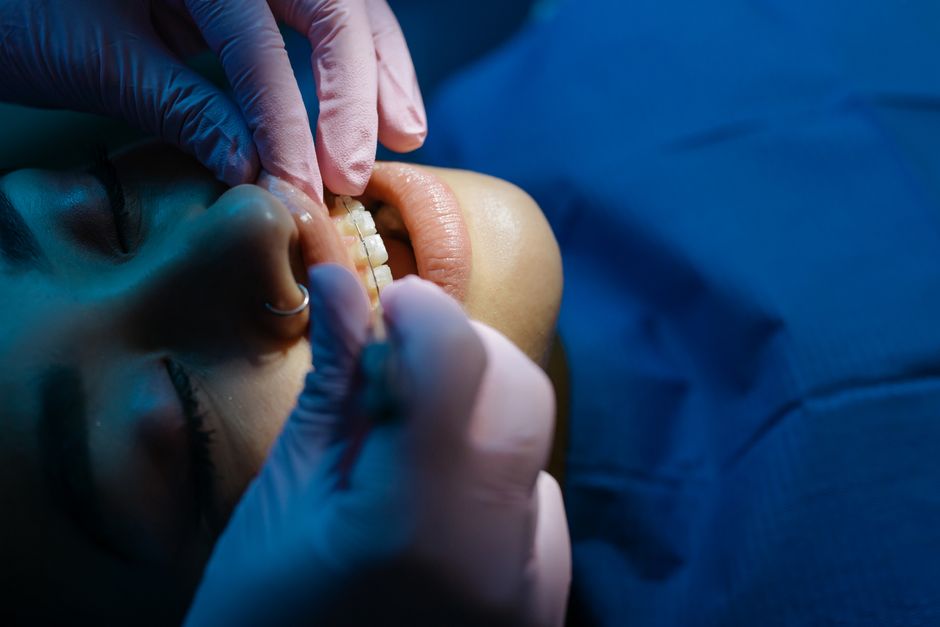
Step 3 — Placement For braces: brackets are bonded to the enamel surface (or lingual surfaces for lingual braces) with dental adhesive; an archwire is threaded through. The appointment takes approximately 1–2 hours under local anesthetic for any discomfort.
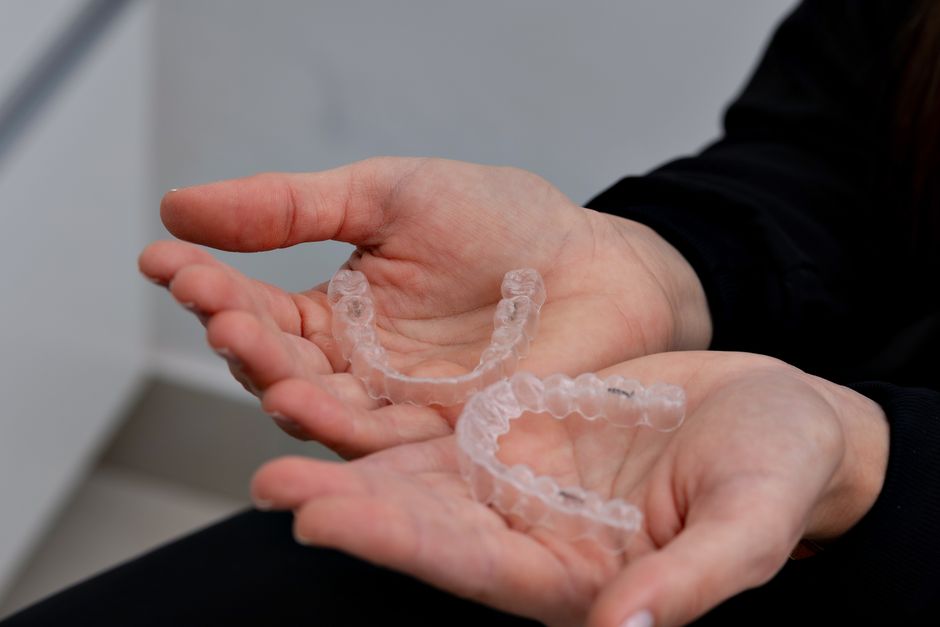
For aligners: the first set of trays is dispensed; small composite attachments may be bonded to certain teeth to create the anchor points aligners grip against.
Step 4 — Adjustment visits Braces require in-clinic visits every 4–8 weeks to change wires and check progress. Aligner patients change trays at home every 1–2 weeks and visit the clinic approximately every 8–12 weeks for monitoring.
Step 5 — Debonding and retention Once target alignment is reached, brackets are removed and teeth polished. Fixed retainers (bonded wires) and removable retainer trays are provided. Retention is indefinite for most patients to prevent relapse.
Recovery Timeline
Orthodontic treatment does not involve surgical recovery in the conventional sense. Patients continue their daily activities without interruption.
First 3–5 days after bonding: Teeth and jaw may feel tender or sore as they respond to the new forces. Over-the-counter pain relief is typically sufficient. Soft foods are advisable. Ulcer wax can protect the cheeks from new bracket edges.
Weeks 1–4: The initial soreness resolves and patients adapt to the appliance. Speech adjusts within days for lingual brace wearers.
Months 1–6: Visible tooth movement begins. Periodic mild soreness after each adjustment is normal and resolves within 2–3 days.
Months 6–18+: The teeth progress through planned stages. Digital scans at check-ups track progress against the original plan.
End of active treatment: After debonding or completing the final aligner, the retention phase begins immediately. Retainers must be worn as directed — typically full-time for several months, then nightly long-term — to maintain results.
For international patients completing initial records and bonding in Korea, the rest of active treatment can be managed through a cooperating orthodontist in their home country, with records and digital files transferred.

Cost Breakdown
Orthodontic fees in Korea are substantially lower than in Western countries — typically 40–70% below US prices — without a corresponding reduction in the clinical standard of care.
What typically influences the price:
- Brace type (metal < ceramic < lingual; clear aligners vary by system)
- Severity and expected treatment length
- Clinic tier (neighborhood clinic vs. large multi-specialist dental hospital in Gangnam)
- Whether extraction of teeth is required
- Retainer fabrication and follow-up visits
Approximate USD ranges (Korea):
- Metal braces: $2,100–$3,500
- Ceramic braces: $2,800–$4,500
- Clear aligners (Invisalign, Spark, K-Line, Clippy-C): $2,750–$5,500
- Lingual braces: $4,800–$8,200
- Retainers (removable set): $150–$350
- Tooth extractions if required: $80–$200 per tooth
For comparison, metal braces in the United States typically cost $4,500–$7,000 and Invisalign $5,000–$9,000 or more, before insurance.
Most Korean orthodontic clinics quote an all-in package price covering bonding, all adjustment visits, and final retainers. Confirm what is included before committing — specifically whether extraction fees and retainer fees are bundled.
| Item | Typical Cost in Korea (USD) |
|---|---|
| Metal braces (full treatment) | $2,100–$3,500 |
| Ceramic braces (full treatment) | $2,800–$4,500 |
| Clear aligners — Invisalign / Korean systems | $2,750–$5,500 |
| Lingual braces (full treatment) | $4,800–$8,200 |
| Removable retainers (set) | $150–$350 |
| Tooth extraction (per tooth, if needed) | $80–$200 |
Why Korea
South Korea's dental sector sits within a broader medical tourism ecosystem regulated by the Ministry of Food and Drug Safety (MFDS) and promoted internationally through the Korea Health Industry Development Institute (KHIDI) and the Medical Korea portal. These bodies maintain quality standards and provide a framework for international patient support.
Cost without quality compromise. Operating costs in Korea are lower than in the US or Western Europe, and clinics amortize overheads across high patient volumes. The result is fees 40–70% below Western prices for the same bracket systems, aligner brands, and imaging technology.
Technology adoption. Seoul clinics — particularly those clustered in Gangnam — are early adopters of 3D intraoral scanners, digital smile design software, and CAD/CAM workflows. Several clinics offer Korean-developed aligner systems (K-Line, Clippy-C) as domestic alternatives to Invisalign, often at lower cost.
Training depth. Korean orthodontists complete an undergraduate dental program followed by a specialist residency in orthodontics — a training pathway totaling approximately a decade. Many specialists hold additional postgraduate qualifications or international training.
Cultural emphasis on dental aesthetics. Korea's consumer culture places a high premium on smile appearance. This demand has driven clinic investment in equipment and technique at a pace that exceeds many Western markets.
International patient infrastructure. Major dental clinics in Gangnam and surrounding districts employ multilingual patient coordinators, provide digital treatment records for home-country follow-up, and can arrange medical tourism support services through KHIDI-affiliated coordinators.
Foreign patient visits to Korean medical facilities — including dental — surpassed one million for the first time in 2024, reflecting growing international confidence in the quality and value proposition of Korean healthcare.
Key Takeaways
- Metal and ceramic braces in Korea cost approximately 40–70% less than equivalent treatment in the United States or Western Europe.
- Korean clinics in Seoul's Gangnam district offer the full range of orthodontic options — metal braces, ceramic braces, lingual braces, and clear aligners including domestic Korean systems such as K-Line and Clippy-C.
- The MFDS, KHIDI, and Medical Korea provide regulatory and support frameworks that give international patients a formal quality assurance structure when accessing Korean dental care.
- International patients can complete initial bonding or aligner setup in Seoul over 3–5 days and continue adjustment visits with a cooperating orthodontist at home using digitally shared records.
Frequently Asked Questions
Can I start orthodontic treatment in Korea and finish it at home?
Yes — this is the most practical approach for international patients. Korean clinics routinely export your complete diagnostic records, 3D scans, and treatment plans in digital formats that an orthodontist in your home country can use to continue adjustment visits. You travel to Korea for the initial consultation, records, and bracket or aligner placement (3–5 days), then return only if you want check-ups in Seoul, or manage follow-up locally.
How much cheaper are braces in Korea compared to the United States?
In the United States, metal braces typically cost $4,500–$7,000 and Invisalign $5,000–$9,000 or more before insurance. Comparable treatment in Korea runs $2,100–$3,500 for metal braces and $2,750–$5,500 for clear aligners — a saving of roughly 40–70% depending on clinic tier and case complexity.
What clear aligner brands are available at Korean dental clinics?
Korean clinics offer internationally recognized systems such as Invisalign and Spark alongside domestically developed systems including K-Line and Clippy-C. The Korean-developed systems often cost less than Invisalign while using equivalent digital planning and sequential aligner technology. Your orthodontist will recommend a system based on case complexity and your preference.
Is orthodontic treatment in Korea regulated and safe for foreign patients?
Yes. Korean dental practice is regulated by the Ministry of Food and Drug Safety (MFDS). The Korea Health Industry Development Institute (KHIDI) and the Medical Korea portal maintain standards for clinics serving international patients, including requirements for malpractice liability coverage. Foreign patient volumes at Korean medical facilities surpassed one million in 2024, reflecting a well-established international patient infrastructure.
Do I need to speak Korean to get orthodontic treatment in Seoul?
Most dental clinics in Gangnam and other central Seoul districts that actively serve international patients employ multilingual coordinators — commonly English-speaking — who manage consultations, treatment explanations, and follow-up communication. It is advisable to confirm language support when contacting a clinic before booking travel.
What is the difference between ceramic braces and clear aligners in Korea?
Ceramic braces use tooth-colored brackets bonded to the front of the teeth, making them less visible than metal but still fixed. Clear aligners are removable trays worn 20–22 hours per day, offering the best aesthetics and easy cleaning but requiring patient discipline. Ceramic braces are generally more affordable than clear aligner systems for complex cases; aligners suit mild-to-moderate crowding best. Your Korean orthodontist will assess which is clinically appropriate during the initial consultation.
Related Topics
Ready to Begin Your Journey?
Get matched with KAHF-accredited hospitals and receive a personalized treatment plan.
Quick Facts
Typical Cost
$2000 - $8000
Duration
365 days
Accredited Hospitals
0+ Available
Top Hospitals
Medical Information Disclaimer
The information provided on this page about Orthodontic Treatment is for general educational and informational purposes only. It is not intended as, and should not be construed as, medical advice, diagnosis, or treatment recommendations.
Always seek the advice of a qualified healthcare professional regarding any medical condition or treatment. Never disregard professional medical advice or delay seeking it because of information found on this website. Individual treatment outcomes may vary. Costs shown are estimates and may differ based on individual circumstances.
KmedTour acts as a medical tourism facilitator and does not provide direct medical services. All treatments are performed by independently accredited healthcare providers in South Korea.