Dentistry$5000 - $15000⭐ KAHF Accredited Hospitals
Oral and Maxillofacial Surgery in Korea
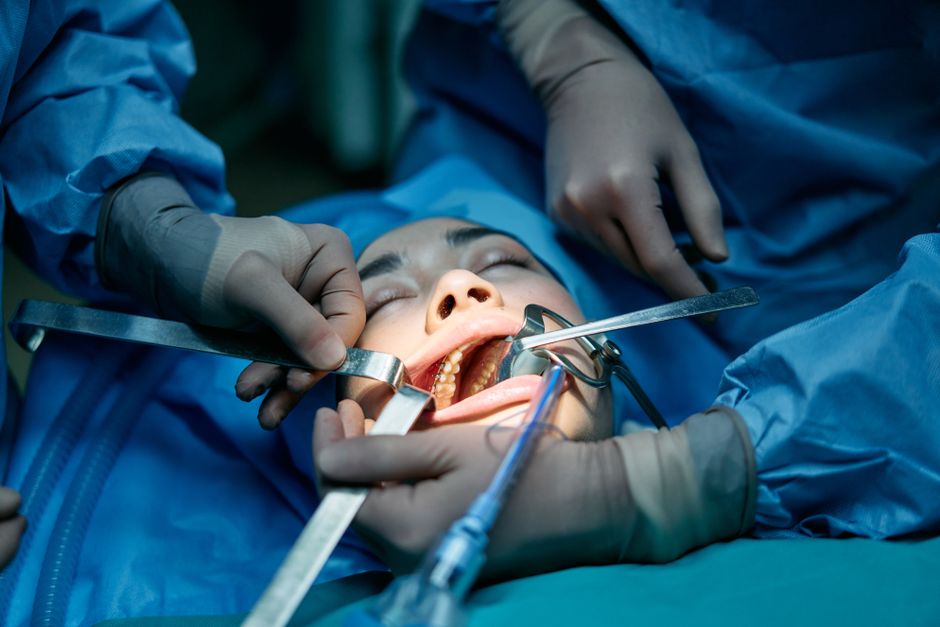
Jaw surgery, orthognathic correction, TMJ treatment, and facial trauma care at Korean university hospitals and specialist clinics.
Quick Answer
- Orthognathic (double jaw) surgery in South Korea typically costs $7,000–$23,000 — roughly 50–60% less than equivalent procedures in the United States.
- Korean surgeons use computer-assisted orthognathic surgery (CAOS), virtual surgical planning (VSP), and 3D CT-guided osteotomy for precision jaw repositioning.
- Hospital stay is generally 4–7 days for major jaw procedures; most international patients plan a 3–4 week total stay in Korea.
- Clinics treating foreign patients must register with KHIDI (Korea Health Industry Development Institute) and carry mandatory malpractice liability insurance.
At a Glance
| Procedure time | 1–5 hours depending on scope (single vs. double jaw, trauma reconstruction) |
|---|---|
| Anesthesia | General anesthesia for orthognathic and trauma procedures; local/IV sedation for wisdom teeth removal |
| Hospital stay | 1–2 days (simple procedures) to 5–7 days (double jaw / bimaxillary surgery) |
| Recommended stay in Korea | 3–4 weeks for orthognathic surgery; 5–7 days for wisdom teeth or TMJ treatment |
| Recovery | Soft diet for 6–8 weeks; full jaw function and bone consolidation at 10–12 weeks; orthodontic fine-tuning continues 6–12 months post-op |
| Typical cost in Korea | $2,500–$23,000 depending on procedure (wisdom teeth extraction to full bimaxillary osteotomy) |
Overview
Oral and maxillofacial surgery (OMS) covers a wide spectrum of procedures involving the bones, soft tissues, and joints of the jaw, face, and oral cavity.
In South Korea, the specialty is practiced by surgeons who complete both a full dental degree and a multi-year surgical residency, giving them a dual-track qualification recognized by the Korean government.
The most internationally sought procedure is orthognathic surgery — the surgical correction of jaw misalignment (malocclusion), facial asymmetry, or skeletal discrepancies that cannot be resolved by orthodontics alone.
Korea has built a global reputation in this area, particularly for bimaxillary (double jaw) procedures that reposition both the upper jaw (maxilla) and lower jaw (mandible) simultaneously.
Scope extends beyond jaw correction.
Korean OMS units handle wisdom tooth (third molar) extraction, including deeply impacted cases requiring bone removal, and temporomandibular joint (TMJ) disorders, from conservative management to arthroscopic or open joint surgery.
Facial trauma reconstruction covers fracture repair of mandible, zygoma, and orbital floor, and pathological conditions include cysts, tumors, and salivary gland disease.
Seoul's major university-affiliated dental hospitals — including the dental schools attached to Seoul National University, Yonsei University, and Kyung Hee University — operate dedicated OMS departments where complex and multi-stage cases are managed by specialist teams.
Private specialist clinics in Gangnam and adjacent districts also attract a large share of international patients seeking orthognathic and facial contouring surgery.
Korea's OMS sector benefits from tight integration with orthodontics, enabling the coordinated pre-surgical orthodontic preparation and post-surgical finishing that determines long-term occlusal stability — a full-cycle capability that sets leading Korean centers apart from single-specialty providers elsewhere.
Complete pre-surgical orthodontics before you travel
Most orthognathic cases require 6–18 months of orthodontic preparation before the jaw can be surgically repositioned. Many international patients complete this phase with an orthodontist at home, then travel to Korea only for the surgical phase — significantly reducing total time in-country.
Am I a Candidate?
Good candidates for orthognathic surgery in Korea are adults whose jaw growth is complete (generally 17–21 years and older) and who have skeletal jaw discrepancies that affect bite function, speech, chewing ability, or breathing — issues orthodontic treatment alone cannot resolve.
Common functional indications include:
- Severe underbite (mandibular prognathism) or overbite (retrognathia)
- Open bite where upper and lower teeth do not contact when the mouth is closed
- Significant facial asymmetry caused by uneven jaw development
- Obstructive sleep apnea related to jaw position (maxillomandibular advancement)
- Cleft palate-related jaw deformities after earlier palate repair
Wisdom tooth removal is appropriate when third molars are impacted (trapped under bone or gum), causing recurrent infection, crowding adjacent teeth, or forming a cyst or pathological lesion.
TMJ surgery candidates are typically those who have not responded adequately to conservative care — physical therapy, splint therapy, medication — and who have documented joint degeneration, disc displacement, or condylar abnormality on MRI.
Facial trauma reconstruction is indicated following fractures of the jaw, cheekbone, eye socket, or nasal bones, and is typically performed on an urgent or semi-urgent basis.
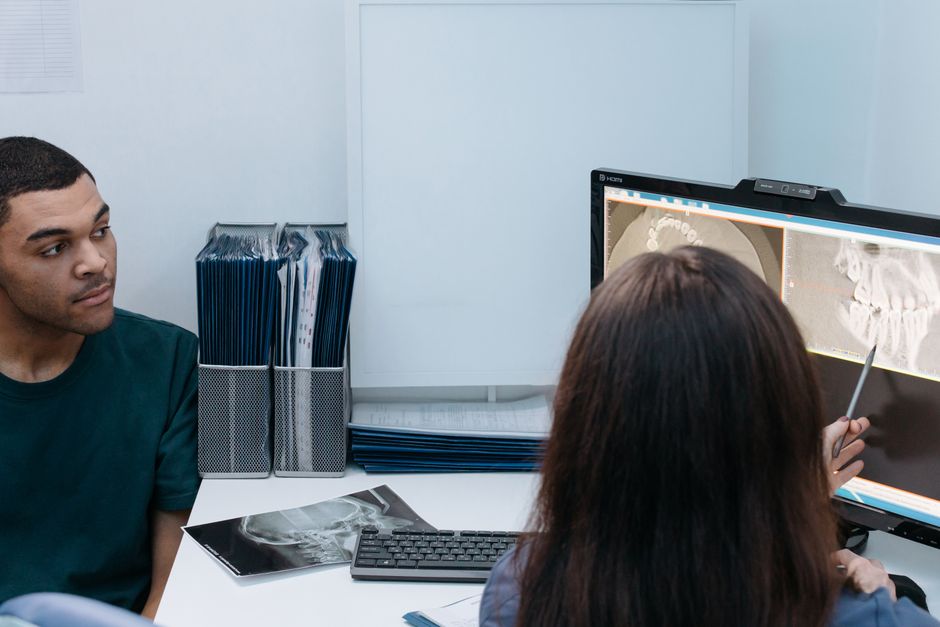
International patients considering surgery in Korea are evaluated through pre-operative consultations, dental impressions, cephalometric X-rays, panoramic radiographs, and 3D CT imaging. Many Korean clinics now offer preliminary digital consultations that allow patients to submit imaging from their home country before traveling.
How the Procedure Works
For orthognathic surgery, the process begins well before the operating room. Most patients undergo pre-surgical orthodontic treatment for 6–18 months to align the teeth within each jaw independently, creating the correct tooth positions for the new skeletal relationship.
Korean OMS teams work directly with orthodontists — either in-house or in close coordination — to plan this phase.
Surgical planning uses 3D CT imaging and virtual surgical planning (VSP) software. Computer-assisted orthognathic surgery (CAOS) allows the surgical team to simulate jaw movements digitally, fabricate custom surgical wafers (occlusal splints), and in many cases use patient-specific titanium fixation hardware.
Research published on PubMed from Korean centers confirms that CAOS reduces operative time and improves positional accuracy compared to conventional model-surgery planning.
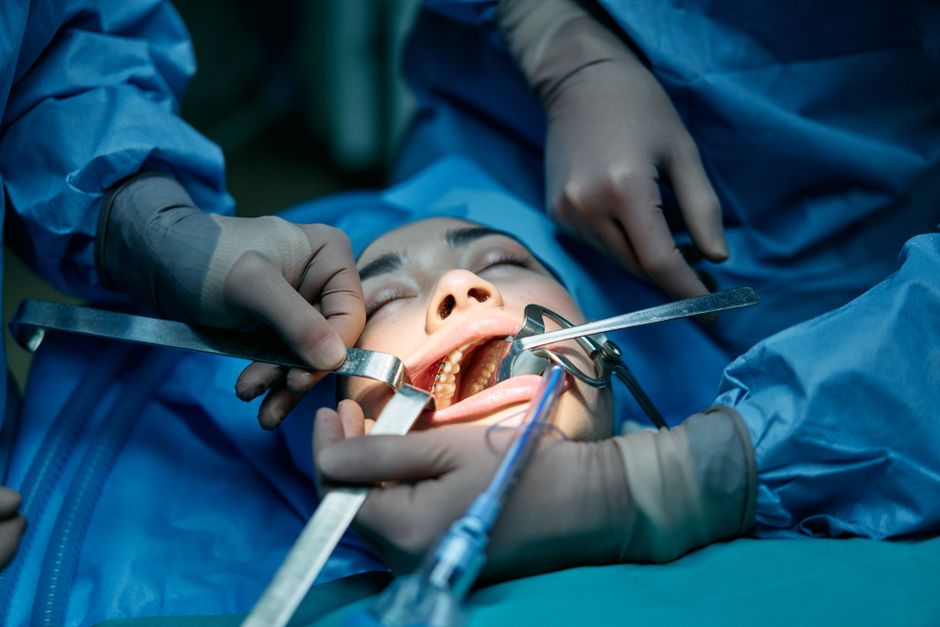
In the operating room, all incisions are made intraorally — inside the mouth — leaving no visible facial scars. For the upper jaw, a Le Fort I osteotomy separates the maxilla from the mid-face skeleton and repositions it vertically, horizontally, or in rotation.
For the lower jaw, a sagittal split ramus osteotomy (SSRO) or intraoral vertical ramus osteotomy (IVRO) divides the mandible and advances, sets back, or rotates the chin-bearing segment. Both cuts are held in their new positions with titanium plates and screws.
For wisdom tooth removal, the oral surgeon makes a small incision in the gum, removes any overlying bone, and extracts the tooth in sections if needed. Closure is with absorbable sutures; the procedure takes 30–90 minutes under local anesthesia with IV sedation.
TMJ arthroscopy is a minimally invasive approach in which a small camera and instruments are inserted through two punctures in front of the ear. The surgeon can wash the joint, release adhesions, or reposition a displaced disc.
Open joint surgery is reserved for severe structural damage and involves a small incision at the joint.
Facial trauma repair involves reducing (realigning) fractured bone segments and holding them with titanium microplates, often through hidden or minimally visible incisions.
Recovery Timeline
Recovery from orthognathic surgery proceeds in broadly predictable phases, though the timeline varies by complexity.
Weeks 1–2: The face is noticeably swollen, and the jaw may be held in light elastic traction (not fully wired shut, in most modern Korean protocols). Patients consume a liquid diet — soups, meal-replacement drinks, smoothies. Pain is managed with prescription analgesics.
Patients are typically discharged after 5–7 days and can travel domestically but should remain in Korea.
Weeks 3–4: Swelling begins to reduce. A soft diet (soft rice, tofu, cooked vegetables) is introduced. Light outdoor activity is permitted. Most international patients complete their in-Korea stay during this window and return home for continued recovery.
Weeks 6–8: A broader soft-to-normal diet is possible. The titanium fixation hardware provides stability; the underlying bone is still consolidating. Orthodontic appointments resume for bite fine-tuning.
Weeks 10–12: Bone consolidation is near complete. Normal diet is gradually reintroduced. Numbness in the lower lip and chin — a common side effect of mandibular nerve proximity — typically resolves over 3–6 months, though this varies.
Months 6–18: Post-surgical orthodontic finishing continues until the occlusion is fully stabilized. Final aesthetic results — including swelling fully resolved — are typically visible at 6–12 months.
For wisdom tooth removal, most patients recover in 5–7 days. For TMJ arthroscopy, return to normal activity is usually within 2–4 weeks.
Cost Breakdown
Costs in South Korea vary significantly by procedure type, institution tier, and whether the work involves one or both jaws. The figures below are approximate USD ranges for international patients paying out of pocket; Korean national health insurance (NHIS) does not cover foreign nationals.
Orthognathic surgery for a single jaw (upper or lower only) runs approximately $7,800–$14,500. Double jaw (bimaxillary) surgery — repositioning both maxilla and mandible — is typically $12,000–$23,000 at specialist private clinics; university hospital rates for comparable procedures can be higher due to facility fees and extended hospitalization.
These figures generally include surgical fees, anesthesia, hospital stay, and basic post-operative care.
Pre-surgical orthodontics is a separate cost — typically $2,500–$5,000 if undertaken in Korea, though many international patients complete this phase in their home country before traveling.
Wisdom tooth removal for a single impacted tooth ranges from roughly $300–$800. Multiple extractions are often discounted when done in a single session.
TMJ arthroscopy is approximately $3,000–$7,000 depending on the extent of joint work. Open TMJ surgery is priced higher.
Pre-operative imaging packages (3D CT, cephalometric X-rays, dental impressions, VSP) add $500–$1,500.
Comparative context: equivalent orthognathic procedures in the United States frequently run $25,000–$40,000+ before insurance — patients traveling to Korea for double jaw surgery commonly report total savings of 40–60% even after factoring in flights and accommodation.
| Item | Typical Cost in Korea (USD) |
|---|---|
| Single jaw osteotomy (Le Fort I or SSRO/IVRO) | $7,800–$14,500 |
| Double jaw (bimaxillary) surgery | $12,000–$23,000 |
| Impacted wisdom tooth removal (per tooth) | $300–$800 |
| TMJ arthroscopy | $3,000–$7,000 |
| Pre-op 3D CT + virtual surgical planning | $500–$1,500 |
| Pre-surgical orthodontics (if done in Korea) | $2,500–$5,000 |
Why Korea
South Korea's standing in oral and maxillofacial surgery rests on several compounding advantages that have developed over decades of investment in dental and surgical education.
Depth of surgical volume. Korea's prevalence of Class III malocclusion (underbite, prognathism) in its domestic population created high natural surgical demand, meaning Korean OMS surgeons perform orthognathic procedures at volumes that build technical fluency faster than low-volume centers elsewhere.
Advanced planning technology. Computer-assisted orthognathic surgery (CAOS) and virtual surgical planning are routinely used at major Korean centers. PubMed-indexed research originating from Korean university hospitals documents the clinical application of patient-specific implants, 3D-printed surgical guides, and piezoelectric bone-cutting instruments — tools that reduce operative trauma and improve precision.
Integrated orthodontic-surgical pathways. Leading Korean centers operate orthodontics and OMS under one roof or in close institutional partnership. This coordination shortens overall treatment timelines and reduces the risk of the pre/post-surgical orthodontic phases being misaligned.
Government-backed patient infrastructure. The Korea Health Industry Development Institute (KHIDI) operates the Medical Korea portal (medicalkorea.or.kr), which lists accredited hospitals serving foreign patients. Clinics must meet registration requirements — including qualified medical interpreters and malpractice liability coverage — to appear on the portal.
The Ministry of Food and Drug Safety (MFDS) governs the surgical hardware (plates, screws, implants) used in OMS procedures.
Korean Association of Maxillofacial Plastic & Reconstructive Surgeons maintains a certified specialist roster, giving international patients a verifiable credential check.
Cost competitiveness. Even at university hospital pricing, Korean OMS fees are substantially below Western equivalents. For patients without insurance coverage for orthognathic surgery — common in many countries where the procedure is classified as cosmetic — Korea represents a credible, quality-verified option.
Key Takeaways
- South Korea's high domestic surgical volume and university hospital OMS programs have made it a globally recognized destination for orthognathic (jaw correction) surgery, particularly bimaxillary procedures.
- Computer-assisted orthognathic surgery (CAOS) and virtual surgical planning (VSP) are standard tools at leading Korean centers, improving positional accuracy and reducing operative time.
- International patients should verify that their chosen clinic is registered on the KHIDI Medical Korea portal, which confirms legal permission to treat foreign patients and mandates interpreter services and malpractice coverage.
- Total costs for double jaw surgery in Korea — including hospital stay — typically run 40–60% below equivalent out-of-pocket costs in the United States or Western Europe.
Frequently Asked Questions
Do I need to complete orthodontic treatment before orthognathic surgery in Korea?
In most cases, yes. Jaw surgery requires that the teeth within each jaw are correctly aligned before the jaws are repositioned — otherwise the bite will be wrong after surgery. This pre-surgical orthodontic phase typically takes 6–18 months and is usually completed at home before you travel to Korea for the surgical procedure itself.
Will orthognathic surgery in Korea leave visible scars?
All incisions for standard single and double jaw osteotomy are made entirely inside the mouth, leaving no external scars on the face or neck. TMJ arthroscopy uses two small punctures in front of the ear that are typically imperceptible once healed. Facial trauma reconstruction may involve small incisions near the fracture site, but surgeons generally choose hidden or minimally visible access points wherever possible.
How do I verify that a Korean OMS clinic is legitimate and safe for foreign patients?
Check the Medical Korea portal (medicalkorea.or.kr), operated by KHIDI, which lists hospitals and clinics legally registered to treat international patients. Registration requires mandatory malpractice liability insurance, qualified medical interpreters, and post-operative coordination standards. You can also verify surgeon credentials through the Korean Association of Maxillofacial Plastic & Reconstructive Surgeons roster.
How long will I feel numbness after double jaw surgery?
Temporary numbness or altered sensation in the lower lip, chin, and surrounding areas is common after mandibular (lower jaw) osteotomy, because the inferior alveolar nerve runs through the bone that is cut. In most patients this resolves over 3–6 months as the nerve heals. Permanent numbness is uncommon but is a recognized risk that your surgeon will discuss during the consent process.
Can wisdom tooth surgery and orthognathic surgery be done in the same visit to Korea?
It depends on the clinical situation. In some cases, impacted wisdom teeth are removed as a separate procedure several months before orthognathic surgery — this gives the extraction sites time to heal and simplifies the osteotomy cuts. In other cases, wisdom teeth can be removed during the same operative session. Your Korean surgical team will review your imaging and advise on the optimal sequence.
Related Topics
Ready to Begin Your Journey?
Get matched with KAHF-accredited hospitals and receive a personalized treatment plan.
Quick Facts
Typical Cost
$5000 - $15000
Duration
10 days
Accredited Hospitals
0+ Available
Top Hospitals
Medical Information Disclaimer
The information provided on this page about Oral and Maxillofacial Surgery is for general educational and informational purposes only. It is not intended as, and should not be construed as, medical advice, diagnosis, or treatment recommendations.
Always seek the advice of a qualified healthcare professional regarding any medical condition or treatment. Never disregard professional medical advice or delay seeking it because of information found on this website. Individual treatment outcomes may vary. Costs shown are estimates and may differ based on individual circumstances.
KmedTour acts as a medical tourism facilitator and does not provide direct medical services. All treatments are performed by independently accredited healthcare providers in South Korea.