Spine$8000 - $18000⭐ KAHF Accredited Hospitals
Open Microdiscectomy in Korea
Open microdiscectomy in South Korea: nerve-decompression surgery for lumbar disc herniation at a fraction of Western costs.
Quick Answer
- Open microdiscectomy removes the herniated disc fragment pressing on a spinal nerve through a 2–4 cm midline incision with surgical-microscope magnification.
- Korea cost advantage: the all-in package typically runs $6,500–$11,000 USD, compared with $20,000–$35,000+ in the United States.
- Recovery is fast: most patients walk the same day; return to light work in 2–6 weeks, full activity in 6–12 weeks.
- Satisfaction is high: roughly 90% of patients report meaningful leg-pain relief; the quoted recurrence rate for this procedure is approximately 3.3% at properly selected candidates.
At a Glance
| Procedure time | 45–90 minutes |
|---|---|
| Anesthesia | General or spinal |
| Hospital stay | 1–3 nights |
| Recommended stay in Korea | 10–14 days |
| Recovery | 2–6 weeks to light activity; 6–12 weeks to full activity |
| Typical cost in Korea | $6,500–$11,000 USD (all-in estimate) |
Overview
Open microdiscectomy is a spinal decompression procedure for lumbar disc herniation — most often at L4-L5 or L5-S1.
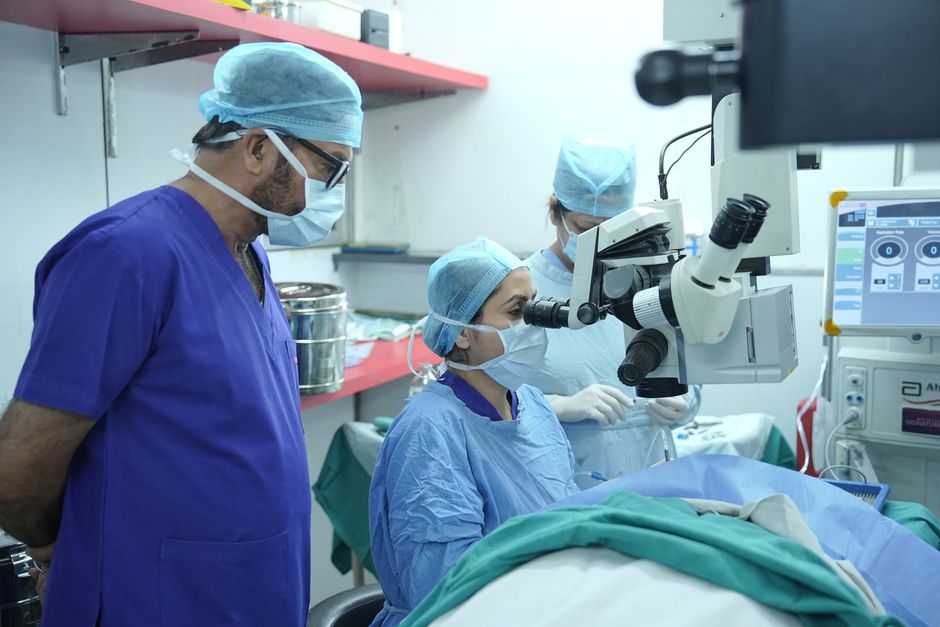
The surgeon makes a 2–4 cm incision directly over the affected level, retracts the paraspinal muscles, removes a small window of bone (laminotomy), and uses a surgical operating microscope to precisely excise the herniated disc fragment that is compressing the nerve root.
The microscope is what distinguishes this from a standard open discectomy. High magnification lets the surgeon preserve healthy disc tissue and minimize collateral damage to the nerve, ligaments, and surrounding musculature.
The goal is straightforward: remove the pain-generating mechanical pressure on the nerve. The disc itself is not fully removed — the outer annulus and most of the nucleus pulposus remain, preserving disc height and spinal stability.
Why it is still used alongside endoscopic options: open microdiscectomy has the longest evidence track record of any disc surgery technique. For large, migrated, or calcified herniations, surgeons may prefer it because the open field gives unobstructed access.
Korean spine centres offer both options and select the technique based on imaging findings and patient anatomy.
Bring your MRI before you fly
Most Korean spine hospitals will review your MRI remotely at no cost and give a surgical eligibility opinion before you book travel. Send images in DICOM format via the hospital's international patient portal to avoid repeat imaging costs on arrival.
Am I a Candidate?
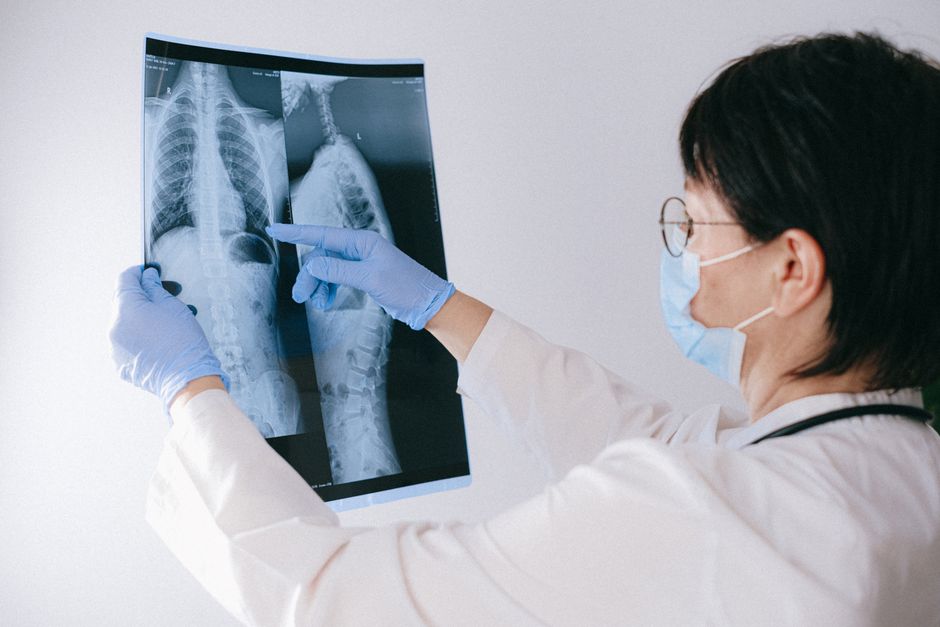
You are likely a candidate if conservative management — rest, physical therapy, epidural steroid injections — has not resolved your symptoms after 6–12 weeks, and your MRI confirms a focal herniation compressing a specific nerve root at one or two levels.
Common presenting symptoms that point toward surgery:
- Sciatica (sharp, shooting pain radiating from the lower back into one leg)
- Numbness or tingling in the foot or lower leg
- Leg weakness affecting walking or foot-drop
- Bladder or bowel dysfunction (this is a surgical emergency, not elective)
Candidates generally have:
- Lumbar herniation confirmed on MRI at L3-L4, L4-L5, or L5-S1
- Radicular symptoms matching the imaging level
- No spinal instability, severe spondylolisthesis, or multi-level disease requiring fusion
Patients with significant osteoporosis, active infection, uncontrolled diabetes, or bleeding disorders need full pre-operative evaluation before a Korean surgical team will schedule the procedure. Korean hospitals' international patient departments typically review your MRI remotely before you travel.
How the Procedure Works
Pre-operative preparation begins the morning of surgery. You will fast from midnight, receive pre-operative antibiotics, and be positioned face-down (prone) on a radiolucent Jackson table that keeps abdominal pressure low and reduces intraoperative bleeding.
Anaesthesia and skin marking. General anaesthesia is standard; spinal anaesthesia is an option at some Korean centres. The correct lumbar level is confirmed with intraoperative fluoroscopy before the incision.
Incision and muscle retraction. A 2–4 cm midline incision is made over the target level. Paraspinal muscles are elevated subperiosteally and held with self-retaining retractors — this is the key difference from a full open laminectomy, where muscles are stripped more aggressively.
Laminotomy. A small window is drilled or rongeured from the inferior edge of the lamina above. Removing this bone fragment exposes the ligamentum flavum.
Microscope engagement. The operating microscope is brought in. The ligamentum flavum is excised, revealing the epidural space, nerve root, and disc herniation underneath.
Disc fragment removal. The nerve root is gently retracted. The herniated fragment — or the loose disc material behind the annular tear — is removed with pituitary rongeurs under direct magnification. The disc space may be gently probed to remove loose fragments.
Closure. The wound is irrigated, fascia and muscle are re-approximated, and skin is closed. Total operative time is typically 45–90 minutes.
Recovery Timeline
Day of surgery: Most patients stand and take assisted steps within hours of surgery. Pain from nerve pressure is typically noticeably reduced immediately; some residual soreness from the incision is expected.
Days 1–3 (hospital stay): You will be seen by physiotherapy for walking and posture coaching. Pain is managed with oral analgesics. Discharge occurs when you can mobilise independently and manage pain with tablets.
Week 1–2 (in Korea): Light walking is encouraged — short distances, flat terrain. You should avoid sitting for prolonged periods, bending at the waist, or lifting anything over 2–3 kg. Korean hospitals with international departments arrange follow-up imaging and wound checks during this window.
Weeks 2–6: Return to desk work is typical around week 3–4. Driving is usually cleared around week 4. Formal physiotherapy for core strengthening begins in this window.
Weeks 6–12: Gradual return to physical activity. Light sport, swimming, and cycling are usually cleared by week 8. Heavy manual labour or contact sport is deferred to 10–12 weeks with surgeon sign-off.
Long-term: Leg-pain relief is durable in a large majority of patients. Continuing core conditioning, maintaining a healthy weight, and avoiding prolonged axial loading reduce the risk of recurrence.
Cost Breakdown
Korea's spine surgery costs are substantially lower than equivalent procedures in the United States, Australia, or the United Kingdom. This is partly because Korea's hospital infrastructure operates at scale and partly because the Korean Won allows favourable USD pricing for international patients.
Approximate all-in cost range: $6,500–$11,000 USD. This range covers the surgical fee, anaesthesiologist, operating room, implants (if a small bone graft or haemostat is used), 1–3 nights inpatient, and standard postoperative nursing.
Variables that push costs upward:
- Multi-level surgery (two levels vs. one)
- Premium private room or international VIP ward
- Additional interpreter or case-coordination services
- Extended hospital stay due to complications or pre-existing conditions
- Pre-operative MRI or CT-myelogram if you arrive without recent imaging
For comparison, the same procedure in the United States typically costs $20,000–$35,000 before insurance, and in the United Kingdom £12,000–£20,000 privately. Korea's pricing represents roughly a 60–70% saving versus US list prices.
Korea does not have universal national health insurance for non-resident foreigners, so international patients pay out-of-pocket. Many Korean hospitals in Seoul and Gangnam offer itemised cost estimates before travel via their international patient departments.
| Item | Typical Cost in Korea (USD) |
|---|---|
| Surgeon and anaesthesiologist fee | $2,500–$4,500 |
| Operating room and equipment | $1,500–$2,500 |
| Inpatient stay (1–3 nights) | $800–$1,800 |
| Pre-operative MRI (if needed in Korea) | $400–$700 |
| Post-operative physiotherapy sessions (in Korea) | $300–$600 |
Why Korea
South Korea has built one of the most concentrated neurosurgery and spine surgery ecosystems in Asia, centred on the Seoul–Gangnam medical corridor.
Regulatory oversight. The Ministry of Food and Drug Safety (MFDS) regulates medical devices and surgical implants used in Korean hospitals to EU/US-equivalent standards. The Korea Health Industry Development Institute (KHIDI), under the Ministry of Health and Welfare, maintains the official registry of institutions authorised to treat foreign patients.
Any hospital you book through should be listed in the KHIDI registry or carry accreditation from the Korean Institute for Healthcare Accreditation (KOIHA).
Medical Korea programme. The government's Medical Korea initiative promotes Korean healthcare abroad and provides a patient support hotline, dispute mediation service, and visa facilitation for medical travellers.
Technology and training. Korean spine centres routinely use intraoperative fluoroscopy, surgical microscopes, and neuromonitoring as standard. Many spine surgeons at major hospitals completed fellowship training in the United States, Germany, or Japan in addition to Korean board certification.
Practical advantages for international patients:
- English-speaking international patient departments at major Seoul hospitals
- Short waiting times (procedure often schedulable within 2–4 weeks of inquiry)
- Accommodation, translation, and airport transfer packages available
- Gangnam district has high concentration of internationally recognised spine centres within walking distance of international hotels
Foreign patient arrivals in Korea exceeded one million for the first time in 2024, according to KHIDI data, reflecting strong and growing confidence in Korean medical quality.
Key Takeaways
- Open microdiscectomy targets single- or two-level lumbar disc herniation with a microscopically assisted approach that preserves most of the disc and spinal stability.
- Korea offers the procedure at $6,500–$11,000 USD — roughly 60–70% less than equivalent US costs — with KHIDI-registered hospitals and MFDS-regulated implants.
- The 3.3% recurrence rate at well-selected candidates compares favourably with broader population figures; 90% patient satisfaction for leg-pain relief is consistent with published international outcomes for the technique.
- Plan for a 10–14 day stay in Korea: 1–3 nights inpatient, wound check at day 7–10, and clearance for international flight before departure.
Frequently Asked Questions
How is open microdiscectomy different from standard open discectomy?
Standard open discectomy uses a larger incision and wider muscle retraction. Open microdiscectomy adds a surgical operating microscope, allowing the surgeon to work through a much smaller opening with greater precision, less muscle disruption, and — in most cases — shorter hospital stay and faster recovery.
Will I need spinal fusion after this procedure?
No, not for a straightforward single-level herniation. Open microdiscectomy removes only the herniated fragment; the disc and vertebral joints remain intact, so fusion hardware is not required. Fusion may be discussed separately if you also have spinal instability or significant spondylolisthesis.
Is it safe to fly to Korea for spine surgery?
Most spine surgeons ask patients to avoid long-haul flights for 10–14 days post-surgery to reduce deep-vein thrombosis risk and to allow wound healing. Korean hospitals with international departments build this into the recommended in-country stay and will not clear you to fly until a post-operative check confirms the wound and neurological status are satisfactory.
What happens if there is a complication after I return home?
Korean hospitals covered by KHIDI registration are required to have a post-treatment follow-up protocol for international patients, which typically includes teleconsultation. You should also arrange to have the operative report and imaging translated and provided to your home country physician before departure.
How do I verify a Korean hospital is authorised to treat foreign patients?
Search the official KHIDI foreign patient institution registry at khidi.or.kr or the Medical Korea portal at medicalkorea.or.kr. Authorised institutions hold a registration certificate issued by the Ministry of Health and Welfare. Avoid booking through intermediaries who cannot show this certificate.
What are realistic expectations for leg pain after surgery?
Most patients experience immediate or early reduction in the radiating leg pain (sciatica) that surgery targets. Back pain improvement is less predictable and may take longer. Numbness and tingling often improve over weeks to months as the nerve recovers, and in some cases mild residual numbness persists permanently.
Related Topics
Sources
Ready to Begin Your Journey?
Get matched with KAHF-accredited hospitals and receive a personalized treatment plan.
Quick Facts
Typical Cost
$8000 - $18000
Duration
5 days
Accredited Hospitals
0+ Available
Top Hospitals
Medical Information Disclaimer
The information provided on this page about Open Microdiscectomy is for general educational and informational purposes only. It is not intended as, and should not be construed as, medical advice, diagnosis, or treatment recommendations.
Always seek the advice of a qualified healthcare professional regarding any medical condition or treatment. Never disregard professional medical advice or delay seeking it because of information found on this website. Individual treatment outcomes may vary. Costs shown are estimates and may differ based on individual circumstances.
KmedTour acts as a medical tourism facilitator and does not provide direct medical services. All treatments are performed by independently accredited healthcare providers in South Korea.