Spine$10000 - $25000⭐ KAHF Accredited Hospitals
Minimally Invasive Spine Surgery in Korea
Endoscopic and percutaneous spine procedures in South Korea — shorter hospital stays, faster recovery, and globally leading research quality.
Quick Answer
- Korea holds the highest h-index (35) globally in full-endoscopic spine surgery research, ahead of the US (27), China (22), and Japan (21).
- Typical cost range: $8,000–$28,000 USD depending on procedure complexity, vs. $50,000–$150,000+ in the US.
- Hospital stay is often 1–3 days for endoscopic procedures; some same-day discharge cases for straightforward discectomy.
- KHIDI and the Ministry of Health and Welfare oversee medical tourism standards, with over 2 million foreign patients visiting Korea in 2025.
At a Glance
| Procedure time | 30–90 minutes (varies by complexity and spinal level) |
|---|---|
| Anesthesia | Local or epidural anesthesia; general anesthesia for complex cases |
| Hospital stay | 1–3 days; same-day discharge possible for endoscopic discectomy |
| Recommended stay in Korea | 7–14 days for post-operative monitoring and follow-up imaging |
| Recovery | Light activity in 1–2 weeks; full recovery typically 4–8 weeks |
| Typical cost in Korea | $8,000–$28,000 USD depending on procedure type |
Overview
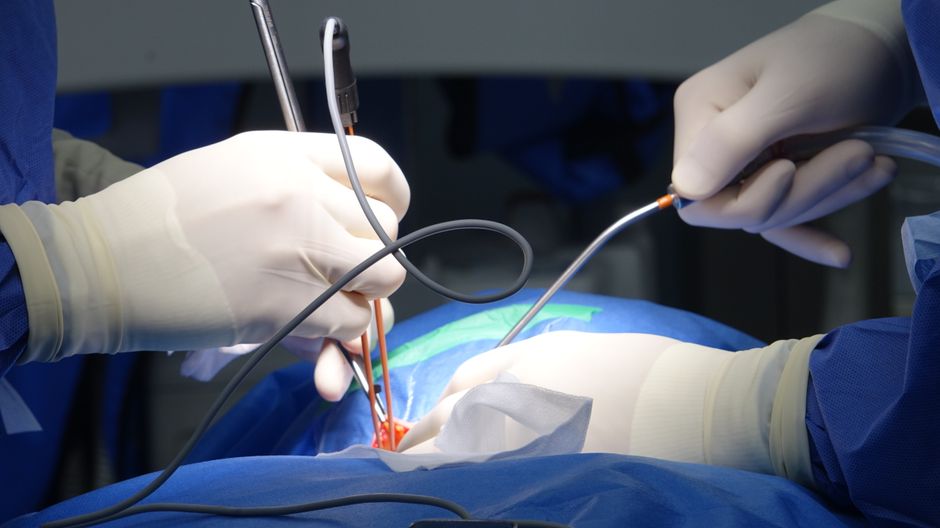
Minimally invasive spine surgery (MISS) replaces large open incisions with small portals — typically 7–18 mm — through which a camera and specialized instruments are passed. The goal is to treat the same conditions as open surgery while disrupting far less muscle, bone, and soft tissue.
The two dominant approaches practiced at Korean spine centers are Percutaneous Endoscopic Lumbar Discectomy (PELD) and Unilateral Biportal Endoscopic (UBE) surgery. Both use real-time endoscopic visualization and continuous saline irrigation to keep the surgical field clear.
Korean surgeons have also contributed original technique innovations: the Percutaneous Endoscopic Stenotic Lumbar Decompression (PESLD) method (developed 2016) and the contralateral foraminal decompression approach (2017) are now practiced internationally.
Conditions treated include herniated intervertebral disc, lumbar spinal stenosis, spondylolisthesis, and degenerative disc disease at cervical, thoracic, or lumbar levels. The same minimally invasive principles apply across spinal regions, though lumbar procedures are most common in medical tourism patients.
Because muscle damage is minimized, post-operative pain tends to be lower than after open surgery, opioid requirements are reduced, and patients are typically walking within hours of the procedure.
Bring DICOM imaging files
Upload or carry your most recent MRI or CT DICOM files when requesting a remote pre-consultation from a Korean spine center. This allows the surgical team to assess candidacy before you book flights and avoids duplicate imaging costs on arrival.
Am I a Candidate?
Good candidates for MISS in Korea are patients with:
- Confirmed disc herniation causing radiculopathy (arm or leg pain, numbness, weakness) that has not responded to 6–12 weeks of conservative care
- Lumbar spinal stenosis producing neurogenic claudication, particularly in patients who cannot walk comfortably for several minutes
- Spondylolisthesis at low grades (I–II) where instability does not require extensive fusion hardware
- Foraminal narrowing compressing a single nerve root
Patients who are less likely to be suitable candidates include those with severe multi-level instability requiring long-segment fusion, active spinal infection, certain spinal tumors, or significant uncorrected bleeding disorders. Prior failed open surgery is not an automatic disqualifier — Korean centers routinely evaluate revision cases.
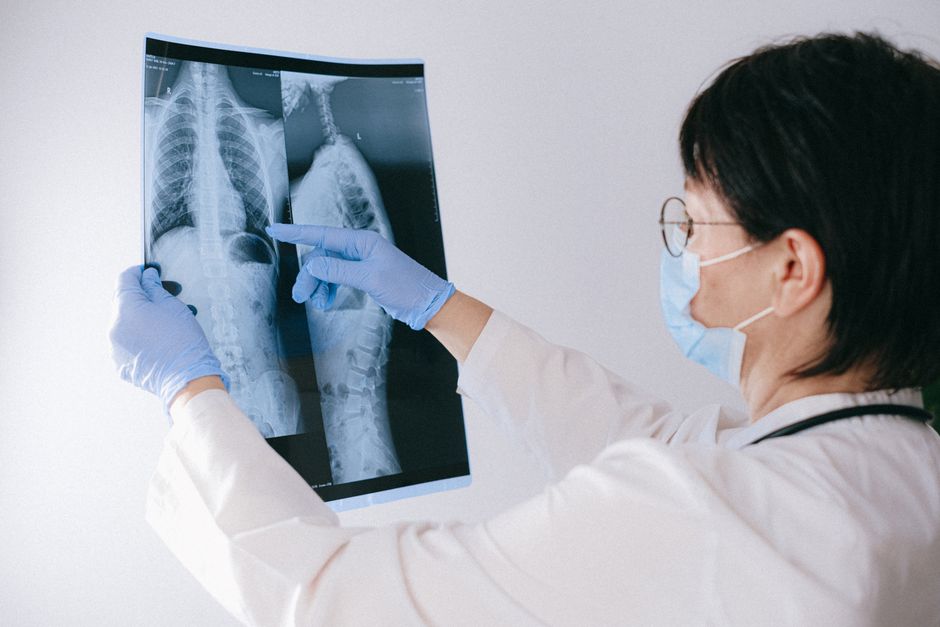
All reputable Korean hospitals require pre-operative MRI or CT imaging. Patients traveling from abroad are advised to bring digital copies (DICOM files preferred) of recent imaging for remote pre-consultation before booking travel. This avoids redundant imaging costs on arrival.
Age alone is rarely a disqualifying factor. Korean spine teams individualize risk assessment using cardiopulmonary fitness, bone density, and comorbidity profiles rather than relying on age cutoffs.
How the Procedure Works
A standard endoscopic discectomy in Korea follows this sequence:
Pre-operative preparation The patient undergoes imaging review, blood work, and an anesthesiology consultation. Local or epidural anesthesia is administered. General anesthesia is reserved for more complex reconstructions.
Positioning and portal placement The patient lies prone on a radiolucent table. Under fluoroscopic guidance, a guide wire is placed through a small skin incision — typically less than 1 cm — to the target disc level.
Dilation and endoscope insertion Sequential dilators create a working channel. The endoscope, with integrated camera and light source, is introduced. Continuous saline irrigation maintains visualization.
Decompression Using microsurgical instruments, the surgeon removes the herniated disc fragment or bone spur compressing the nerve. For stenosis cases, bone and ligament are carefully trimmed to widen the canal.
Closure The portal site is closed with one or two sutures. No drain is typically required.
Immediate post-op The patient is observed in recovery for 1–2 hours. Most walk to their room within 2–4 hours. For biportal endoscopic cases requiring more extensive decompression, observation extends to 24–48 hours.
Recovery Timeline
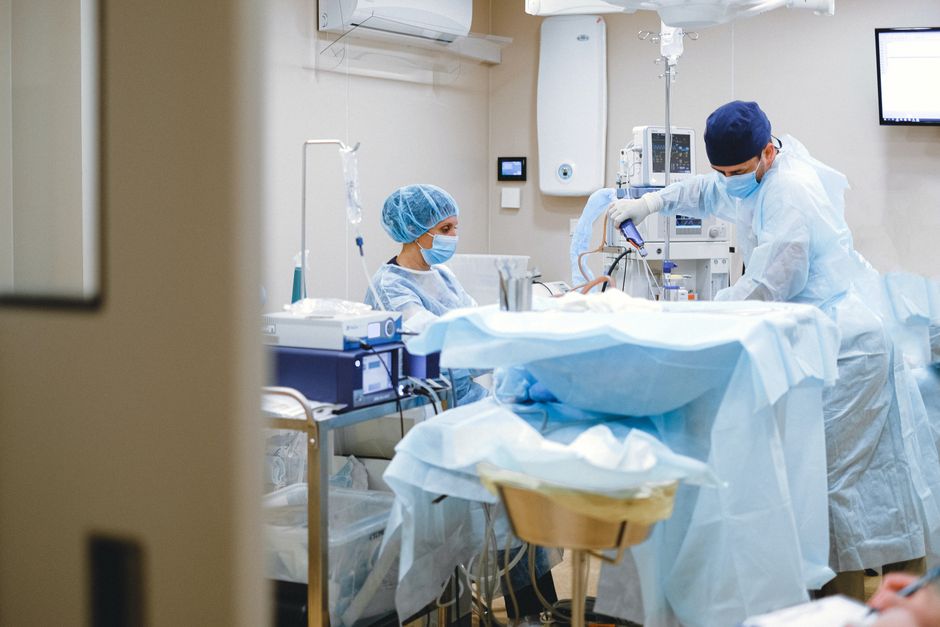
Day 1–3: Post-operative monitoring in hospital. Pain is managed with oral analgesics in most cases. Walking begins the same day under physiotherapy supervision.
Days 4–7 (still in Korea): Wound check and follow-up imaging (X-ray or MRI at the surgeon's discretion). Light walking is encouraged; patients can usually manage short excursions around their accommodation.
Days 7–14 (late Korea stay or early return home): Most patients are cleared to fly in economy class for regional flights; long-haul flights may require an extra 2–3 days of observation. The surgical team provides a structured discharge summary and exercise protocol.
- Desk work or light sedentary activity: typically 1–2 weeks post-op
- Driving: typically 2–4 weeks post-op depending on level and side operated
- Manual or physical labor: 6–12 weeks pending physiotherapy clearance
- Full physiological healing of the disc space: 3–6 months
Patients are advised to avoid prolonged sitting (>30 min continuous), heavy lifting (>5 kg), and twisting motions during the first 4–6 weeks. A home exercise program emphasizing core stabilization is provided at discharge.
Cost Breakdown
Korea's spine surgery costs are substantially lower than those in the United States, United Kingdom, or Australia — without an equivalent reduction in equipment standards or surgical team credentials.
Why costs are lower: - Government-regulated fee schedules reduce administrative overhead - High procedural volume at dedicated spine centers creates economies of scale - Shorter hospital stays directly reduce per-case facility costs - No fragmented insurance-billing intermediaries common in the US system
Typical price components in a Korean MISS package:
- Surgeon fee
- Anesthesiologist fee
- Operating theater and equipment use
- Implants or hardware (if required for fusion cases)
- 1–3 nights inpatient accommodation
- Post-operative consultation and discharge imaging
Medical tourism facilitators in Seoul and Gangnam also offer bundled packages that incorporate airport transfer, interpretation services, and accommodation — useful for patients traveling without Korean language skills.
Patients should request an itemized quote before travel. Costs can increase if additional spinal levels require treatment, if hardware implants are added intraoperatively, or if the stay is extended due to complications.
| Item | Typical Cost in Korea (USD) |
|---|---|
| Endoscopic discectomy (single level) | $8,000–$14,000 |
| Endoscopic decompression for stenosis | $10,000–$18,000 |
| Minimally invasive spinal fusion (TLIF/PLIF, single level) | $14,000–$28,000 |
| Multi-level endoscopic procedure | $18,000–$35,000 |
| Post-op consultation, imaging, and discharge package | $500–$1,500 |
Why Korea
Korea's position in minimally invasive spine surgery rests on three pillars: original research, volume, and infrastructure.
Research leadership Bibliometric analysis of full-endoscopic spine surgery publications places South Korea first globally in h-index (35), ahead of the United States (27), China (22), and Japan (21). Six of the ten most published authors in this field worldwide are Korean.
Three of the five most productive research institutions are Korean. This citation impact reflects not just output but influence on how surgeons worldwide practice.
Technique origination Several endoscopic techniques now used internationally were first described and systematized by Korean surgeons. The Korean Minimally Invasive Spine Surgery Society (KOMISS) has been a central organizing body for training, standardization, and international dissemination of these methods.
Government-backed medical tourism infrastructure The Korea Health Industry Development Institute (KHIDI) and the Ministry of Health and Welfare jointly run Medical Korea, the official medical tourism portal, which lists accredited hospitals and facilitates patient inquiries.
The Ministry of Food and Drug Safety (MFDS) regulates medical devices and implants used in Korean operating rooms to standards comparable to the US FDA.
Seoul's Gangnam district is the geographic concentration of private spine specialty hospitals, many of which operate dedicated international patient departments with multilingual coordinators, translation services, and tailored recovery packages.
In 2025, Korea recorded over 2 million foreign patient visits — a 71.9% increase on the prior year — underscoring the scale and reliability of its medical tourism ecosystem.
Key Takeaways
- Korea leads globally in endoscopic spine surgery research quality, holding the highest h-index of any country in this subspecialty.
- Costs for minimally invasive spine procedures in Korea are typically 60–80% lower than equivalent procedures in the United States, without a corresponding reduction in technology or accreditation standards.
- Most endoscopic spine patients are mobile within hours of surgery and discharged within 1–3 days, making Korea a practical destination for international patients with limited time away from home.
- KHIDI, MFDS, and the Medical Korea portal provide a government-backed framework that sets accreditation, safety, and transparency standards for foreign patients.
Frequently Asked Questions
Do I need to speak Korean to get spine surgery in Korea?
No. Major spine hospitals in Seoul and Gangnam operate dedicated international patient departments with multilingual coordinators who handle consultation scheduling, translation during consultations, and discharge paperwork in English and other languages. It is worth confirming language support availability when contacting a hospital directly.
How long must I stay in Korea after minimally invasive spine surgery?
Most surgeons recommend a minimum of 7–14 days in-country after an endoscopic procedure. This allows a wound check, follow-up imaging if indicated, and clearance to fly. Complex cases involving fusion hardware may require a longer stay of 2–3 weeks.
Is the surgery done under general anesthesia?
Many endoscopic procedures — particularly single-level discectomy — are performed under local or epidural anesthesia, meaning the patient is conscious but the surgical area is numbed. General anesthesia is used for more complex reconstructions or at the patient's preference after discussion with the anesthesiologist.
Will my results be the same as if I had surgery in my home country?
Outcomes depend on patient selection, surgical technique, and adherence to post-operative rehabilitation — factors that apply regardless of country. Korean spine centers performing high volumes of endoscopic procedures report complication rates comparable to those published in peer-reviewed literature from other high-volume international centers. No center can guarantee outcomes, and patients should ask any hospital for their complication and revision rates before proceeding.
Can I combine spine surgery with treatment for another condition while in Korea?
It is generally not advisable to schedule multiple surgical procedures during the same visit. Recovering from spine surgery requires rest and focused rehabilitation. Combining procedures increases anesthesia exposure and complicates recovery monitoring. Discuss any secondary medical interests with your Korean care coordinator before travel so they can help sequence care appropriately.
How do I verify that a Korean hospital is accredited?
The Medical Korea portal (medicalkorea.or.kr) lists hospitals designated by the Ministry of Health and Welfare for medical tourism. You can also check for Korean Hospital Accreditation (KOIHA) certification, which is the domestic standard. Some hospitals additionally hold JCI accreditation. Accreditation status should be confirmed directly with the hospital before booking.
Related Topics
Sources
- Frontiers in Surgery — Bibliometric analysis of full endoscopic spine surgery research
- PMC — Endoscopic spine surgery in Republic of Korea
- PubMed — Worldwide research productivity in full-endoscopic spine surgery
- PMC — Percutaneous endoscopic vs open lumbar microdiscectomy meta-analysis (Korean population)
- Medical Korea — Spine
Ready to Begin Your Journey?
Get matched with KAHF-accredited hospitals and receive a personalized treatment plan.
Quick Facts
Typical Cost
$10000 - $25000
Duration
7 days
Accredited Hospitals
0+ Available
Top Hospitals
Medical Information Disclaimer
The information provided on this page about Minimally Invasive Spine Surgery is for general educational and informational purposes only. It is not intended as, and should not be construed as, medical advice, diagnosis, or treatment recommendations.
Always seek the advice of a qualified healthcare professional regarding any medical condition or treatment. Never disregard professional medical advice or delay seeking it because of information found on this website. Individual treatment outcomes may vary. Costs shown are estimates and may differ based on individual circumstances.
KmedTour acts as a medical tourism facilitator and does not provide direct medical services. All treatments are performed by independently accredited healthcare providers in South Korea.