Fertility$5000 - $10000⭐ KAHF Accredited Hospitals
In Vitro Maturation in Korea
IVM retrieves immature eggs from unstimulated ovaries and matures them in the lab — cutting OHSS risk and cost for suitable patients in Korea.
Quick Answer
- IVM collects immature oocytes before they are fully grown, then matures them outside the body — skipping most or all hormone injections
- Ideal for PCOS patients and OHSS-risk cases where conventional controlled ovarian hyperstimulation carries elevated danger
- Cost in Korea runs roughly $3,000–$6,500 USD per cycle — lower than standard IVF because gonadotropin drug loads are minimal
- Korea is a recognised IVM centre of excellence, with dedicated clinical programmes at leading Seoul fertility units and strong research publication output
At a Glance
| Procedure time | Egg retrieval: 20–30 min under sedation; lab maturation: 24–48 hours |
|---|---|
| Anesthesia | Light IV sedation or local analgesia for egg retrieval |
| Hospital stay | Day procedure — no overnight admission required |
| Recommended stay in Korea | 2–3 weeks to allow monitoring, retrieval, embryo culture, and transfer |
| Recovery | 1–2 days rest post-retrieval; most patients resume normal activity within 48 hours |
| Typical cost in Korea | Approx. $3,000–$6,500 USD per cycle (excluding travel and accommodation) |
Overview
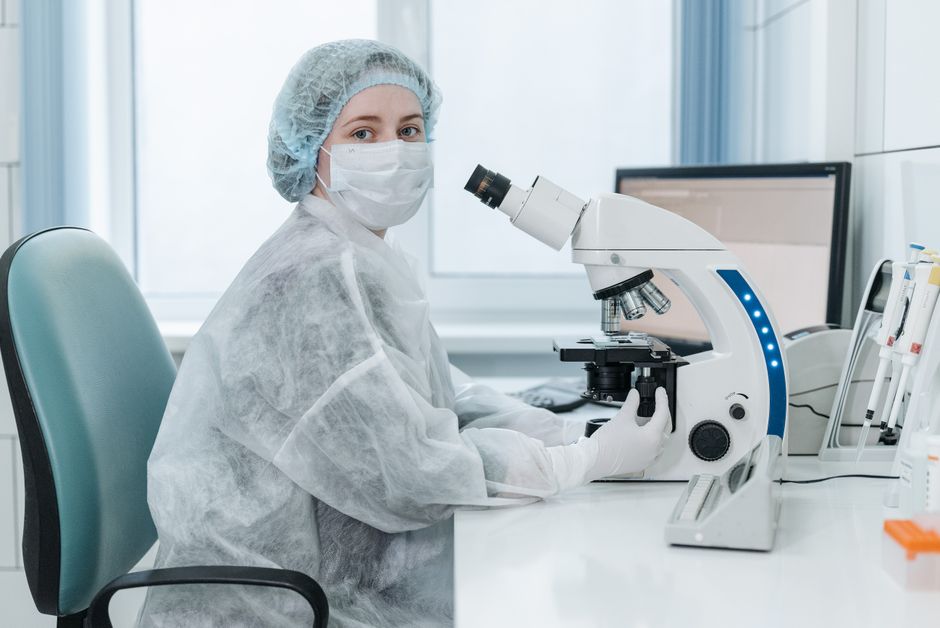
In Vitro Maturation (IVM) is an assisted reproductive technology (ART) in which immature oocytes are aspirated from small antral follicles in unstimulated or minimally stimulated ovaries.
The eggs are then placed in a specialised maturation medium in the laboratory, where they complete the final stage of development over 24–48 hours before fertilisation.
The defining difference from conventional IVF is the near-elimination of controlled ovarian hyperstimulation (COH). Standard IVF requires high-dose gonadotropin injections over 10–14 days to drive multiple follicles to full maturity before retrieval. IVM replaces most or all of that pharmacological load with a laboratory maturation step.
This reduction in drug exposure has two major practical effects: it largely removes the risk of ovarian hyperstimulation syndrome (OHSS) — a potentially serious complication of conventional IVF — and it substantially lowers medication costs and the number of monitoring visits required.
IVM was first successfully achieved in humans in the late 1980s, and clinical programmes have matured significantly since the early 2000s. It is now formally classified as a non-experimental ART by major reproductive medicine bodies.
Korea, particularly through its Seoul-based fertility research institutions, has been among the global leaders in refining IVM protocols and extending its clinical application.
Ask about freeze-all protocols
Many Korean IVM programmes prefer freezing all embryos after retrieval and scheduling transfer in a separate natural or medicated cycle. This gives the uterine lining more time to normalise and can be logistically combined with a second trip — or, for patients who prefer a single visit, transfer is sometimes performed in the same cycle if timing allows. Confirm the clinic's default approach during your consultation.
Am I a Candidate?
IVM is not a universal substitute for IVF; patient selection is central to success. The following profiles are the clearest candidates:
- PCOS and PCO-like ovaries — Women with polycystic ovary syndrome typically have large numbers of small antral follicles, making them both ideal IVM candidates and the population most at risk of OHSS under conventional stimulation.
- High OHSS risk — Any patient with prior OHSS history or ultrasound markers suggesting high ovarian sensitivity.
- Fertility preservation under time pressure — Cancer patients or others who cannot wait for a full stimulation cycle because treatment must start promptly.
- Hormone-sensitive conditions — Patients with oestrogen-sensitive tumours for whom high-dose gonadotropins are contraindicated.
- Preference for minimal medication — Women who wish to reduce pharmaceutical exposure for personal, religious, or financial reasons.
IVM is generally less well-suited to women with low antral follicle counts (poor ovarian reserve), older patients with diminished reserve, or cases where embryo numbers are already expected to be low — where the additional laboratory handling of immature eggs could reduce the viable embryo pool.
Your reproductive specialist will review antral follicle count, AMH levels, cycle history, and PCOS status before recommending IVM over conventional IVF.
How the Procedure Works
A typical IVM cycle in Korea follows a structured but comparatively brief sequence.
Baseline assessment (Days 1–3 of cycle): Transvaginal ultrasound confirms antral follicle count. Blood tests check AMH, FSH, LH, and oestradiol.
If the profile supports IVM, a minimal-stimulation priming dose (a low gonadotropin or hCG trigger) may be given to help synchronise follicle readiness — though some protocols proceed with no stimulation at all.
Monitoring (Days 5–10): One or two follow-up ultrasounds track follicle development. The monitoring burden is far lighter than conventional IVF, which typically requires daily or near-daily scans.
Egg retrieval (Day 10–14): Performed under light IV sedation in a procedure room. A thin needle guided by transvaginal ultrasound aspirates fluid from small antral follicles (typically measuring 6–12 mm). The process takes 20–30 minutes. Multiple immature oocytes are collected.
Laboratory maturation (24–48 hours): Oocytes are transferred to a specialised IVM culture medium containing hormones and growth factors. Embryologists assess maturation stage — eggs that reach the MII (metaphase II) stage are mature and ready for fertilisation.
Fertilisation and embryo culture (Days 2–6 post-retrieval): Mature eggs are fertilised via ICSI (intracytoplasmic sperm injection), which is standard for IVM because it maximises fertilisation of each matured egg. Embryos develop in culture for 3–5 days.
Embryo transfer or freezing: A blastocyst is transferred into the uterus in a fresh or frozen-thaw cycle. Many IVM programmes favour a freeze-all approach to allow the uterine lining to fully recover from retrieval before transfer.
Recovery Timeline
Recovery from IVM egg retrieval is generally faster and milder than recovery from a conventional stimulated IVF cycle, because the ovaries have not been subjected to heavy pharmaceutical stimulation.
Day of retrieval: Mild cramping and spotting are normal. Most patients rest for a few hours at the clinic, then return to their accommodation. Driving is not advised on retrieval day.
- Days 1–2: Light pelvic discomfort and minor bloating. Over-the-counter pain relief is usually sufficient. Most patients feel well enough to move around the city.
- Days 3–7: Normal activities resume for most patients. Unlike stimulated IVF, significant OHSS-related bloating or fluid retention is very uncommon after IVM.
- Embryo transfer day (if fresh transfer): Same-day procedure, no anaesthesia required. A short rest period of 30–60 minutes at the clinic is standard.
- Two-week wait: After transfer, progesterone support (vaginal pessaries or gel) is continued. A pregnancy blood test (beta-hCG) is done approximately 10–14 days after transfer.
Patients travelling from abroad typically plan a 2–3 week stay to cover baseline scans, retrieval, lab maturation, and transfer. If a freeze-all protocol is used, transfer may be scheduled on a return visit, which some patients prefer logistically.
Cost Breakdown
IVM costs less than conventional IVF in Korea primarily because the gonadotropin medication bill — which can reach $2,000–$4,000 USD in a standard stimulated cycle — is reduced to a minimal or zero drug load.
Approximate per-cycle cost ranges for international patients in Seoul:
- Basic IVM cycle (retrieval, lab maturation, ICSI, fresh transfer): $3,000–$5,500 USD
- With freeze-all and single frozen embryo transfer (FET) on same trip: add $500–$1,000 USD
- Preimplantation Genetic Testing (PGT-A): add $1,000–$2,500 USD if requested
- Minimal stimulation drugs (if any used): typically under $200–$400 USD, compared with $1,500–$4,000+ for full stimulation
For context, a fully stimulated IVF cycle in Seoul for international patients is typically quoted at $5,000–$9,000 USD (excluding PGT), making IVM the more cost-accessible option for suitable candidates.
Fees vary by clinic tier, whether a Korean health insurance subsidy applies (generally not available to non-resident foreigners), and what additional services such as translation, coordination, or accommodation packages are included. Always request an itemised quote before committing.
Korea's medical tourism infrastructure means many fertility clinics in Seoul have dedicated international patient coordinators who can prepare transparent cost breakdowns in English.
| Item | Typical Cost in Korea (USD) |
|---|---|
| IVM egg retrieval + lab maturation + ICSI | $2,500–$4,500 |
| Embryo culture to blastocyst stage | $300–$600 |
| Fresh or frozen embryo transfer (FET) | $500–$1,000 |
| Minimal stimulation drugs (if used) | $100–$400 |
| Preimplantation Genetic Testing PGT-A (optional) | $1,000–$2,500 |
Why Korea
Korea has built a substantive and internationally recognised reputation in fertility medicine, with IVM as one of the areas where Korean clinical and research contributions have been particularly notable since the early 2000s.
Research foundation: Korean institutions have published widely in peer-reviewed reproductive medicine journals on IVM protocol development, maturation media optimisation, and outcomes in PCOS populations. This research base underpins the clinical confidence of Korean programmes.
Specialised laboratory infrastructure: Seoul's major fertility centres operate embryology laboratories equipped for the specific culture conditions that IVM requires. Lab-side expertise — embryologist training, maturation medium formulation, ICSI technique — is central to IVM success rates, and Korean labs have accumulated substantial case volume.
Regulatory framework: ART in Korea is governed by the Bioethics and Safety Act (enacted 2005, amended 2020), which sets standards for embryo handling, donor programmes, and laboratory accreditation.
The MFDS (Ministry of Food and Drug Safety) oversees pharmaceutical and device standards in fertility medicine. KHIDI (Korea Health Industry Development Institute) administers the Medical Korea programme, which accredits hospitals receiving international patients and tracks ART outcomes nationally.
National data collection: From 2017, Korean National Health Insurance applied to certain ART procedures, requiring all accredited clinics to submit cycle-level outcome data. This surveillance infrastructure drives quality benchmarking across the sector.
Cost-quality ratio: Korea offers IVM at price points well below comparable programmes in the United States, Australia, or Western Europe, while drawing on the same foundational science.
Combined with Seoul's strong international connectivity, English-capable patient coordinators, and established medical tourism support ecosystem under the Medical Korea banner, it represents an accessible option for patients across Africa, the GCC, and Southeast Asia.
Key Takeaways
- IVM retrieves immature eggs and matures them in the lab, largely or entirely avoiding the hormone injections and OHSS risk of conventional IVF
- PCOS patients and women at high OHSS risk are the clearest candidates; low ovarian reserve is a relative contraindication
- Korea — particularly Seoul fertility centres — has a documented research and clinical track record in IVM that extends back to the early 2000s
- Per-cycle costs in Korea are roughly $3,000–$6,500 USD, making it among the more affordable IVM destinations with established clinical infrastructure
Frequently Asked Questions
How is IVM different from IVF?
In conventional IVF, the ovaries are stimulated with high-dose hormone injections over roughly 10–14 days until follicles reach full maturity before retrieval. IVM collects follicles while they are still immature — at around 6–12 mm — and completes the maturation step in the laboratory over 24–48 hours. This dramatically reduces or eliminates the medication phase, which in turn lowers cost and removes the risk of ovarian hyperstimulation syndrome.
Who is IVM best suited for?
The strongest candidates are women with polycystic ovary syndrome (PCOS) or PCO-like ovaries, who have many small antral follicles and are at elevated risk of OHSS under heavy stimulation. IVM is also used for fertility preservation in cancer patients who cannot tolerate a full stimulation cycle, and for women who prefer minimal pharmaceutical exposure for medical or personal reasons. It is generally less suitable for patients with low ovarian reserve.
What are the success rates for IVM?
IVM pregnancy rates per transfer cycle are generally somewhat lower than those reported for conventional IVF in unselected populations — reflecting the additional challenge of completing maturation outside the body. However, for well-selected patients (particularly PCOS), outcomes are considered clinically acceptable and the risk-benefit balance favours IVM over stimulated IVF. Success depends heavily on the number of mature eggs obtained, embryo quality, and laboratory expertise. Ask your clinic for their specific IVM outcome data.
Is ICSI always used with IVM?
Yes, virtually all IVM programmes use ICSI (intracytoplasmic sperm injection) to fertilise IVM-matured eggs. Because IVM eggs have had a different maturation environment from conventionally retrieved eggs, their zona pellucida (outer shell) characteristics may differ, and ICSI ensures reliable fertilisation of each mature oocyte rather than relying on standard insemination.
Can I do IVM as part of a single trip to Korea?
Yes, in most cases. A typical IVM cycle from baseline scan to egg retrieval spans roughly 10–14 days, with laboratory maturation adding 1–2 days and embryo culture another 3–5 days. If a fresh embryo transfer is planned, the entire process can be completed in 2–3 weeks. Some clinics use a freeze-all approach, which may require a second shorter trip for transfer — though many international patients coordinate this as a separate cycle after returning home.
Are there safety concerns specific to IVM?
IVM-born children have been followed in long-term studies and, to date, developmental outcomes appear broadly comparable to IVF. The reduced drug exposure is in fact considered a safety advantage for the patient. Ongoing research continues to refine maturation media and culture conditions to further optimise embryo quality. As with all ART, patients should discuss the current evidence with their clinical team, particularly regarding any specific medical history.
Related Topics
Sources
Ready to Begin Your Journey?
Get matched with KAHF-accredited hospitals and receive a personalized treatment plan.
Quick Facts
Typical Cost
$5000 - $10000
Duration
14 days
Accredited Hospitals
0+ Available
Top Hospitals
Medical Information Disclaimer
The information provided on this page about In Vitro Maturation is for general educational and informational purposes only. It is not intended as, and should not be construed as, medical advice, diagnosis, or treatment recommendations.
Always seek the advice of a qualified healthcare professional regarding any medical condition or treatment. Never disregard professional medical advice or delay seeking it because of information found on this website. Individual treatment outcomes may vary. Costs shown are estimates and may differ based on individual circumstances.
KmedTour acts as a medical tourism facilitator and does not provide direct medical services. All treatments are performed by independently accredited healthcare providers in South Korea.