Cardiac$150000 - $300000⭐ KAHF Accredited Hospitals
Heart Transplantation in Korea
Heart transplantation in South Korea: bicaval technique, KONOS organ allocation, and university hospital expertise for end-stage heart failure patients.
Quick Answer
- Heart transplantation in South Korea is performed using the bicaval technique, which preserves normal atrial geometry and reduces arrhythmia risk compared to the older biatrial method.
- Korea's organ allocation is managed by KONOS (Korean Network for Organ Sharing), established in 2000 — all deceased-donor hearts are allocated through this national registry, not by individual hospitals.
- KOTRY-reported outcomes show approximately 88% 1-year survival and 78% 5-year survival based on Korean Organ Transplant Registry data.
- Total cost in Korea is approximately $80,000–$150,000 USD depending on donor availability, ICU duration, and post-transplant immunosuppression management — significantly below typical US pricing.
At a Glance
| Procedure time | 4–8 hours (variable; depends on recipient cardiac anatomy and surgical complexity) |
|---|---|
| Anesthesia | General anesthesia with cardiopulmonary bypass |
| Hospital stay | 3–6 weeks (ICU phase plus step-down ward) |
| Recommended stay in Korea | 3–6 months minimum for immunosuppression monitoring, rejection surveillance, and outpatient follow-up |
| Recovery | 3–6 months before light activity; 12+ months for full cardiac rehabilitation |
| Typical cost in Korea | $80,000–$150,000 USD (all-inclusive estimate; varies by case complexity and length of stay) |
Overview
Heart transplantation is the definitive surgical treatment for end-stage heart failure when all other medical and device therapies have failed. The recipient's diseased heart is removed and replaced with a donor heart from a brain-dead deceased donor.
In South Korea, the procedure is governed by the Organ Transplantation Act and coordinated through KONOS (Korean Network for Organ Sharing). KONOS manages the national waiting list, allocates deceased-donor organs by medical urgency, blood type, and regional factors, and approves transplantation at licensed centers.
Korea's major university hospitals have operated heart transplant programs since the late 1980s. The Korean Organ Transplant Registry (KOTRY) publishes national outcomes data, providing transparency on survival rates, rejection episodes, and graft function across all certified centers.
For international patients, the pathway requires a full cardiac workup, listing with KONOS, and an extended stay in Korea — both pre-transplant (waiting for a donor) and post-transplant (immunosuppression monitoring). The waiting period for a deceased-donor heart is medically unpredictable and can range from weeks to many months.
Waiting period is unpredictable — plan your finances accordingly
Unlike elective procedures, you cannot book a heart transplant in advance. Once listed with KONOS, a suitable donor match may arrive in weeks or many months. International patients should budget for extended accommodation, living costs, and interim medical monitoring while waiting in Korea.
Am I a Candidate?
Patients are evaluated through a multi-disciplinary cardiac transplant team. General candidacy criteria include:
- End-stage heart failure (NYHA Class III–IV) refractory to maximal medical therapy
- Cardiomyopathy (ischemic, dilated, or other etiology) with severely reduced ejection fraction
- No response to device therapy such as cardiac resynchronization therapy
- Age typically under 70 (assessed case by case at Korean centers)
- Absence of active infection, active malignancy, or irreversible pulmonary hypertension
- No significant irreversible non-cardiac organ failure that would prevent recovery
- Demonstrated medication adherence and psychosocial support network
Patients already bridged with a left ventricular assist device (LVAD) may remain listed for transplant. Since Korean national health insurance began covering LVADs in 2018, their use as a bridge to transplant has grown substantially within the KOTRY registry.
International patients must also satisfy visa requirements for a medical stay and demonstrate adequate financial coverage or guarantee before listing is formally processed.
How the Procedure Works
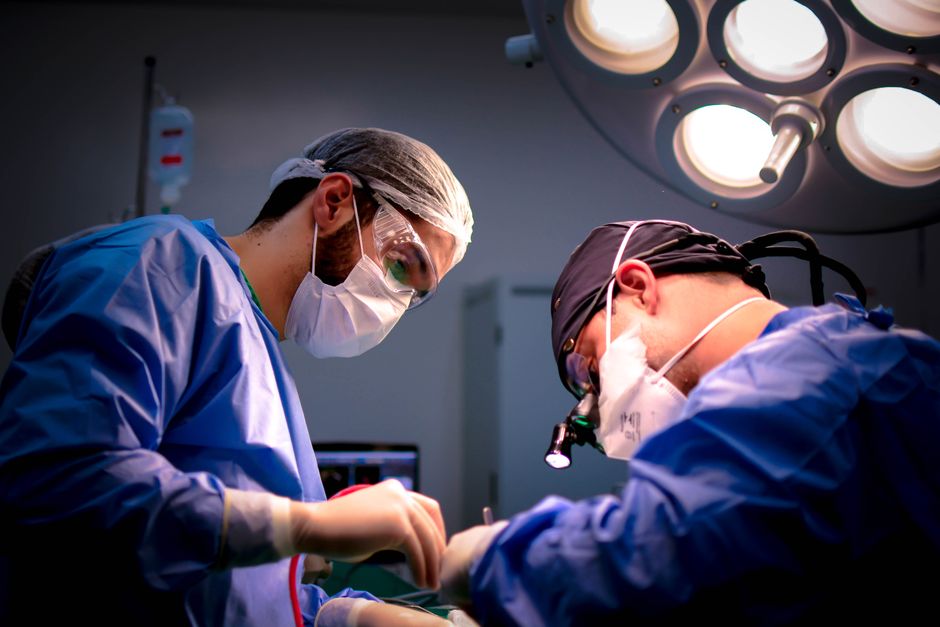
The operation is performed under general anesthesia with the patient on cardiopulmonary bypass, which takes over heart and lung function during the surgery.
The surgical team excises the recipient's diseased heart, leaving a cuff of the posterior left atrium and the great vessels for anastomosis.
Korean programs adopted the bicaval technique — preserving the donor's superior and inferior vena cava separately rather than merging atrial tissue — from 1999 onward. This approach maintains more natural atrial geometry, reduces tricuspid regurgitation risk, and lowers rates of sinus node dysfunction compared to the biatrial method.
The donor heart's aorta, pulmonary artery, and venous connections are sutured to the recipient's corresponding vessels. The new heart is then defibrillated and monitored to confirm stable rhythm and adequate function before bypass is weaned.
Total operative time typically ranges from 4 to 8 hours, depending on recipient anatomy, prior surgeries (adhesions from previous cardiac operations), and hemodynamic stability during the weaning phase.
Endomyocardial biopsy — a small tissue sample taken via catheter — is used in the early post-transplant period to detect rejection at the cellular level before symptoms appear.
Recovery Timeline
Recovery after heart transplantation follows a structured multi-phase timeline:
ICU phase (Days 1–14): - Mechanical ventilation weaned within 24–72 hours in stable patients - Continuous hemodynamic monitoring and early immunosuppression dosing (calcineurin inhibitors, mycophenolate, corticosteroids) - Endomyocardial biopsy typically performed in week 1–2 to screen for acute rejection
Step-down ward (Weeks 2–6): - Gradual mobility, physiotherapy, and cardiac rehabilitation initiation - Immunosuppression drug levels closely titrated - Infection surveillance (CMV, fungal, bacterial) is a primary focus
Early outpatient phase (Months 1–6): - Follow-up at 1 month, 3 months, and 6 months post-discharge per KOTRY protocol - Rejection episodes are most common in this window — biopsies and echocardiography continue - International patients are strongly advised to remain in Korea during this phase
Longer-term (6–12 months+): - Return to light activity and eventual cardiac rehabilitation milestones - Lifelong immunosuppression continues; annual surveillance coronary angiography screens for transplant vasculopathy - KOTRY data shows 10-year survival of approximately 67%, consistent with major international registries

Cost Breakdown
Korean heart transplant costs are structured across several distinct components. Unlike elective procedures, transplant pricing is heavily influenced by how long a patient waits for a donor (ICU or ward bed days accumulate) and by post-transplant ICU duration.
Surgical and operative fees cover the transplant team, anesthesia, perfusionist, and operating suite time.
Hospital stay fees — typically 3–6 weeks — represent a significant portion of total cost. ICU days are priced differently from step-down ward days.
Immunosuppression drugs are an ongoing and substantial cost. Calcineurin inhibitors (tacrolimus or cyclosporine), mycophenolate mofetil, and corticosteroids are initiated immediately post-op and are lifelong.
Diagnostic workup and monitoring — endomyocardial biopsies, echocardiograms, laboratory panels, CMV surveillance — add to the inpatient and early outpatient bill.
For international patients, KONOS listing fees, medical visa facilitation, and coordinator services may be additional. Total cost estimates from medical aggregators place the all-in range at approximately $80,000–$150,000 USD, substantially below the $1,000,000+ figures sometimes quoted in the US context (which include multi-year post-transplant management).
| Item | Typical Cost in Korea (USD) |
|---|---|
| Transplant surgery (operative fees, team, bypass) | $30,000–$55,000 |
| ICU and hospital stay (3–6 weeks) | $25,000–$50,000 |
| Immunosuppression drugs (initial inpatient course) | $5,000–$12,000 |
| Post-op diagnostics (biopsies, echo, labs, CMV monitoring) | $5,000–$15,000 |
| Outpatient follow-up in Korea (months 1–6) | $5,000–$18,000 |
Why Korea
Korea is a credible destination for heart transplantation for several converging reasons.
Established national infrastructure: KONOS, operational since 2000, provides a centralized, transparent organ allocation system governed by the Organ Transplantation Act (amended 2024). Allocation is based on medical urgency and standardized criteria — not purely on ability to pay.
Registry-driven quality: The Korean Organ Transplant Registry (KOTRY) tracks outcomes at all certified centers with standardized protocols. The use of near-identical immunosuppression regimens across Korean centers is a documented characteristic of the system, enabling meaningful national benchmarking.
Surgical technique maturity: Korean programs transitioned to the bicaval technique from 1999 and have accumulated multi-decade operative experience across high-volume university hospitals in Seoul and other metropolitan centers.
Medical Korea government program: The KHIDI (Korea Health Industry Development Institute), operating under the Ministry of Health and Welfare, administers the Medical Korea initiative, which supports international patient services at registered hospitals — including coordination, translation, and quality standards oversight.
Cost differential: Even accounting for the necessary extended stay, total costs are substantially lower than equivalent procedures in the US, UK, or Western Europe — without sacrificing the quality infrastructure of a high-income OECD healthcare system.
Seoul's concentration of large university-affiliated cardiac centers means that pre-transplant workup, LVAD bridging if needed, and post-transplant follow-up can all occur within integrated systems rather than across fragmented providers.
Key Takeaways
- Korea uses the bicaval surgical technique, adopted nationally from 1999, which is associated with better atrial function and lower arrhythmia rates than the older biatrial approach.
- KONOS, the national organ allocation registry, governs donor heart distribution by medical urgency — international patients can be listed but must be present in Korea when a match becomes available.
- KOTRY-reported survival rates (88% at 1 year, 78% at 5 years, 67% at 10 years) are consistent with outcomes at major transplant programs internationally.
- Total costs in Korea are approximately $80,000–$150,000 USD all-in — a fraction of US pricing — with the KHIDI-administered Medical Korea program providing an additional layer of international patient oversight.
Frequently Asked Questions
Can international patients be listed for a heart transplant in South Korea?
Yes. International patients can be evaluated and listed with KONOS after completing a full cardiac assessment at a licensed Korean transplant center. You must be physically present in Korea to receive the organ when a match is identified, so the expectation is that you will remain in the country throughout the waiting period.
How long is the typical wait for a donor heart in South Korea?
The wait time is medically unpredictable and depends on blood type, body size, urgency status, and donor availability. Some patients wait weeks; others wait many months. Medical urgency scoring — including status classifications for patients on mechanical circulatory support — affects queue priority.
What immunosuppression medications are used after heart transplant in Korea?
Korean transplant centers use a standardized triple-therapy protocol consistent with international guidelines: a calcineurin inhibitor (most commonly tacrolimus), mycophenolate mofetil, and corticosteroids. Drug levels are closely monitored and doses titrated through the post-transplant period. Lifelong immunosuppression is required.
How is rejection detected and managed in Korean transplant programs?
Rejection surveillance relies primarily on endomyocardial biopsy — a catheter-based tissue sampling procedure performed in the early months post-transplant. KOTRY follow-up protocols schedule assessments at 1, 6, and 12 months. Rejection episodes are most common in the 1–6 month window. If detected, immunosuppression is intensified under inpatient monitoring.
Is a left ventricular assist device (LVAD) available as a bridge to transplant in Korea?
Yes. Korean national health insurance began covering LVADs in October 2018, and KOTRY registry data shows their use as a bridge to transplant has grown significantly since then. An LVAD can stabilize a patient's condition while awaiting a suitable donor.
What does the Medical Korea government program offer international heart transplant patients?
Medical Korea is administered by KHIDI (Korea Health Industry Development Institute) under the Ministry of Health and Welfare. Registered hospitals must meet quality and service standards to participate. The program supports international patients with coordination services, translation assistance, and a formal complaints mechanism — providing an additional layer of accountability beyond individual hospital policies.
Related Topics
Sources
Ready to Begin Your Journey?
Get matched with KAHF-accredited hospitals and receive a personalized treatment plan.
Quick Facts
Typical Cost
$150000 - $300000
Duration
30 days
Accredited Hospitals
0+ Available
Top Hospitals
Medical Information Disclaimer
The information provided on this page about Heart Transplantation is for general educational and informational purposes only. It is not intended as, and should not be construed as, medical advice, diagnosis, or treatment recommendations.
Always seek the advice of a qualified healthcare professional regarding any medical condition or treatment. Never disregard professional medical advice or delay seeking it because of information found on this website. Individual treatment outcomes may vary. Costs shown are estimates and may differ based on individual circumstances.
KmedTour acts as a medical tourism facilitator and does not provide direct medical services. All treatments are performed by independently accredited healthcare providers in South Korea.