Transplantation$40000 - $80000⭐ KAHF Accredited Hospitals
Exchange Donor Kidney Transplant in Korea
South Korea's paired kidney exchange program matches incompatible donor-recipient pairs so both transplants proceed simultaneously.
Quick Answer
- Paired exchange (swap) transplants have been performed in Korea since 1991, making it one of the world's longest-running programs of this type.
- KONOS (Korean Network for Organ Sharing), established in 2000, oversees all living-donor approvals, waiting-list management, and paired-exchange coordination nationally.
- Cost range: approximately $52,000–$85,000 USD depending on hospital tier, complexity of the exchange chain, and length of immunosuppression management.
- International patients must bring their own compatible donor — Korean law prohibits unrelated directed donation to foreign nationals to prevent organ trafficking.
At a Glance
| Procedure time | 3–5 hours per recipient (two surgical teams operate simultaneously) |
|---|---|
| Anesthesia | General anesthesia |
| Hospital stay | 10–14 days (recipient); 5–7 days (donor) |
| Recommended stay in Korea | 6–8 weeks for monitoring, immunosuppression titration, and follow-up labs |
| Recovery | Full return to light activity in 4–6 weeks; heavy exertion avoided for 3 months |
| Typical cost in Korea | $52,000–$85,000 USD (all-in living-donor exchange, varies by hospital) |
Overview
An exchange donor kidney transplant — also called a paired kidney exchange or swap transplant — solves a specific biological mismatch problem.
When a willing living donor is incompatible with their intended recipient (wrong blood type or positive crossmatch), the pair is matched with another incompatible pair whose donor happens to be compatible with the first recipient, and vice versa.
Both transplants are scheduled simultaneously so neither donor can withdraw after the other surgery has begun.
Korea pioneered this model in Asia. The first direct exchange-donor transplant between two families was performed in Korea in 1991, and by 2005 a web-based algorithm was running multi-center paired exchanges across Korean transplant programs.
The program is now coordinated nationally through KONOS (Korean Network for Organ Sharing), the government body that registers patients, approves living-donor applications, and allocates deceased-donor organs. This centralized infrastructure enables longer exchange chains and reduces the time incompatible pairs wait for a match.
For international patients, the paired exchange framework means both the patient and their donor travel together to Korea.
Korean transplant law requires foreign patients to bring their own donor — an individual related up to the second or third degree — ensuring the exchange is ethically structured and free from commercial arrangements.
Bring your donor's full medical records
KONOS approval and hospital pre-screening both require ABO typing, HLA tissue typing, and crossmatch results for both the patient and donor before a consultation can be scheduled. Having these ready shortens the pre-operative timeline by several weeks.
Am I a Candidate?
Candidates for a paired kidney exchange transplant in Korea generally meet the following criteria:
- End-stage renal disease (ESRD) confirmed by nephrologist evaluation
- A willing living donor who is medically fit but incompatible due to ABO blood-group mismatch or a positive crossmatch result
- No active infection, uncontrolled malignancy, or systemic condition that would preclude major surgery
- Adequate cardiac and pulmonary reserve assessed pre-operatively
- Willingness to remain in Korea for the full recommended 6–8 week monitoring period
Patients who are highly sensitized (high panel-reactive antibody levels) may face longer waits for a compatible match within the exchange pool. Korean centers have experience with desensitization protocols for such cases, and KONOS maintains a national registry that improves the odds of finding a chain match.
International applicants should submit complete medical records — GFR trends, dialysis history, immunological workup, and donor compatibility tests — to the Korean hospital's international patient center before travel is arranged. Pre-screening reduces the risk of arriving only to be found ineligible.
How the Procedure Works
The exchange transplant involves coordinated preparation across two (or more) donor-recipient pairs.
Pre-operative phase: - Full immunological workup: ABO typing, HLA tissue typing, crossmatch testing for all pairs - KONOS approval of the living-donor exchange arrangement - Psychological evaluation and ethics board review at the transplant center - Surgical planning with two independent transplant teams
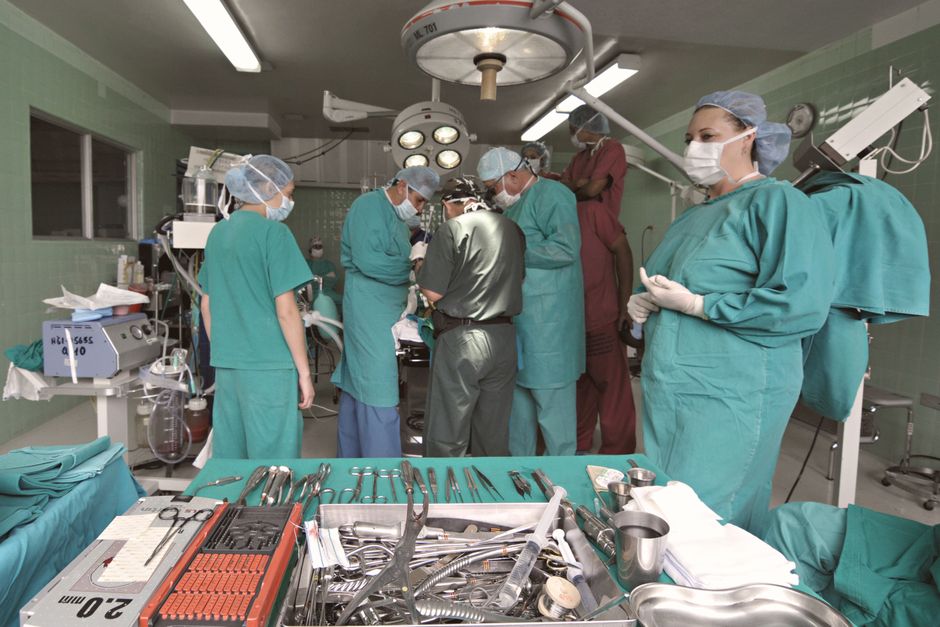
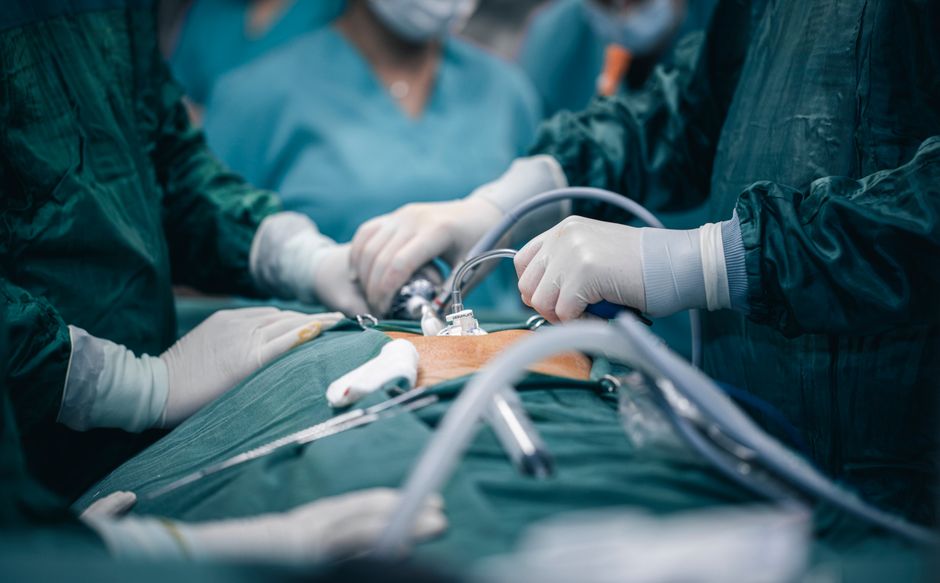
Day of surgery: Both donor surgeries begin simultaneously in adjacent operating theatres. Donor nephrectomy is typically performed laparoscopically (minimally invasive), reducing donor recovery time. The explanted kidneys are preserved with cold perfusion solution and transferred immediately.
Recipient surgeries proceed in parallel; the donor kidney is placed in the recipient's lower abdomen (heterotopic placement), connecting to the iliac vessels and bladder. Simultaneous scheduling is a strict ethical safeguard: no withdrawal is possible once both donors are under anesthesia.
Post-operative monitoring: - Immediate graft function is assessed via urine output and creatinine trend within hours - Immunosuppression protocol typically includes calcineurin inhibitors, mycophenolate, and corticosteroids, titrated by the transplant nephrology team
Recovery Timeline
Recovery from a paired kidney exchange transplant follows a structured timeline.
Days 1–3 (ICU/step-down unit): - Continuous monitoring of urine output, blood pressure, and graft function labs - Fluid management and early mobilization begin - Donor patients are typically more mobile within 24–48 hours of laparoscopic nephrectomy
Days 4–14 (general ward): - Daily creatinine and tacrolimus level checks - Wound care and gradual diet advancement - Recipient discharged when graft function is stable and immunosuppression is at target levels - Donor typically discharged by day 5–7
Weeks 3–6 are outpatient in Korea. Clinic visits run 2–3 times per week for labs and medication adjustment, which is why an in-country stay of 6–8 weeks is strongly recommended: early rejection episodes and drug toxicity are most likely in this window.
Light walking is encouraged, while driving and heavy lifting are restricted.
Months 2–3 (after return home): - Patients resume care with a local nephrologist who coordinates with the Korean center - Full recovery and return to non-strenuous work typically by 6–8 weeks post-surgery - Lifelong immunosuppression is required; Korean hospitals provide a detailed hand-off protocol for the receiving physician

Cost Breakdown
Kidney transplant costs in Korea are significantly lower than comparable programs in the United States or Western Europe, while transplant outcomes data tracked through the Korean Organ Transplantation Registry (KOTRY) reflects strong long-term graft survival.
The all-in cost for a living-donor exchange transplant in Korea typically falls in the $52,000–$85,000 USD range.
This figure covers both the recipient and donor surgical episodes, which is important context — in an exchange, two donor nephrectomies and two recipient implantations occur, so the combined surgical and hospitalization cost reflects that complexity.
Factors that shift cost toward the higher end of the range:
- High-sensitization workup requiring extended pre-operative immunological management
- Three-way or longer exchange chains (more pairs, more OR time)
- Extended ICU stay due to delayed graft function
- Premium international patient services at top-tier Seoul teaching hospitals
Immediately post-discharge, immunosuppression medications represent an ongoing monthly expense. Korean hospitals and the Medical Korea portal can connect international patients with pharmacy sourcing options for the initial supply before returning home.
Most Korean hospitals require a cost deposit and provide itemized estimates before surgery. The international patient office at the treating hospital typically prepares a line-item breakdown on request.
| Item | Typical Cost in Korea (USD) |
|---|---|
| Recipient surgery + hospitalization (10–14 days) | $38,000–$55,000 |
| Living donor nephrectomy + hospitalization | $10,000–$18,000 |
| Pre-operative workup (both pairs, immunological panel) | $3,000–$6,000 |
| Immunosuppression medications (first 3-month supply) | $2,000–$5,000 |
| Post-discharge outpatient follow-up (6-week Korea stay) | $1,500–$3,500 |
Why Korea
Korea holds a distinctive position in the global kidney exchange landscape for reasons grounded in infrastructure, longevity, and regulatory clarity.
Pioneer program depth: Korea's paired exchange program dates to 1991 — among the earliest in Asia — and evolved to include a web-based algorithmic matching system by 2005. Institutional memory and protocol refinement over more than three decades translate into process maturity that newer programs lack.
National coordination through KONOS: The Korean Network for Organ Sharing, established under the Act on Organ Donation in 2000, provides a single national registry for exchange matching. Centralized management shortens the time to find a compatible pair, enables multi-center chains, and ensures every exchange undergoes ethics-board review.
KOTRY long-term data: The Korean Organ Transplantation Registry, launched in 2014 as a prospective cohort, systematically tracks graft survival, rejection episodes, and patient outcomes. Transplant centers can benchmark their results against national data — a quality-assurance mechanism that benefits patients.
Minimally invasive donor surgery: Leading Seoul transplant centers routinely perform laparoscopic donor nephrectomy, reducing donor pain, scarring, and recovery time compared to open surgery — a meaningful quality-of-life factor for the donor who is making a voluntary sacrifice.
Ethical and legal clarity: Korean transplant law explicitly prohibits commercial organ arrangements for foreign nationals and requires that international patients present a genuine related donor.
While this restricts who can access the program, it also means the legal and ethical framework is well-defined and enforced — a protection for patients against fraud.
Medical Korea portal coordination: The government-operated Medical Korea portal facilitates international patient inquiries, connects patients with verified transplant centers, and provides pre-arrival guidance on documentation requirements.
Key Takeaways
- Korea's paired kidney exchange program has operated since 1991 and is managed nationally through KONOS, giving it one of the longest institutional track records in Asia.
- International patients must bring their own related living donor — Korean law prohibits unrelated directed donation to foreign nationals to prevent organ trafficking.
- Both donor and recipient surgeries are performed simultaneously by separate teams, ensuring neither donor can withdraw after the other surgery begins.
- All-in costs for a living-donor exchange transplant in Korea typically range from $52,000 to $85,000 USD, covering both surgical episodes.
- A minimum 6–8 week stay in Korea after surgery is strongly recommended for immunosuppression titration and early rejection monitoring.
- Long-term graft outcomes are tracked through the Korean Organ Transplantation Registry (KOTRY), giving transplant centers access to national benchmarking data.
Frequently Asked Questions
Can an international patient access Korea's paired kidney exchange program without bringing a donor?
No. Korean transplant law requires that international patients present their own living donor, related up to the second or third degree. This rule exists to prevent organ trafficking and is strictly enforced. Patients without an eligible donor are not able to access the living-donor exchange pathway and would instead need to be evaluated for deceased-donor waitlist options, which carry much longer wait times.
How long does it take to find a matching pair through KONOS?
Match timing varies and cannot be guaranteed in advance. The national KONOS registry improves matching speed by pooling incompatible pairs across multiple transplant centers. Patients with common blood types and low antibody sensitization tend to match faster. Highly sensitized patients — those with high panel-reactive antibody levels — may wait longer or require desensitization before a suitable match is found.
Are both the patient and the donor operated on at the same time?
Yes. Simultaneous surgery is a core ethical and logistical feature of the paired exchange model. Two separate surgical teams work in adjacent operating theatres at the same time. The simultaneity ensures that neither donor can withdraw from the exchange after the other donor's surgery has already begun, protecting both recipient pairs.
What immunosuppression will be required after the transplant, and for how long?
Kidney transplant recipients require lifelong immunosuppression to prevent rejection. The typical regimen combines a calcineurin inhibitor (such as tacrolimus), mycophenolate mofetil, and low-dose corticosteroids. Doses are adjusted frequently during the first months after surgery based on drug levels and kidney function. Korean transplant centers provide a detailed medication protocol and coordinate with the patient's home nephrologist to ensure continuity of care after return.
What documentation does a patient need to begin the evaluation process at a Korean transplant center?
Typically required are: complete nephrology records showing ESRD diagnosis and dialysis history, recent GFR measurements, ABO blood group and HLA tissue typing for both patient and donor, crossmatch test results, cardiac and pulmonary evaluation reports, and any prior transplant history. The Medical Korea portal and hospital international patient offices can provide a specific checklist for the transplant center of interest.
Related Topics
Sources
- Relay kidney transplantation in Korea — legal, ethical and medical aspects (PubMed)
- Exchange donor program in kidney transplantation (PubMed)
- Korean Organ Transplantation Registry (KOTRY) overview — PMC
- Improving self-sufficiency in organ transplantation in Korea — PMC
- Kidney paired donation — Wikipedia
- Medical Korea — Transplantation
Ready to Begin Your Journey?
Get matched with KAHF-accredited hospitals and receive a personalized treatment plan.
Quick Facts
Typical Cost
$40000 - $80000
Duration
21 days
Accredited Hospitals
0+ Available
Top Hospitals
Medical Information Disclaimer
The information provided on this page about Exchange Donor Kidney Transplant is for general educational and informational purposes only. It is not intended as, and should not be construed as, medical advice, diagnosis, or treatment recommendations.
Always seek the advice of a qualified healthcare professional regarding any medical condition or treatment. Never disregard professional medical advice or delay seeking it because of information found on this website. Individual treatment outcomes may vary. Costs shown are estimates and may differ based on individual circumstances.
KmedTour acts as a medical tourism facilitator and does not provide direct medical services. All treatments are performed by independently accredited healthcare providers in South Korea.