Dentistry$1500 - $4000⭐ KAHF Accredited Hospitals
Digital Guided Implant Surgery in Korea
Computer-planned implant placement using 3D CBCT and CAD/CAM surgical guides — performed in South Korea at 50–70% below US prices.
Quick Answer
- Digital guided implant surgery uses 3D CBCT scans and computer-designed surgical guides to place implants with sub-millimeter precision.
- A flapless technique is often possible, meaning smaller incisions, less swelling, and faster recovery than conventional surgery.
- In South Korea, a single guided implant typically costs $700–$1,400 USD — roughly 50–70% less than in the US or Australia.
- Osstem and Dentium, Korea's globally distributed implant brands, are MFDS-approved and backed by extensive long-term clinical use.
At a Glance
| Procedure time | 60–120 minutes per implant (including guide seating and placement) |
|---|---|
| Anesthesia | Local anesthesia; IV sedation available on request |
| Hospital stay | Outpatient — same-day discharge |
| Recommended stay in Korea | 7–14 days (single implant); up to 14–21 days for full-arch cases |
| Recovery | Soft diet 1–2 weeks; return to normal activity within 2–4 days for flapless cases |
| Typical cost in Korea | $700–$1,400 USD per single implant (guided, zirconia crown included) |
Overview
Digital guided implant surgery is a precision approach to replacing missing teeth with titanium dental implants. Instead of relying on freehand judgment during the operation, the entire procedure is pre-planned on a computer using detailed three-dimensional imaging.
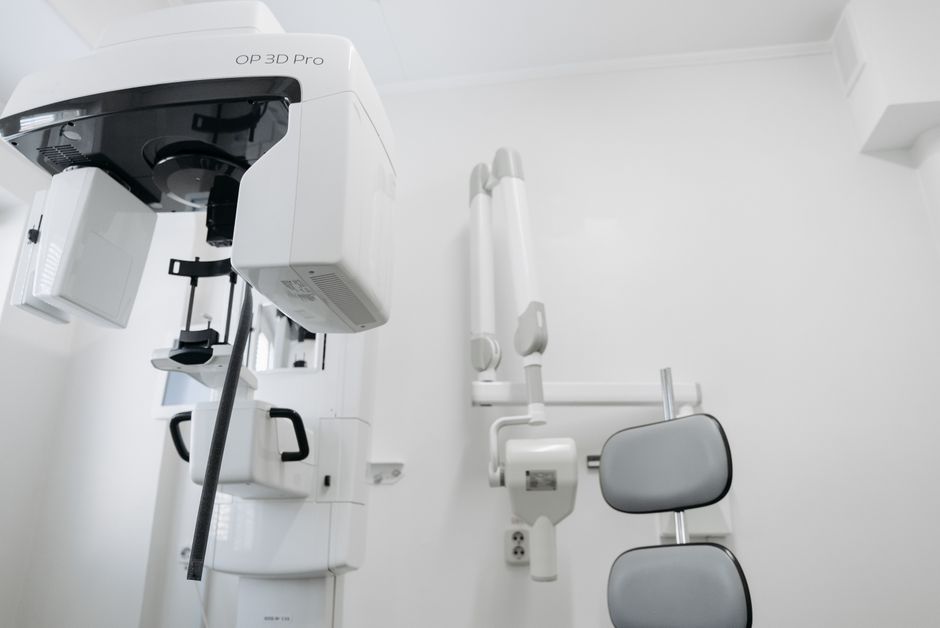
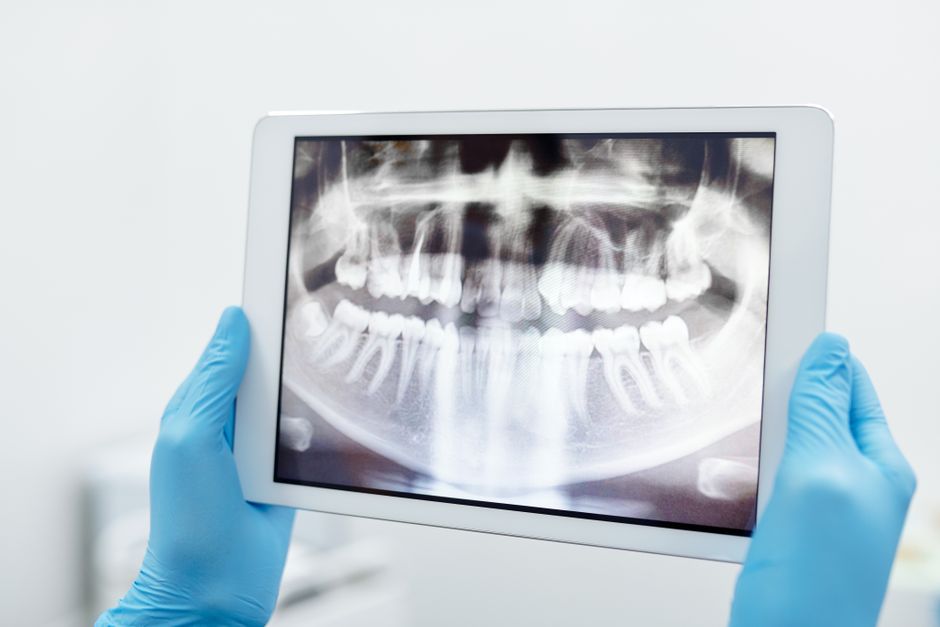
The foundation is 3D Cone Beam Computed Tomography (CBCT), a low-radiation scan that captures the exact geometry of the jaw, bone density, and the positions of nerves and sinus cavities.
This data is imported into implant-planning software, where the ideal implant position, angle, and depth are determined digitally before any incision is made.
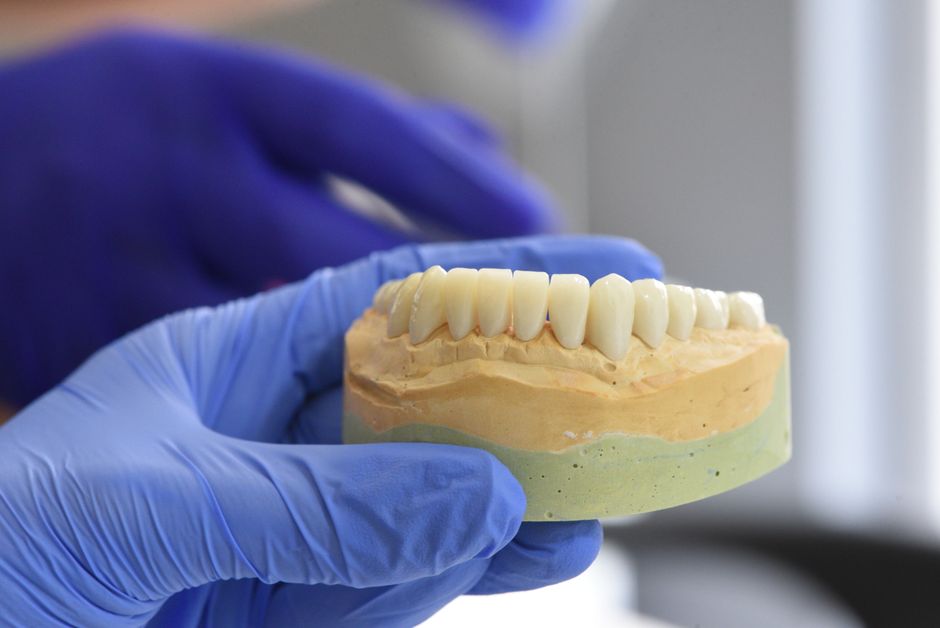
From that digital plan, a CAD/CAM surgical guide — a custom-fitted acrylic or resin stent — is manufactured, usually by milling or 3D printing. The guide fits over the teeth or gum and contains precisely drilled sleeves that restrict the surgical drill to the pre-planned trajectory.
During surgery the guide is secured in place, and the dentist drills and places the implant through the guide's sleeves. Because the path is mechanically constrained, deviations from the plan are minimized.
In many cases this allows a flapless approach: a small punch through the gum tissue rather than a full incision and flap reflection.
The result is more predictable implant positioning, reduced trauma to surrounding tissue, and — when flapless surgery is used — a significantly shorter recovery period. South Korean dental clinics have integrated this workflow broadly, supported by domestic manufacturing of implant systems, CBCT hardware, and digital planning software.
Compress your trip with a pre-visit CBCT
Many Seoul clinics accept CBCT scans taken at home before you travel. Sending your imaging data in advance allows the clinic to begin digital planning before your arrival, potentially cutting your in-Korea visit to as few as 5–7 days for a single implant case.
Am I a Candidate?
Not every patient is an automatic candidate for the fully guided flapless approach. A thorough pre-surgical evaluation determines suitability.
Patients who tend to be good candidates include:
- Adults with one or more missing teeth and adequate residual bone volume
- Patients with well-controlled systemic health (blood pressure, blood glucose)
- Non-smokers or those willing to abstain from smoking during healing
- Patients without active periodontal (gum) disease in the treatment area
- Those with sufficient bone height and width to avoid sinus lift or major bone augmentation
Patients who may need additional procedures before guided placement:
- Those with bone loss requiring grafting (ridge augmentation, sinus lift)
- Patients with uncontrolled diabetes, bleeding disorders, or bisphosphonate use
- Heavy smokers — flapless surgery is generally avoided due to impaired wound healing
- Patients with severe bruxism who need a bone volume assessment first
For complex cases, the digital workflow still adds value even if a traditional flap is required — the 3D pre-plan reduces intraoperative surprises regardless of incision technique.
Korean clinics typically perform a full-mouth CBCT and periodontal examination at the first consultation visit and will identify any preparatory steps before scheduling guided placement.
How the Procedure Works
The digital guided implant process unfolds across several visits, though international patient itineraries in Korea are often compressed into a structured 7–14 day trip.
Consultation and imaging (Visit 1)
- A full-arch or targeted 3D CBCT scan is taken, typically taking under 30 seconds of exposure time
- Digital intraoral impressions are captured using a wand-style scanner — no traditional putty trays
- Periodontal health, bite, and bone density are assessed
- Restorative goals (crown material, color, size) are discussed
Digital treatment planning
- The CBCT dataset and intraoral scan are merged in implant-planning software
- The prosthodontist or oral surgeon determines optimal implant position relative to the planned crown
- Nerve canals, sinus floor, and adjacent tooth roots are mapped and respected as safety margins
- The approved plan is converted into a milling or 3D-printing file for the surgical guide
Surgical guide fabrication
- The CAD/CAM guide is milled or printed, typically within 1–3 days
- Fit is verified on a study model or digitally before surgery
Surgical appointment
- Local anesthetic is administered; IV sedation is available on request
- The surgical guide is seated and verified for fit
- A small tissue punch creates an opening through the gum (flapless technique)
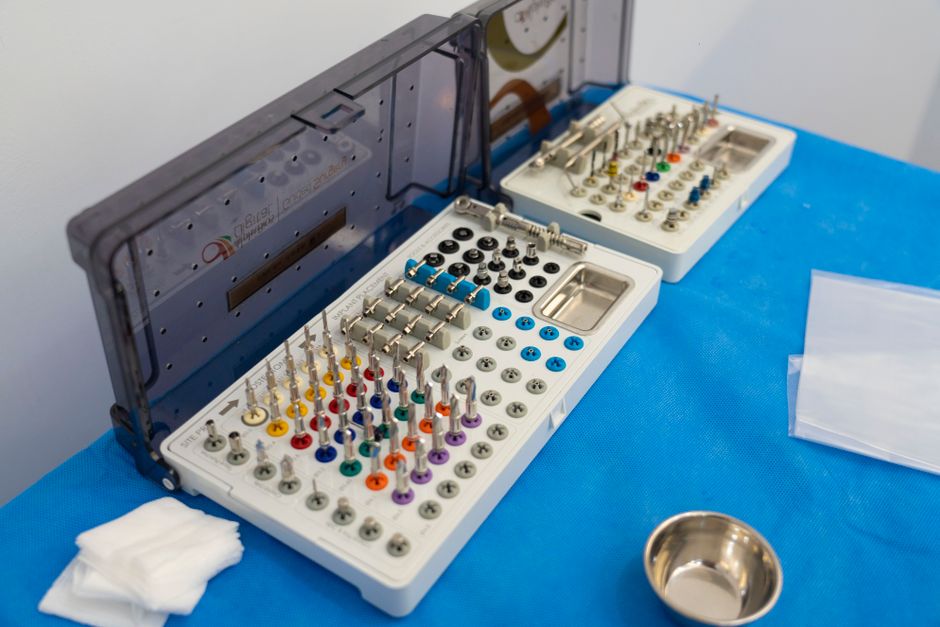
- Sequential drills guided by the stent's sleeves prepare the osteotomy
- The titanium implant fixture is inserted to the pre-planned depth and torque
- A healing cap is placed; sutures are usually minimal with flapless surgery
Healing phase and crown delivery
- Osseointegration (bone bonding) takes approximately 6–12 weeks for standard loading
- Immediate or early loading protocols — placing a temporary crown the same day or within days — may be available for eligible patients based on bone quality and torque achieved at placement
- Final zirconia or porcelain-fused-to-metal (PFM) crown is fitted at a follow-up appointment
For international patients completing treatment in a single trip, some Seoul clinics design itineraries where planning, surgery, and a temporary crown delivery all fall within a 7–10 day window, with the final crown shipped or delivered on a shorter return visit.
Recovery Timeline
Recovery from digitally guided flapless implant surgery is generally faster and more comfortable than conventional open-flap implant surgery, primarily because soft tissue trauma is reduced.
Days 1–3
Mild soreness and minor swelling are typical. Over-the-counter analgesics manage discomfort in most cases. Ice packs to the face reduce swelling. Bleeding, if any, is minimal with flapless technique. Soft foods — soups, yogurt, soft rice — are recommended.
Days 4–7
For flapless cases, most patients return to desk work and light activity within 48–72 hours. Swelling peaks around day 2–3 and typically resolves by the end of the first week. Smoking and alcohol must be strictly avoided during this window.
Weeks 2–6
Diet expands to semi-soft foods. The implant fixture is not yet loaded with full chewing force. Regular oral hygiene resumes with care around the surgical site.
Weeks 6–12
Osseointegration — the biological process by which bone cells grow onto and bond with the titanium surface — completes for most patients. A follow-up CBCT or X-ray confirms bone contact before final crown loading.
After final crown placement
No specific activity restriction. Regular dental check-ups and hygiene visits are recommended every 6 months. The implant is designed to function indefinitely with proper maintenance.
International patients who receive a temporary crown before leaving Korea should schedule a follow-up with a local dentist at home to monitor healing during the osseointegration period.
Cost Breakdown
South Korea offers digitally guided implant surgery at significantly lower cost than the United States, Australia, or Western Europe, without reducing the technology used. The savings come from lower clinic operating costs, domestic manufacturing of key components, and a competitive dental market — not from shortcuts in materials or technique.
Single implant (guided, standard case)
For a straightforward single-tooth replacement with a Korean implant brand (Osstem or Dentium), a zirconia crown, and the full guided workflow, the total cost typically falls in the range of $700–$1,400 USD. Premium cases using imported European implant systems may reach $1,600–$2,200.
Multiple implants
Clinics commonly offer per-unit discounts for two or more implants placed in the same session. A two-implant case with guided surgery and crowns often totals $1,200–$2,400 USD.
Full-arch restoration (All-on-4 / All-on-6)
For patients requiring a full arch of teeth, these protocols use four to six implants per jaw to support a fixed prosthetic bridge. Per-arch costs in Korea range from approximately $6,500–$12,000 USD — substantially lower than comparable full-arch cases in Western markets.
What is typically included
- Pre-surgical CBCT scan and digital planning
- CAD/CAM surgical guide fabrication
- Implant fixture (titanium post)
- Abutment and zirconia or PFM crown
- Local anesthesia
- Post-operative medications
What may be additional
- Bone grafting or sinus lift if required
- IV sedation
- Tooth extraction if needed prior to placement
- Interpreter services (though many Seoul clinics have English-speaking staff)
For comparison, a single guided implant in the United States typically costs $3,000–$6,000 USD when planning, surgery, and crown are totaled. The Korea cost advantage is material and well-documented across multiple medical tourism tracking sources.
| Item | Typical Cost in Korea (USD) |
|---|---|
| Single guided implant — Korean brand (Osstem/Dentium) + zirconia crown | $700–$1,400 |
| Single guided implant — imported European/US brand + zirconia crown | $1,600–$2,200 |
| Two implants — guided workflow, same session, zirconia crowns | $1,200–$2,400 |
| Bone graft / sinus lift (if required, per site) | $400–$900 |
| Full-arch All-on-4 or All-on-6 (per jaw) | $6,500–$12,000 |
| IV sedation add-on | $150–$400 |
Why Korea
South Korea has developed into one of the most technically advanced dental implant destinations in the world, driven by a combination of domestic manufacturing, research investment, regulatory rigor, and clinical volume.
Domestic implant manufacturing at global scale
Korea is home to Osstem Implant and Dentium, two of the largest dental implant manufacturers globally by unit volume. Both companies are headquartered in Seoul.
Their systems are exported to over 80 countries, are used routinely in Korean clinics at domestic pricing, and carry MFDS (Ministry of Food and Drug Safety) approval under the Medical Devices Act.
Patients in Korea therefore access the same implant systems as patients in Europe or North America, but at manufacturer-proximate cost.
MFDS regulatory standards
Korea's MFDS classifies endosseous dental implants as Grade 3 (High Risk) devices, requiring rigorous premarket review. CBCT units, digital planning software, and CAD/CAM fabrication equipment used in licensed clinics also fall under MFDS oversight.
This regulatory infrastructure means the digital workflow — from scan to guide to implant — is subject to formal approval standards, not just clinical discretion.
Concentration of expertise in Seoul and Gangnam
Seoul, and particularly the Gangnam district, has a dense concentration of specialist dental clinics serving both domestic and international patients. This competitive environment drives continuous investment in technology — CBCT units, intraoral scanners, milling machines, and 3D printers for guide fabrication are standard equipment rather than luxury add-ons.
Clinics handling large international patient volumes have adapted workflows specifically for visit-compressed itineraries.
KHIDI and Medical Korea infrastructure
The Korea Health Industry Development Institute (KHIDI) operates under the Ministry of Health and Welfare and oversees the Medical Korea program, which registers and promotes vetted healthcare providers to international patients.
Registered dental providers through the Medical Korea portal are required to meet standards for facility, staffing, and patient communication — giving international patients a verified starting point for clinic selection.
Cost and value
The combination of regulated domestic manufacturing, high procedural volume, and competitive clinic market means that patients accessing guided implant surgery in Korea receive technology equivalent to top-tier Western facilities at 50–70% lower total cost — without sacrificing the digital workflow, implant system quality, or post-operative support.
Key Takeaways
- Digital guided implant surgery uses 3D CBCT data and CAD/CAM-fabricated surgical guides to place implants with high positional accuracy, often enabling a less invasive flapless technique.
- South Korea's domestic implant manufacturers (Osstem, Dentium) are globally distributed, MFDS-approved, and available to Korean clinic patients at domestic pricing — a key driver of the cost advantage.
- Single guided implants in Seoul typically cost $700–$1,400 USD all-in, compared to $3,000–$6,000 in the United States, with equivalent or superior digital infrastructure.
- International patients should plan 7–14 days in Korea for a single-implant case; clinics serving medical tourists routinely design compressed itineraries that include planning, guide fabrication, surgery, and temporary crown within one trip.
Frequently Asked Questions
What makes guided implant surgery different from conventional implant surgery?
Guided implant surgery pre-plans depth, angle, and position on a 3D digital model of your jaw from a CBCT scan, then physically constrains the drill to that plan with a custom CAD/CAM surgical guide. Conventional surgery instead relies on 2D X-rays and tactile judgment during the operation. The guided result is more predictable placement, reduced risk of nerve or sinus errors, and, when bone and gum conditions allow, the option of a flapless technique with smaller incisions and faster healing.
Is flapless implant surgery always possible with the guided approach?
Not always. Flapless surgery is suitable when there is adequate bone volume and gum tissue thickness, and when the planned implant position is straightforward. If bone grafting is needed, or if the surgeon needs direct visual confirmation of bone quality, a conventional flap may still be required even when using a guided workflow. Your Korean clinic will assess suitability from your CBCT scan at the initial consultation.
How long will I need to stay in South Korea for a single guided implant?
For a single standard implant, most international patient itineraries run 7–14 days. The first 1–2 days cover consultation, CBCT, and digital impressions. Guide fabrication takes 1–3 days. Surgery is performed around day 3–5. If immediate or early loading is suitable, a temporary crown may be fitted before you leave. If standard loading is used, osseointegration takes 6–12 weeks and the final crown is fitted on a shorter return visit or by a local dentist.
Are Korean implant brands (Osstem, Dentium) reliable for long-term use?
Yes. Osstem and Dentium are among the world's largest dental implant manufacturers by unit sales and are exported to over 80 countries. Both are approved by Korea's MFDS (Ministry of Food and Drug Safety) as Grade 3 high-risk medical devices, are used routinely in Korean clinics, and have an extensive real-world record across large international patient populations. Patients preferring a European or American system can ask their clinic about imported options, also used in many Seoul practices at higher cost.
What additional costs should I budget for beyond the implant itself?
Budget extra for likely add-ons beyond the implant. Bone grafting or a sinus lift adds $400–$900 per site. IV sedation adds about $150–$400 if preferred over local anesthesia. Tooth extraction before placement, if replacing a failing tooth, is usually $80–$250 per tooth. A 10-day Seoul stay in a guesthouse or budget hotel runs $50–$120 per night. Medical Korea-registered clinics can often connect patients with coordinator services for accommodation, transfers, and interpreter support.
Related Topics
Sources
Ready to Begin Your Journey?
Get matched with KAHF-accredited hospitals and receive a personalized treatment plan.
Quick Facts
Typical Cost
$1500 - $4000
Duration
3 days
Accredited Hospitals
0+ Available
Top Hospitals
Medical Information Disclaimer
The information provided on this page about Digital Guided Implant Surgery is for general educational and informational purposes only. It is not intended as, and should not be construed as, medical advice, diagnosis, or treatment recommendations.
Always seek the advice of a qualified healthcare professional regarding any medical condition or treatment. Never disregard professional medical advice or delay seeking it because of information found on this website. Individual treatment outcomes may vary. Costs shown are estimates and may differ based on individual circumstances.
KmedTour acts as a medical tourism facilitator and does not provide direct medical services. All treatments are performed by independently accredited healthcare providers in South Korea.