Eye Care$6000 - $14000⭐ KAHF Accredited Hospitals
Corneal Transplant in Korea
Corneal transplant (keratoplasty) in Korea: full-range lamellar and endothelial techniques at KAHF-accredited tertiary centers, $12,000–$18,000 per eye.
Quick Answer
- Four technique options — PK (full-thickness), DALK (anterior lamellar), DSAEK, and DMEK (endothelial only) — matched to which corneal layers are affected
- Endothelial keratoplasty (DSAEK/DMEK) offers the fastest visual recovery: usable vision within 1–2 weeks
- Rejection is the key long-term risk — steroid and antibiotic drops continue for months; urgent signs (redness, light sensitivity, sudden blurring) require same-day contact
- Plan an extended stay — initial surgery plus mandatory early follow-up visits mean most patients need 2–4 weeks in Korea before flying home
At a Glance
| Procedure time | 1–2 hours depending on technique (PK vs. lamellar vs. endothelial) |
|---|---|
| Anesthesia | Local (topical/regional block) or general anesthesia — decided case-by-case |
| Hospital stay | Typically 1–2 days inpatient; day-surgery possible for DSAEK/DMEK at some centers |
| Recommended stay in Korea | 2–4 weeks minimum for early post-operative monitoring and suture checks |
| Recovery | DSAEK/DMEK: functional vision 1–2 weeks; PK: vision fluctuates up to 12–18 months with sutures in place |
| Typical cost in Korea | Approximately $12,000–$18,000 USD per eye (technique, donor tissue, and hospital fees vary) |
Overview
Corneal transplant — medically termed keratoplasty — replaces diseased, scarred, or clouded corneal tissue with healthy donor cornea sourced from a screened eye bank.
The cornea is the clear front window of the eye. When it becomes opaque or structurally compromised, vision loss follows and cannot be corrected by glasses, contact lenses, or medication alone.
Korean tertiary ophthalmology centers offer the full spectrum of modern techniques:
- Penetrating keratoplasty (PK): full-thickness replacement — the oldest and most established method.
- Deep anterior lamellar keratoplasty (DALK): removes only the front layers while preserving the patient's own healthy endothelium, which lowers rejection risk.
- DSAEK and DMEK: endothelial keratoplasty procedures that replace only the damaged inner cell layer through a small incision, using an air or gas bubble to hold the graft while it adheres.
The technique chosen depends on which corneal layers are affected, the patient's prior surgical history, and the surgeon's assessment of the eye bank tissue available.
Rejection warning signs — act the same day
Sudden redness, new light sensitivity, unexplained vision blurring, or eye pain after any type of corneal graft are rejection warning signs. Do not wait for your next scheduled appointment — contact your surgeon or the nearest ophthalmology emergency unit immediately. Early treatment with intensive steroids can reverse most acute rejection episodes if caught within 24–48 hours.
DMEK vs. DSAEK — ask about cell density
Both replace only the endothelial layer, but DMEK transplants a thinner, purer tissue layer and typically delivers better final visual acuity. Ask your Korean surgeon for the eye bank's pre-cut DMEK tissue cell density count — above 2,000 cells/mm² is the standard quality threshold for graft tissue used at reputable centers.
Plan your return trip carefully
Most airlines require a physician fit-to-fly letter after intraocular surgery. If your procedure involved an air or gas bubble (DSAEK/DMEK), flying before the bubble fully absorbs causes dangerous intraocular pressure changes. Your surgical team will confirm when you are cleared for air travel — do not book return flights before that clearance.
Am I a Candidate?
Good candidates share one defining feature: vision loss caused by corneal disease that has not responded to non-surgical options.
Common qualifying diagnoses include:
- Advanced keratoconus — progressive thinning and cone-shaped distortion of the cornea
- Fuchs' endothelial dystrophy — inherited failure of the endothelial pump cells that keep the cornea clear
- Corneal scarring from prior infection (herpes simplex keratitis, bacterial ulcer) or trauma
- Hereditary corneal dystrophies affecting the stroma or anterior layers
- Failed prior graft — regraft surgery is technically demanding but performed at high-volume Korean centers
Contraindications require careful evaluation. Significant uncontrolled glaucoma, severe dry eye syndrome, active ocular surface inflammation, or co-existing retinal disease can each reduce the chance of a successful outcome.
General health must be suitable for anesthesia. Patients are expected to commit to an extended stay in Korea for post-operative monitoring and to ongoing drop therapy at home after returning.
How the Procedure Works
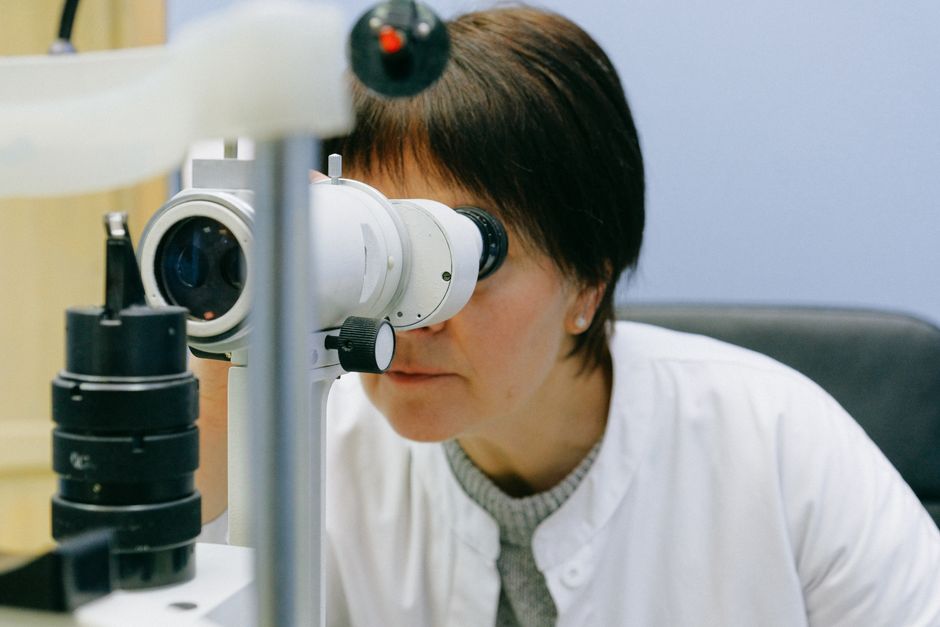
The process begins before surgery with a thorough workup: corneal topography, pachymetry (thickness mapping), slit-lamp biomicroscopy, and endothelial cell density count.
Donor tissue is procured from a licensed eye bank. All tissue undergoes serological screening and is stored under refrigerated conditions with documented cell counts.
Penetrating keratoplasty (PK): A circular trephine removes a full-thickness disc of the patient's cornea. The donor button — cut to precise diameter — is sutured into place with continuous or interrupted fine nylon sutures. Sutures may remain for 12–18 months while the wound heals.
Deep anterior lamellar keratoplasty (DALK): The surgeon removes the front stromal layers while leaving the patient's own Descemet membrane and endothelium intact. Donor anterior tissue is positioned and sutured. Because the patient's endothelium is preserved, endothelial rejection is effectively eliminated.
DSAEK / DMEK: Only the diseased inner endothelial layer is replaced. Donor tissue is folded and inserted through a small corneal incision. An air or gas bubble is injected to press the graft flat against the recipient bed. The patient lies face-up for 30–60 minutes post-operatively to hold graft position.
Total operating time is typically 1–2 hours. Anesthesia choice — local block or general — is made jointly by the surgeon and anesthesiologist based on patient cooperation and systemic health.
Recovery Timeline
Recovery differs substantially by technique, and patients should understand the timelines before choosing Korea for surgery.
Endothelial keratoplasty (DSAEK/DMEK): Functional vision typically returns within 1–2 weeks as the graft adheres and the cornea clears. Full stabilization takes 1–2 months. DMEK often produces sharper final vision than DSAEK because the transplanted tissue is thinner and more anatomically normal.
DALK: Visual recovery is slower than endothelial procedures — several months — but the absence of endothelial rejection risk is a significant long-term advantage. Sutures remain in place for an extended period.
PK: Vision fluctuates during the 12–18 months that sutures are in place. Suture adjustment or selective removal is sometimes needed to manage post-operative astigmatism. Final visual acuity stabilizes only after full suture removal.
Some care rules apply to every patient. Antibiotic and corticosteroid eye drops are prescribed for months on an individualized taper schedule, and drop compliance is essential to prevent rejection.
Rejection warning signs (sudden redness, increased light sensitivity, vision change, or pain) require same-day ophthalmology contact rather than a wait-and-see approach, and protective eyewear is required whenever outdoors during the healing phase.
Most international patients need 2–4 weeks in Korea before the surgical team considers them stable to fly home.
Cost Breakdown
The approximate price range for corneal transplant in Korea is $12,000–$18,000 USD per eye. This is a planning estimate; the final written quote follows review of your medical records and imaging.
Factors that shift cost within this range:
- Technique: DMEK requires highly skilled tissue preparation; PK is less technically demanding but carries higher anesthesia and inpatient time.
- Donor tissue and eye-bank fees: Processed, pre-cut endothelial grafts (DMEK/DSAEK) carry higher preparation costs than full-thickness PK tissue.
- Anesthesia type: General anesthesia adds to the facility fee versus a local block.
- Hospital stay: Day surgery versus 1–2 days inpatient affects the room and nursing charge.
- Diagnostic workup: Pre-operative topography, pachymetry, and specular microscopy are billed separately at most centers.
Patients must also budget for items outside the surgical fee:
- International flights and airport transfers
- 2–4 weeks accommodation in Seoul or the host city
- Post-operative medications (steroid drops are required for months)
- Comprehensive travel and medical insurance covering surgical complications
- Ongoing follow-up costs at home after returning
Request an itemized written estimate before committing to surgery.
| Item | Typical Cost in Korea (USD) |
|---|---|
| Surgical fee (technique-dependent) | $8,000–$13,000 |
| Donor cornea / eye-bank preparation fee | $1,500–$3,000 |
| Anesthesia | $500–$1,200 |
| Inpatient stay (1–2 nights, if required) | $400–$1,000 |
| Pre-operative diagnostic workup | $300–$800 |
| Post-operative medications (drops, 3–6 months) | $200–$500 |
Why Korea
Korea's ophthalmology system is structured to handle the full complexity of corneal surgery at scale, which matters for international patients who cannot easily return for complications.
National oversight: The Korea Health Industry Development Institute (KHIDI) and Ministry of Health and Welfare operate the Medical Korea framework — a government-backed program that sets standards for hospitals treating foreign patients.
Accreditation: Hospitals participating in the Medical Korea program carry KAHF (Korea International Medical Association) certification. The Korea Institute for Healthcare Accreditation (KOIHA) conducts regular facility reviews.
High-volume specialist exposure: Seoul tertiary centers perform each of the four corneal transplant techniques regularly, giving surgeons the repetition that matters in technically demanding procedures like DMEK and DALK.
Eye-bank infrastructure: Korea maintains a functioning national eye-bank system with documented tissue screening protocols and modern corneal imaging (Scheimpflug tomography, specular microscopy).
International patient coordination: Accredited centers operate international healthcare centers staffed with medical interpreters, case coordinators, and documentation specialists who manage visa support letters, medical report translation, and scheduling across multiple specialist appointments.
Key Takeaways
- Korea offers all four corneal transplant techniques (PK, DALK, DSAEK, DMEK) at KAHF-accredited tertiary centers under the Medical Korea government framework
- Technique selection drives both cost ($12,000–$18,000 per eye) and recovery timeline — endothelial procedures (DSAEK/DMEK) recover fastest, PK takes up to 18 months
- Rejection is a lifelong vigilance issue requiring months of steroid drops and immediate response to warning signs regardless of which technique was used
- International patients should plan at least 2–4 weeks in Korea before flying home, and must confirm fit-to-fly clearance if a gas bubble was used
Frequently Asked Questions
What is the difference between PK, DALK, DSAEK, and DMEK?
All four are corneal transplants that replace different layers. PK (penetrating keratoplasty) replaces the full thickness of the cornea. DALK (deep anterior lamellar keratoplasty) replaces only the front stromal layers, keeping your healthy inner endothelium and eliminating endothelial rejection risk. DSAEK and DMEK replace only the diseased inner endothelial layer through a small incision; DMEK uses a thinner, more precise graft and generally achieves better final acuity but is technically more demanding. Your surgeon recommends the technique for your case.
How long do I need to stay in Korea after corneal transplant surgery?
Plan for a minimum of 2–4 weeks in Korea before your surgical team considers you stable to travel. The first week involves daily or every-other-day checks to confirm graft adhesion (critical for DSAEK/DMEK) and monitor intraocular pressure. If you received a gas or air bubble during endothelial keratoplasty, you cannot fly until it fully absorbs, usually 1–2 weeks. PK patients may need suture adjustment appointments within the first month. Always get written fit-to-fly clearance before booking return flights.
Where does the donor cornea come from, and is it safe?
Donor corneas in Korea come from licensed eye banks operating under national regulatory oversight. Donated tissue undergoes serological screening for infectious diseases, specular microscopy to confirm endothelial cell density, and refrigerated storage with documented chain-of-custody records. Pre-cut tissue for DSAEK and DMEK is evaluated for cell density — reputable centers use tissue above 2,000 cells/mm². You can ask your coordinator for documentation of the tissue's origin and quality metrics before surgery.
What are the rejection warning signs and how quickly do I need to act?
Corneal graft rejection can occur months or even years after surgery, so act fast: contact your ophthalmologist the same day, not the next morning, if you notice the classic warning signs. These are Redness, light Sensitivity, Vision decrease, and Pain. Rejection caught within 24–48 hours can usually be reversed with intensive topical and sometimes systemic corticosteroids. Delayed treatment significantly worsens the prognosis. This applies to all techniques, though DALK carries no endothelial rejection risk.
What is the recovery timeline for each technique?
Recovery varies considerably by technique. DSAEK and DMEK: usable vision typically returns within 1–2 weeks, with full stabilization in 1–2 months. DALK: recovery is slower, several months, because the stromal wound must heal, but endothelial rejection risk is eliminated. PK: vision fluctuates for the 12–18 months that sutures remain, selective removal may manage astigmatism, and final acuity is assessed only after all sutures are out. All techniques require antibiotic and steroid drops for months on an individualized taper.
Is corneal transplant in Korea covered by travel insurance, and what should my policy include?
Standard travel insurance does not cover elective surgery abroad. You need a specialist medical travel insurance policy that explicitly covers planned surgical procedures, post-operative complications, emergency medical repatriation, and extended stays if recovery is slower than expected. Verify that the policy covers complications requiring additional surgery (such as graft dislocation requiring rebubbling in DMEK) and that the coverage limit is sufficient to cover the full cost-of-care range. Discuss policy requirements with your Korean international patient coordinator before booking.
Related Topics
Sources
Ready to Begin Your Journey?
Get matched with KAHF-accredited hospitals and receive a personalized treatment plan.
Quick Facts
Typical Cost
$6000 - $14000
Duration
10 days
Accredited Hospitals
2+ Available
Available Cities
Medical Information Disclaimer
The information provided on this page about Corneal Transplant is for general educational and informational purposes only. It is not intended as, and should not be construed as, medical advice, diagnosis, or treatment recommendations.
Always seek the advice of a qualified healthcare professional regarding any medical condition or treatment. Never disregard professional medical advice or delay seeking it because of information found on this website. Individual treatment outcomes may vary. Costs shown are estimates and may differ based on individual circumstances.
KmedTour acts as a medical tourism facilitator and does not provide direct medical services. All treatments are performed by independently accredited healthcare providers in South Korea.