Cancer$20000 - $45000⭐ KAHF Accredited Hospitals
Bronchoplasty in Korea
Bronchial reconstruction surgery in South Korea — sleeve resection technique, cost, recovery, and why Korean thoracic centers attract international patients.
Quick Answer
- Bronchoplasty (including sleeve resection) removes and reconstructs a diseased or narrowed segment of bronchus, preserving healthy lung tissue instead of removing an entire lobe.
- Surgery takes approximately 2.5–4 hours; bronchial anastomosis alone averages 40–50 minutes of operative time.
- Hospital stay in Korea is typically 7–12 days; international patients generally plan a total 4–6 week in-country stay for follow-up and clearance to fly.
- Approximate cost in Korea ranges from $12,000–$28,000 USD (all-in: surgeon, anesthesia, OR, ward stay), substantially below US estimates for equivalent thoracic surgery.
At a Glance
| Procedure time | 2.5–4 hours (mean ~3 hours reported in clinical literature) |
|---|---|
| Anesthesia | General anesthesia with single-lung ventilation |
| Hospital stay | 7–12 days (complex cases may extend to 14 days) |
| Recommended stay in Korea | 4–6 weeks total (surgery + follow-up + fit-to-fly clearance) |
| Recovery | Light activity in 4–6 weeks; full recovery 2–4 months depending on extent of resection |
| Typical cost in Korea | Approximately $12,000–$28,000 USD (varies by extent of resection and hospital tier) |
Overview
Bronchoplasty is a surgical procedure in which a damaged, stenotic, or tumour-affected segment of a bronchus — the major airway branches of the lungs — is resected and the remaining healthy ends are rejoined (anastomosed).
The goal is to restore open, functional airflow while sparing as much lung parenchyma as possible.
The most common form is sleeve resection, in which a circumferential ring of the central or lobar bronchus is removed along with the affected lobe. The upper bronchial stump is then sutured directly to the lower bronchial stump, avoiding the need for a full pneumonectomy (total lung removal).
Candidates include patients with non-small cell lung cancer (NSCLC) involving a main or lobar bronchus, benign bronchial stenosis (often post-tuberculosis or post-transplant), low-grade airway neoplasms, or traumatic bronchial injury. The lung-sparing approach is strongly preferred over pneumonectomy when the disease extent allows it.
Minimally invasive approaches — video-assisted thoracoscopic surgery (VATS) and robot-assisted thoracic surgery (RATS) — have become the dominant techniques at high-volume Korean thoracic centres. A 3D imaging system is now commonly used during VATS sleeve resection to improve precision of the anastomosis.
Bronchoplasty is a technically demanding procedure requiring a surgeon with dedicated thoracic oncology training. Case volume at the operating institution correlates strongly with anastomotic integrity and complication rates — a factor that makes centre selection critical for international patients.
Plan your companion's visa alongside yours
Korea's Medical Care Visa (G-1-10 category) allows one guardian to accompany the patient for the full treatment duration. Apply simultaneously — guardian visa processing times match the patient's, and having support during the 4–6 week stay meaningfully reduces logistical stress after thoracic surgery.

Am I a Candidate?
You may be a candidate for bronchoplasty if:
- You have non-small cell lung cancer (NSCLC) with endobronchial or peribronchial involvement of a lobar or segmental bronchus
- You have a benign bronchial stricture — such as post-tuberculosis stenosis, post-lung-transplant anastomotic narrowing, or granulomatous disease
- You have a low-grade airway tumour (e.g. carcinoid, mucoepidermoid carcinoma) accessible via bronchial resection
- Your pulmonary function tests indicate you would tolerate lobectomy but NOT pneumonectomy — making lobe-sparing sleeve resection the safer choice
- You have a post-intubation or traumatic bronchial injury with significant stricture formation
You are generally NOT a candidate if:
- Disease has spread extensively beyond the bronchus into surrounding vascular structures in a way that prevents safe anastomosis
- Your overall cardiopulmonary reserve is too low to tolerate general anaesthesia and single-lung ventilation
- Active systemic infection is present
- You have had prior high-dose radiation to the planned anastomotic site (relative contraindication; assessed case-by-case)
Pre-operative assessment in Korea typically includes high-resolution CT, bronchoscopy, PET-CT (for oncology cases), pulmonary function testing (spirometry + DLCO), and cardiac evaluation.
How the Procedure Works
Pre-operative preparation
The patient undergoes bronchoscopy to map the exact extent of bronchial disease and plan the resection margins. A mediastinal staging workup is completed for oncology cases. A double-lumen endotracheal tube or bronchial blocker is placed to allow single-lung ventilation during the operation.
Surgical approach
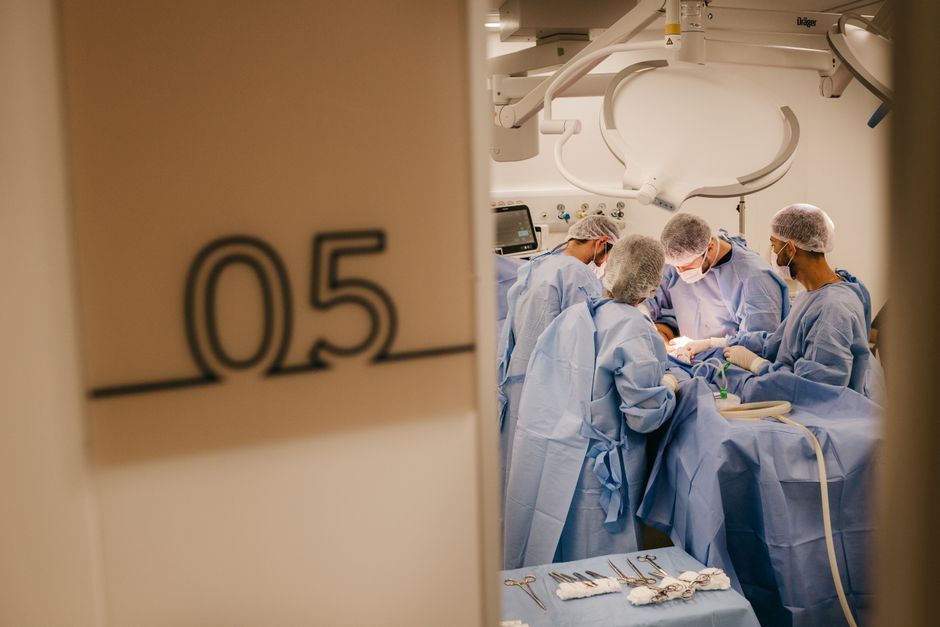
Most Korean thoracic centres now perform bronchoplasty via VATS (video-assisted thoracoscopic surgery) or robotic assistance rather than open thoracotomy. The patient is positioned in lateral decubitus. Two to four small port incisions are made; a utility incision of 3–5 cm is used for specimen extraction.
Resection
The inferior pulmonary ligament is divided to reduce tension on the eventual anastomosis. The surgical team dissects the affected bronchial segment free from surrounding pulmonary artery and lymphatic tissue. The bronchus is divided at clean margins (confirmed by frozen-section pathology in oncology cases).
The lobe containing the diseased segment is removed.
Anastomosis
The two bronchial stumps are reapproximated using interrupted or continuous absorbable sutures. A water-submersion pneumostasis test — inflating the lung to approximately 20 cm H₂O pressure under saline — confirms no air leak.
A pericardial fat pad or intercostal muscle flap may be wrapped around the anastomosis to reinforce it and protect the nearby pulmonary artery.
Closure and drain placement
One or two chest drains are placed. The port sites are closed in layers. The patient is extubated in the operating room if haemodynamically stable.
Total operative time ranges from approximately 2.5 to 4 hours; anastomosis construction alone takes 18–76 minutes depending on complexity and approach.
Recovery Timeline
Days 1–3 (ICU or high-dependency unit)
- Continuous oxygen monitoring and pulmonary physiotherapy begin immediately
- Incentive spirometry and early mobilisation (sitting, then standing) initiated within 24 hours
- Chest drains remain in place; output and air leak assessed daily
Days 4–7 (ward)
- Chest drains removed when output is low and no air leak is detected
- Pain managed with epidural or patient-controlled analgesia, transitioning to oral medications
- Physiotherapy includes breathing exercises, gentle walking circuits
- Bronchoscopy may be performed at day 5–7 to inspect anastomotic healing
Days 7–12 (pre-discharge)
- Most patients are discharged at 7–12 days; complex cases with minor complications may extend to 14 days
- Discharge criteria: no air leak, oxygen saturation acceptable on room air, adequate oral intake, controlled pain
- International patients remain in Korea and attend outpatient follow-up visits
Weeks 2–6 (outpatient, in Korea)
- Follow-up bronchoscopy at 2–3 weeks assesses anastomotic patency
- Driving and lifting restrictions remain in effect
- Gradual return to light activities; no strenuous exertion
- Fit-to-fly assessment typically occurs at week 4–6; medical clearance is required before boarding a long-haul flight
Months 2–4 (home country)
- Pulmonary function testing repeated to document recovery
- CT chest imaging at 3 months (oncology cases)
- Full activity generally restored by month 3–4 for straightforward sleeve resections
Cost Breakdown
Korea does not publish a single national tariff for bronchoplasty, and costs vary by hospital tier, anaesthesia duration, ICU use, and whether the case is oncological or non-oncological. The ranges below are representative approximations based on available international patient-facing data from Korean medical tourism sources.
Surgeon and anaesthesia fees form the largest single component, followed by operating room and equipment costs, then ward stay.
For context: comparable thoracic sleeve resection in the United States typically falls in the $40,000–$80,000+ range (hospital bill alone, before insurance), and in Western Europe the all-in private cost commonly exceeds $25,000–$45,000. Korea's combination of high surgical volume, lower overhead, and government-backed medical tourism infrastructure positions it competitively.
All major KHIDI-registered Korean hospitals issue itemised cost estimates for international patients before admission. The International Patient Center at each facility handles currency conversion, payment scheduling, and insurance liaison.
Korea's Medical Tourism Visa (Medical Care Visa, C-3-3 or G-1-10) covers the patient and one accompanying guardian for the duration of treatment plus recovery — a significant logistical advantage over countries that limit medical visa durations.
| Item | Typical Cost in Korea (USD) |
|---|---|
| Surgeon and anaesthesia fees | $4,000–$9,000 |
| Operating room and equipment (VATS/robotic) | $3,500–$7,000 |
| ICU (1–2 nights) | $1,200–$2,500 |
| Ward stay (7–10 nights) | $2,500–$6,000 |
| Post-op bronchoscopy and follow-up visits | $800–$2,500 |
Why Korea
South Korea has built one of Asia's most concentrated thoracic surgery ecosystems over the past two decades.
Lung cancer is the leading cause of cancer death in Korea, which has driven exceptionally high operative volumes at major teaching hospitals — high volume correlates with better outcomes for technically demanding procedures like sleeve resection.
Korea's Ministry of Food and Drug Safety (MFDS) and the Korea Health Industry Development Institute (KHIDI) jointly oversee foreign-patient medical institutions through the KAHF (Korean Accreditation for Healthcare serving Foreign patients) system. Only registered institutions may legally treat international patients, providing a regulatory layer absent in many competing destinations.
The Medical Korea programme — administered under the Ministry of Health and Welfare — connects international patients with accredited hospitals, offers interpreter services, and provides a patient ombudsman channel for dispute resolution.
Minimally invasive thoracic surgery adoption in Korea is high. VATS and robotic sleeve bronchoplasty are now routine at leading centres, reducing open-chest procedures, shortening hospital stays, and lowering complication rates compared with traditional thoracotomy.
Korea's National Health Insurance system sets procedure fee structures that indirectly anchor what hospitals charge international patients, preventing the extreme price inflation seen in purely private markets.
Seoul's Gangnam medical district and major university hospital campuses offer English-language international patient coordinators, dedicated wards for foreign patients, and logistics support including hotel partnerships near hospital campuses — reducing the organisational burden on patients travelling alone or with one accompanying guardian.
Key Takeaways
- Bronchoplasty (sleeve resection) spares functional lung tissue by reconstructing the bronchus rather than removing the entire lung — preserving respiratory capacity that matters long-term.
- Korea's high lung-cancer surgical volumes and VATS/robotic adoption make it a genuinely strong choice for a technically demanding reconstruction procedure, not just for cost.
- Total in-country time of 4–6 weeks is realistic and necessary — anastomotic healing must be confirmed by bronchoscopy before long-haul flight clearance.
- Use only KHIDI-registered, KAHF-accredited institutions — Korea's regulatory framework specifically protects international patients at registered facilities.
Frequently Asked Questions
What is the difference between bronchoplasty and sleeve resection?
The terms are often used interchangeably but have a technical distinction. Bronchoplasty broadly refers to any reconstructive procedure on a bronchus, including patching or widening a narrowed segment. Sleeve resection is a specific type of bronchoplasty in which a circumferential ring of central bronchus (with the attached lobe) is removed and the two remaining ends are sutured together. Most bronchoplasty procedures for lung cancer are sleeve resections.
Is bronchoplasty safer than pneumonectomy?
For patients who are candidates for both, sleeve resection is generally preferred because it preserves the remaining lobe's function. Removing an entire lung (pneumonectomy) carries higher long-term functional cost and is associated with greater cardiopulmonary morbidity. Whether you qualify for sleeve resection depends on the location and extent of disease — your surgical team will assess this based on imaging, bronchoscopy, and pulmonary function tests.
How long does it take to get fit to fly home after bronchoplasty in Korea?
Most international patients require 4–6 weeks in-country before receiving medical clearance for long-haul flight. The anastomosis must be inspected bronchoscopically, lung expansion confirmed on imaging, and oxygen saturation must be stable on room air. Flying too early after thoracic surgery carries risks of pneumothorax and anastomotic stress from cabin pressure changes. Your international patient coordinator will liaise with the surgical team on your specific clearance date.
Will I need a second bronchoscopy after surgery?
Yes — a follow-up bronchoscopy at approximately 2–3 weeks post-operation is standard at Korean thoracic centres to directly inspect the anastomotic suture line for healing, granulation tissue, or early stenosis. This is a brief outpatient procedure, typically performed under light sedation, and is an important quality check before you are cleared to travel.
Does Korea's KAHF accreditation mean anything for bronchoplasty specifically?
KAHF (Korean Accreditation for Healthcare serving Foreign Patients) is administered by KHIDI under the Ministry of Health and Welfare. It certifies that an institution meets standards for safety, quality, and patient services for international patients — including interpreter availability, informed-consent processes in the patient's language, and coordination protocols. It does not certify individual procedures, but choosing a KAHF-accredited hospital ensures the institutional framework around your surgery meets a verified standard.
What pre-operative tests will I need before flying to Korea for bronchoplasty?
Korean thoracic teams typically request recent CT chest (within 3 months), pulmonary function tests (FEV1, FVC, DLCO), recent blood work, ECG, and — for oncology cases — a PET-CT and pathology reports. Many hospitals allow remote pre-consultation review of these documents via their International Patient Center before you travel, so the surgical plan can be finalised and an admission date confirmed before you book flights.
Related Topics
Sources
Ready to Begin Your Journey?
Get matched with KAHF-accredited hospitals and receive a personalized treatment plan.
Quick Facts
Typical Cost
$20000 - $45000
Duration
14 days
Accredited Hospitals
0+ Available
Top Hospitals
Medical Information Disclaimer
The information provided on this page about Bronchoplasty is for general educational and informational purposes only. It is not intended as, and should not be construed as, medical advice, diagnosis, or treatment recommendations.
Always seek the advice of a qualified healthcare professional regarding any medical condition or treatment. Never disregard professional medical advice or delay seeking it because of information found on this website. Individual treatment outcomes may vary. Costs shown are estimates and may differ based on individual circumstances.
KmedTour acts as a medical tourism facilitator and does not provide direct medical services. All treatments are performed by independently accredited healthcare providers in South Korea.