Cancer$8000 - $15000⭐ KAHF Accredited Hospitals
Breast Conserving Surgery in Korea
Lumpectomy in South Korea: remove breast cancer while preserving the breast, with oncoplastic reconstruction at internationally accredited centers.
Quick Answer
- Breast conserving surgery (BCS) removes the tumor and a margin of healthy tissue while keeping the breast intact — it is not a full mastectomy.
- In South Korea, BCS is routinely combined with oncoplastic reconstruction techniques to minimize visible contour changes after surgery.
- Total cost in Korea typically ranges $8,000–$22,000 USD depending on complexity, imaging, pathology, and whether oncoplastic reshaping is included.
- Most international patients plan a stay of 3–4 weeks to cover surgery, pathology review, and the first radiation planning consultation.
At a Glance
| Procedure time | 1.5–3 hours (longer if oncoplastic reshaping is combined) |
|---|---|
| Anesthesia | General anesthesia |
| Hospital stay | 2–4 days inpatient |
| Recommended stay in Korea | 3–4 weeks (covers pathology turnaround and follow-up) |
| Recovery | Return to light activity in 2–3 weeks; full recovery in 4–6 weeks |
| Typical cost in Korea | $8,000–$22,000 USD (all-in estimate; varies by hospital tier and complexity) |
Overview
Breast conserving surgery (BCS) — also called a lumpectomy or wide local excision — removes a malignant or suspicious breast mass along with a clear margin of surrounding tissue, leaving the rest of the breast intact.
It is the internationally preferred alternative to total mastectomy for early-stage breast cancer (typically Stage I–II) when the tumor-to-breast size ratio allows safe removal with adequate margins.
In South Korea, BCS has evolved beyond simple excision. Surgeons at major cancer centers routinely apply oncoplastic surgery principles — reshaping the remaining breast tissue immediately during the same operation to restore natural contour and symmetry.
Radiation therapy to the remaining breast tissue is a standard part of the treatment package after BCS. Korean multidisciplinary teams — combining breast surgeons, radiation oncologists, medical oncologists, and plastic surgeons — coordinate this across a single facility, reducing the coordination burden on international patients.
The Korean Breast Cancer Society (KBCS), founded in 1999, maintains national quality registries and drives evidence-based protocol adoption across the country's major hospitals.
Bring all prior imaging and pathology reports
Korean hospitals can review your existing biopsy results, mammogram, and MRI before your arrival, allowing the multidisciplinary team to prepare a treatment plan in advance. This can reduce your in-country workup time significantly.

Am I a Candidate?
BCS is considered when certain clinical conditions are met. Your treatment team in Korea will confirm eligibility through imaging and biopsy review before surgery.
Typical criteria that support BCS candidacy:
- Early-stage tumor (generally Stage I or Stage II) with a favorable tumor-to-breast volume ratio
- Clear margins achievable without removing the majority of breast tissue
- No widespread (multicentric) disease across multiple quadrants of the breast
- No prior radiation to the same breast that would limit post-surgical radiotherapy
- Patient preference to preserve the breast after fully informed discussion
Factors that may lead the team to recommend mastectomy instead:
- Large tumor relative to breast size
- Multiple tumor sites in different quadrants
- Genetic risk profile (e.g., BRCA1/2 pathogenic variants) where total mastectomy reduces future risk
- Inability to receive post-operative radiotherapy
- Prior radiation history to the chest
Neoadjuvant (pre-surgery) chemotherapy is sometimes used in Korea to shrink larger tumors before BCS, making conservation possible in cases that initially seemed to require mastectomy.
How the Procedure Works
The surgical sequence at a Korean cancer center typically follows these stages:
Pre-operative workup
- Bilateral mammography, breast MRI, and/or ultrasound to map tumor extent
- Pathology confirmation from prior biopsy
- Sentinel lymph node biopsy planning
- Pre-surgical marking or wire/seed localization to guide excision
Day of surgery
- General anesthesia is administered
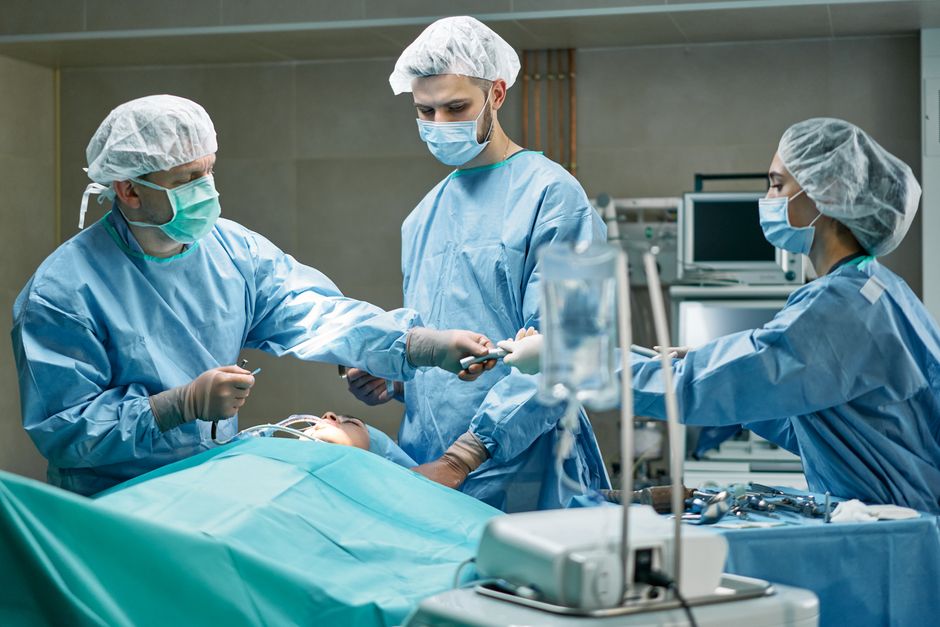
- The surgeon removes the tumor plus a surrounding margin of healthy tissue
- Sentinel lymph node biopsy (SLNB) is performed simultaneously — a technique refined in Korea — to sample the first lymph nodes that drain from the tumor, avoiding full axillary dissection when nodes are clear
- If oncoplastic reshaping is planned, the breast tissue is rearranged immediately to fill the cavity and restore shape
- The contralateral (opposite) breast may be adjusted for symmetry in the same session
Intraoperative margin assessment
- Many Korean centers perform same-day frozen-section or intraoperative pathology to check that excised margins are clear, reducing the need for re-excision
Closure and recovery room
- A small drain may be placed
- Most patients move to the ward within hours and begin mobilizing the next morning
Recovery Timeline
Recovery from BCS is generally faster than mastectomy, though radiation therapy extends the total treatment period.
Week 1–2 (hospital + early post-op)
- 2–4 days inpatient for monitoring, wound care, and drain management
- Mild to moderate chest discomfort managed with oral medication
- Arm movement on the operated side may be limited initially; physiotherapy guidance is provided
- Pathology report (final margin and lymph node status) typically returns within 5–10 business days
Week 2–3 (in Korea, outpatient follow-up)
- Drain removal and wound check
- Review of pathology results with the breast surgeon
- Radiation oncology consultation to plan post-surgical radiation (usually begins 4–6 weeks after surgery)
- Light walking is encouraged; no lifting of heavy objects
Week 3–6 (full recovery)
- Most patients resume desk work and light daily activities by week 3
- Driving and strenuous upper-body exercise are typically cleared around week 4–6
- Arm/shoulder physiotherapy may continue
- Fatigue is common and should be expected
Radiation phase (if staying in Korea)
- Whole-breast radiotherapy typically runs 3–5 weeks of daily sessions
- Partial-breast or stereotactic approaches may shorten this for eligible patients
- International patients who cannot stay for radiation can obtain the full treatment plan from the Korean team and complete radiation in their home country
Cost Breakdown
Costs in South Korea for BCS are substantially lower than in the United States, Canada, or Western Europe for equivalent oncology infrastructure.
The following ranges reflect all-in estimates for international self-pay patients. Prices vary by hospital tier (university hospital vs. specialized cancer center), tumor complexity, and whether oncoplastic reshaping is included.
What is typically included in the surgical package:
- Pre-operative imaging review and consultation
- Operating room and anesthesia fees
- Surgical oncologist and (if applicable) plastic surgeon fees
- Intraoperative pathology / frozen section
- Sentinel lymph node biopsy
- 2–4 nights inpatient stay
- Post-operative ward care and medications
- First follow-up consultation with pathology review
What is usually billed separately:
- Pre-operative MRI, mammogram, or ultrasound (if done in Korea)
- Chemotherapy or targeted therapy (if neoadjuvant or adjuvant)
- Radiation therapy course
- Medical translation and coordination services
- Accommodation and travel
Korea's national health insurance (NHI) covers Korean residents at heavily subsidized rates. International patients pay self-pay rates, which are still competitive globally. Many hospitals have dedicated international patient centers to provide itemized cost estimates before admission.
| Item | Typical Cost in Korea (USD) |
|---|---|
| Surgical package (excision + SLNB, no oncoplasty) | $8,000–$13,000 |
| Oncoplastic BCS (combined excision + immediate reshaping) | $12,000–$22,000 |
| Pre-op MRI + imaging in Korea | $800–$1,800 |
| Whole-breast radiotherapy course (if done in Korea) | $4,000–$9,000 |
| Medical coordination / international patient services | $300–$1,200 |
Why Korea
South Korea has built one of Asia's most respected oncology ecosystems, with breast cancer care ranking among its strongest specialties.
Regulatory and accreditation infrastructure
The Korea Health Industry Development Institute (KHIDI) operates the Medical Korea program, which certifies hospitals that treat international patients and maintains a searchable accredited hospital directory. The Korean Hospital Accreditation program (KOIHA) applies standards across patient safety, infection control, and clinical outcomes.
The Ministry of Food and Drug Safety (MFDS) regulates surgical devices, implants used in oncoplastic reconstruction, and pharmaceutical protocols.
Oncoplastic and reconstructive expertise
Korea's internationally recognized plastic surgery sector directly benefits breast cancer patients. Surgeons who perform BCS routinely combine oncologic excision with immediate oncoplastic reshaping in a single procedure — an approach that demands dual expertise not always available elsewhere.
The Korean Breast Cancer Society coordinates multi-center research, quality benchmarks, and national data registries, promoting protocol standardization across institutions.
Seoul and the Gangnam medical district
Seoul concentrates the majority of Korea's tertiary cancer centers. The Gangnam and Seocho districts, south of the Han River, are home to several large university-affiliated hospitals with dedicated breast cancer units and English-speaking international patient services.
Transport links, accommodation options near hospitals, and medical translation services are mature infrastructure for international patients.
Cost and coordination
Self-pay costs for international patients are substantially lower than comparable oncology care in the United States or United Kingdom. Multidisciplinary coordination — surgery, pathology, radiation oncology, and medical oncology — under one hospital roof reduces the logistical complexity for patients traveling from abroad.
Key Takeaways
- BCS preserves the breast by removing only the tumor and a clear margin — radiation therapy afterward is a standard part of the complete treatment.
- Korean cancer centers routinely combine BCS with oncoplastic reshaping in one operation, reducing visible contour defects.
- KHIDI's Medical Korea program and KOIHA accreditation provide a verifiable quality framework for international patients selecting a hospital.
- Budget $8,000–$22,000 USD for surgery; radiation and adjuvant therapy are additional and depend on whether they are completed in Korea or at home.
Frequently Asked Questions
Can I complete radiation therapy in my home country after surgery in Korea?
Yes. Many international patients return home for the radiation phase. Korean hospitals can provide a full radiation treatment plan, pathology reports, and imaging in English so that your home-country oncologist can continue care smoothly. Confirm this option when requesting your pre-travel quote.
How long will I need to stay in Korea if I only want surgery and pathology review?
A minimum of 3–4 weeks is advisable. Final pathology (permanent sections confirming clear margins and lymph node status) typically takes 5–10 business days. You will also need at least one follow-up consultation to discuss results and the adjuvant treatment plan before you travel home.
What is oncoplastic breast surgery and is it standard in Korea?
Oncoplastic surgery combines cancer removal with immediate plastic surgical techniques — rearranging breast tissue, reshaping the breast mound, or adjusting the opposite breast for symmetry — all in the same operation. Major Korean cancer centers with plastic surgery departments offer this as a standard option for appropriate candidates, not an upgrade.
Will I need to bring a companion, and are English-speaking staff available?
English-speaking staff and medical interpreters are available at hospitals accredited under the Medical Korea program. Bringing a companion is strongly recommended for emotional support and to help with logistics, particularly during the post-operative period when you may have restricted mobility.
Does breast conserving surgery in Korea include sentinel lymph node biopsy?
Sentinel lymph node biopsy is performed as part of the standard surgical session at Korean cancer centers when clinically indicated. It avoids full axillary lymph node dissection for patients whose sentinel nodes are clear, reducing the risk of lymphedema. Your surgeon will confirm the plan based on your pre-operative imaging and staging.
How is the hospital accreditation system in Korea structured for cancer care?
KHIDI (Korea Health Industry Development Institute) operates the Medical Korea portal, which lists hospitals authorized to treat international patients. KOIHA (Korean Institute for Healthcare Accreditation) applies a national accreditation standard covering safety, staffing, and clinical outcomes. For cancer specifically, the Health Insurance Review and Assessment Service publicly reports quality grades for cancer treatment at designated hospitals.
Related Topics
Sources
- Locoregional Recurrence After BCS with Neoadjuvant Chemotherapy in Korean Women — PMC
- BCS vs. Mastectomy Survival Comparison — Nature Scientific Reports
- First Experience in Korea of Stereotactic Partial Breast Irradiation — PMC
- Medical Korea — Cancer Treatment Information (KHIDI)
- Medical Korea — KAHF Accreditation Program
Ready to Begin Your Journey?
Get matched with KAHF-accredited hospitals and receive a personalized treatment plan.
Quick Facts
Typical Cost
$8000 - $15000
Duration
7 days
Accredited Hospitals
0+ Available
Top Hospitals
Medical Information Disclaimer
The information provided on this page about Breast Conserving Surgery is for general educational and informational purposes only. It is not intended as, and should not be construed as, medical advice, diagnosis, or treatment recommendations.
Always seek the advice of a qualified healthcare professional regarding any medical condition or treatment. Never disregard professional medical advice or delay seeking it because of information found on this website. Individual treatment outcomes may vary. Costs shown are estimates and may differ based on individual circumstances.
KmedTour acts as a medical tourism facilitator and does not provide direct medical services. All treatments are performed by independently accredited healthcare providers in South Korea.